2692 resultados
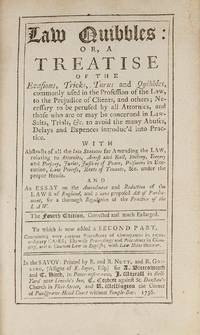
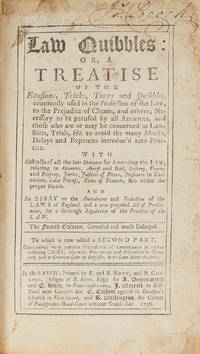
1736ref. 856711736. London 1736. Fourth & final edition. London 1736. Fourth & final edition. A Reform-Oriented Layman's Guide to Law's "Evasions Tricks Turns and Quibbles" Legal Criticism. Law Reform. Great Britain. Law Quibbles: Or A Treatise of the Evasions Tricks Turns and Quibbles Commonly Used in the Profession of the Law To the Prejudice of Clients And Others; Necessary to be Perused by All Attornies And Those Who Are or May be Concerned in Law Suits Trials &c. To Avoid the Many Abuses Delays and Expences Introduc'd into Practice. With Abstracts of All the Late Statutes for Amending the Law Relating to Attornies Arrest and Bail Bribery Forgery and Perjury Juries Justices of Peace Prisoners in Execution Law Process Rents of Tenants &c. Under the Proper Heads. And an Essay on the Amendment and Reduction of the Laws of England And a New Proposed Act of Parliament For a Thorough Regulation of the Practice of the Law. Corrected and much Enlarged. To Which is Now Added a Second part Containing Every Curious Precedents of Conveyances in Extraordinary Cases; Likewise Proceedings and Precedents in Chancery And at Common Law in English; With Law-Notes Thereon. London: Printed by E. and R. Nutt and R. Gosling 1736. viii 132 135 13 72 pp. An Essay on the Amendment and Reduction of the Laws of England bound at rear text complete. Octavo 8" x 4-1/2"; 20.2 x 11.5 cm. Modern quarter calf over marbled boards lettering piece to spine endpapers renewed. Some fading to spine negligible light shelfwear to extremities. Moderate toning to interior occasional light foxing light soiling in a few places light edgewear to first and last several leaves first four leaves reinforced at edges on verso reinforcement just touching text on one page without loss early owner signature of James Pocock to head of title page. A good copy. $650. Fourth and final edition substantially expanded. First issued in 1724 Law Quibbles occupies a distinctive place in the history of English legal literature as a hybrid work combining satire procedural commentary statutory digest practical precedent book and reform tract. The first part presents an alphabetical exposition of procedural stratagems tactical evasions and professional "mysteries" attributed to legal practitioners. Framed for both attorneys and lay litigants it documents contemporary perceptions of delay expense and pr. unknown
1736ref. 856711736. London 1736. Fourth & final edition. London 1736. Fourth & final edition. A Reform-Oriented Layman's Guide to Law's "Evasions Tricks Turns and Quibbles" Legal Criticism. Law Reform. Great Britain. Law Quibbles: Or A Treatise of the Evasions Tricks Turns and Quibbles Commonly Used in the Profession of the Law To the Prejudice of Clients And Others; Necessary to be Perused by All Attornies And Those Who Are or May be Concerned in Law Suits Trials &c. To Avoid the Many Abuses Delays and Expences Introduc'd into Practice. With Abstracts of All the Late Statutes for Amending the Law Relating to Attornies Arrest and Bail Bribery Forgery and Perjury Juries Justices of Peace Prisoners in Execution Law Process Rents of Tenants &c. Under the Proper Heads. And an Essay on the Amendment and Reduction of the Laws of England And a New Proposed Act of Parliament For a Thorough Regulation of the Practice of the Law. Corrected and much Enlarged. To Which is Now Added a Second part Containing Every Curious Precedents of Conveyances in Extraordinary Cases; Likewise Proceedings and Precedents in Chancery And at Common Law in English; With Law-Notes Thereon. London: Printed by E. and R. Nutt and R. Gosling 1736. viii 132 135 13 72 pp. An Essay on the Amendment and Reduction of the Laws of England bound at rear text complete. Octavo 8" x 4-1/2"; 20.2 x 11.5 cm. Modern quarter calf over marbled boards lettering piece to spine endpapers renewed. Some fading to spine negligible light shelfwear to extremities. Moderate toning to interior occasional light foxing light soiling in a few places light edgewear to first and last several leaves first four leaves reinforced at edges on verso reinforcement just touching text on one page without loss early owner signature of James Pocock to head of title page. A good copy. $650. Fourth and final edition substantially expanded. First issued in 1724 Law Quibbles occupies a distinctive place in the history of English legal literature as a hybrid work combining satire procedural commentary statutory digest practical precedent book and reform tract. The first part presents an alphabetical exposition of procedural stratagems tactical evasions and professional "mysteries" attributed to legal practitioners. Framed for both attorneys and lay litigants it documents contemporary perceptions of delay expense and pr. unknown books
1860ref. 46405258s. l. n. d., (vers 1860) ; 2 volumes in-8, demi-chagrin à coins, doubles filets dorés, dos à nerfs orné de fleurons dorés et filets dorés et à froid. (Relié vers 1880) titre, 1 f. bl., XIV pp., 1 f. bl., 503 pp. - 1 f., 147 pp.Traductions de textes allemands sur la vie des papes. Elles sont l’œuvre d’un même traducteur qui n’a pas signé son travail. Texte soigneusement calligraphié.1 - VOIGT (J.) Histoire de Grégoire VII. C’est une traduction résumée de la seconde édition allemande du Hildebrand als Papst Gregorius der Siebente und sein Zeitalter de J. Voigt parue en 1845. La première édition avait paru en 1815, une autre édition a paru à Vienne en 1819, une traductions française par M. Jager a paru en 1838 avec une préface de ce dernier. Il semble que cette préface posait quelques problèmes au pouvoir autrichien qui fit interdire cette édition. Une traduction italienne avec la même préface de Jager a paru à Milan (alors occupée par l’Autriche) sans y être interdite alors qu’elle l’était en Autriche. Johannes Voigt (1786-1863) était un historien et théologien prussien qui enseignait à Königsberg.“Plusieurs histoires de Grégoire VII ont été publiées depuis celle de Voigt (...) celle que j’ai écrite n’est, comme je l’ai déjà dit, qu’un résumé de la seconde édition de l’ouvrage de Voigt, résumé fait, d’ailleurs avant la publication de ces deux derniers ouvrages et destiné à demeurer toujours en manuscrit. Il m’a semblé néanmoins qu’elle pouvait encore, par son exactitude générale et sa brièveté, ne pas manquer complètement d’intérêt pour ceux qui la liraient.” Dit le traducteur dans sa préface.2 - THEINER (A.) - GESTIN (P. de). Histoire du pontificat de Clément XIV. Dans un court texte introductif, l’auteur de la traduction déclare que ce texte est “tiré de l’Histoire du pontificat de Clément XIV, écrite d’après les documents inédits des archives secrètes du Vatican, par le Père Augustin Theiner, prêtre de l’Oratoire, et traduite de l’allemand sous les yeux de l’auteur par Mr. Paul de Geslin, missionnaire apostolique. Cette traduction a été éditée à Paris en trois volumes...” Il s’agit donc, ici aussi, d’un résumé de la traduction.
Londres: Londini, Typis A. G. & J. P. et prostant venales apud Georgium Wells, 1681. 4to. imperial; 2 hs., 749 pp. [i.e. 795 pp., al estar duplicada la numeración de las pp. 401 a 442]. Encuadernación en piel de la época, con lomera nervada y tejuelo.
Petit in-folio oblong (410 x 280 mm), percaline vert bronze éditeur orné de motifs rocaille dorés et à froid, titre doré, 21 lithographies sur fond teinté, dont le titre. Edition originale de cet album conçu lors d'une assemblée générale des fondateurs de Mettray, le 12 mars 1843, "véritable opération de communication" pour promouvoir, sous forme d'une visite en images, la célèbre colonie agricole pour jeunes délinquants fondée Frédéric-Auguste Demetz en 1839. Les planches ont été confiées pour le dessin à Jean-Alexandre Thierry, élève de l'architecte de la colonie Abel Blouet et à Sauvé et Faivre pour la lithographie. L'album comprend le titre dans un encadrement architectural et allégorique, suivi de 20 vues de la colonie et des activités des détenus: vue générale des bâtiments, vue bucolique du village, intérieur et aménagements, salle de classe, réfectoire, dortoir, infirmerie, atelier des cordiers, exploitation de la carrière, horticulture, gymnastique, école de natation, etc. En un siècle (1839-1937), la colonie de Mettray tenta de "redresser" par le travail plus de 17.000 jeunes âgés de 6 à 21 ans, en les arrachant à la prison. Nichée au coeur de la Touraine, l'institution philanthropique sans mur, aux allures de jardin, se transforma rapidement en véritable bagne pour enfants. L'écrivain Jean Genet, y passera près de trois ans et Michel Foucault l'érigera en modèle de l'archipel carcéral. Cf. J. Bourquin et E. Pierre, 'Une visite à Mettray par l'image: l'album de gravures de 1844', in "Sociétés & Représentations", 2004/2 (n° 18), p. 207-216. Cartonnage légèrement frotté, coins émoussés, piqûres et rousseurs, soutenues sur certaines planches.
Datée du 31 décembre 1848, la lettre, dernière de l'année qui s'achève, mentionne la réforme fiscale qui prend effet le 1er janvier de 1849 et met en circulation le premier timbre. Dans son post-scriptum, Léopold Delaire rappelle à son oncle « la taxe des lettres se trouvant réduite uniformément à 20 centimes, à compter du premier janvier, Je vous engage à nous donner plus souvent de vos nouvelles, afin de compenser, dans l'intérêt du Trésor public, la diminution de plus des deux tiers qui va s'opérer dans nos frais de correspondance. J'appose sur cette lettre un des nouveaux timbres qui serviront désormais à l'affranchissement : elle vous parviendra donc franche de port ». La dernière phrase a été rayée d'un trait. Le début de la lettre dresse un bilan sévère d'une année révolutionnaire que Léopold Delaire juge « féconde en tristes et lamentables événements ». Le jeune homme se montre cependant soulagé par l'élection en décembre 1848 de Louis Napoléon Bonaparte. «Grâce à Dieu, elle finit mieux qu'on ne pouvait l'espérer. L'immense majorité obtenue par Napoléon, le petit nombre de voix réparti sur les candidats avoués des hommes du désordre, le triomphe complet du parti modéré qui veut l'ordre, la famille et la propriété assurent au moins le présent et rétablissent la confiance ». Si des troubles peuvent encore survenir, « ils ne sont pas de nature à menacer l'ordre ». Léopold Delaire brosse ensuite le tableau d'une capitale rendue à la vie avec la reprise du commerce,les étrangers peuplant de nouveau les hôtels garnis et les maisons meublées, les voitures de maître se croisant en tout sens dans les rues. Il note que, depuis l'élection du président de la République, les Parisiens qui avaient quitté la capitale début décembre semblent vouloir rentrer. Il commente, pourcentages à l'appui, les résultats des élections dans le département de l'Allier, dont sa famille est originaire, qui recèle « une minorité considérable de gens dangereux », ce qui « est bien surprenant dans un département qui est presque tout agricole ». Léopold Delaire est le fils de Jean Marie Delaire, président de la Cour des Comptes et le petit-fils du général Jean-Pierre-Hugues de Cambacérès. Le destinataire de la lettre est Antoine Delaire, maire de Montaigu-le-Blin, dans l'Allier.
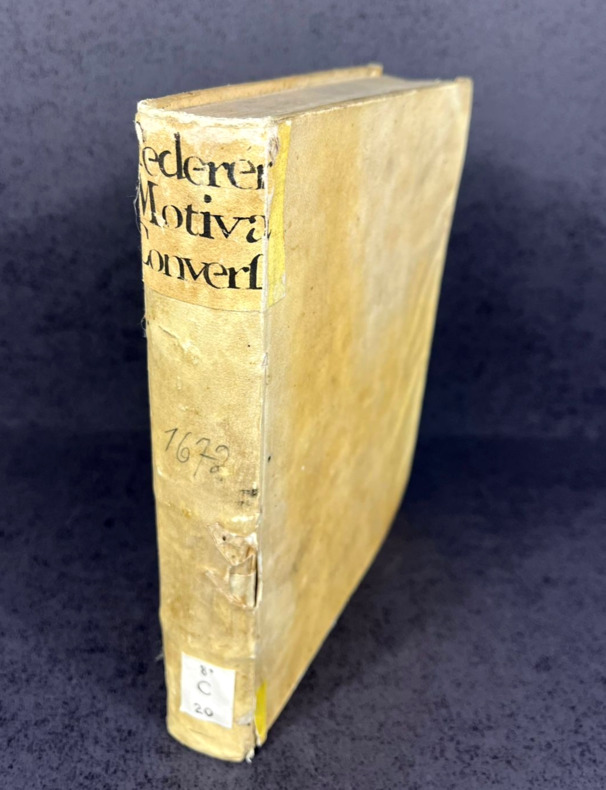
1672ref. 0533Innsbruck, Wagner, 1672. Épais volume in-4 de 160 x 203 mm, 440 (23) pp. Relié plein vélin blanc d'époque. Étiquette d'époque en coiffe, autre étiquette (bibliothèque) plus récente en queue, année d'édition au crayon au milieu du dos. Marque d'ancienne bibliothèque au premier contreplat surmontée d'une référence au crayon. Première garde blanche avec deux inscriptions en latin et allemand. Page de titre principale placée en fin d'ouvrage (!), qui commence par la page signalant la première partie, avec une inscription à la plume en haut de cette page d'ouverture. Rarissime titre polémique anticalviniste. L'auteur, Ioannes ou Johannes Federer (1645-1706), était prêtre jésuite. Professeur et théologien, il s'est fait remarquer en particulier avec "Calvinismus Detectus, & dedoctus", un livre érudit et vigoureux qui condamne le protestantisme calviniste dans les termes les plus fermes. L'auteur y répond à deux lettres calvinistes, l'une du philologue Johann Georg Grævius (1632-1703), converti, l'autre de Johann Jakob Vedrosi (1624-1706). Avec bandeaux, lettrines et culs-de-lampe. Léger manque au dos, petits trous de mite aux toutes premières pages sans aucun autre dégât, deux morceaux de papier vierges collés pour couvrir les tampons du monastère d'origine, sinon intérieur très pur, exempt de rousseurs ou d'annotations. ***************************************************** Innsbruck, Wagner, 1672. Thick in-quarto volume, 160 x 203 mm, 440 (23) pp. Bound in full contemporary white vellum. Contemporary label at the endpaper, another more recent (library) label at the tail, year of publication in pencil in the center of the spine. Old library mark on the front cover surmounted by a pencil reference. First white endpaper with two inscriptions in Latin and German. Main title page placed at the end of the book (!), which begins with the page indicating the first part, with a pen inscription at the top of this opening page. An extremely rare anti-Calvinist polemical title. The author, Ioannes or Johannes Federer (1645-1706), was a Jesuit priest. A professor and theologian, he made a name for himself in particular with "Calvinismus Detectus, & dedoctus," a scholarly and vigorous book that condemns Calvinist Protestantism in the strongest terms. In it, the author responds to two Calvinist letters, one from the philologist Johann Georg Grævius (1632-1703), a convert, and the other from Johann Jakob Vedrosi (1624-1706). With headbands, initials, and tailpieces. Slight loss to the spine, small moth holes in the very first pages with no other damage, two small blank pieces of paper glued to cover the original monastery stamps. Otherwise, the interior is very clean, free of foxing or annotations.
1781ref. STAN0086Ohne Ort (Wien 1781). 2°. 2 nn. Bll. Ungebunden (1 gef. Doppelblatt), altersgemäß vergilbt, schwach stockfleckig, e. Fleck mit minimaler Textundeutlichkeit auf S. 3. Auch 'Untertanenpatent' bezeichnete Amtsdruckschrift, mit welcher Joseph II. per 1. November 1781 die Aufhebung der Leibeigenschaft anordnete. Mit diesem Erlass wurde eine der wesentlichsten Entscheidungen im Zuge der josephinischen Reformtätigkeit getroffen.
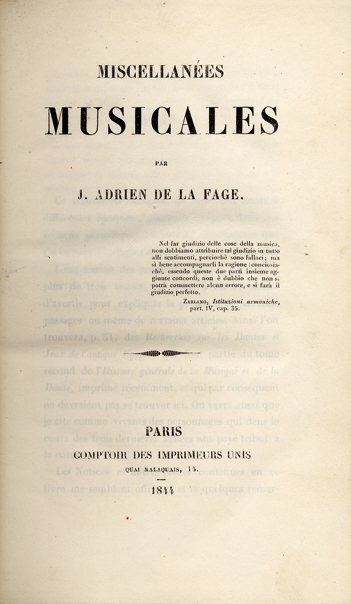
1844ref. 14501Paris, Comptoir des Imprimeurs Unis, 1844 ; in-8 ; plein maroquin bleu-marine, dos à nerfs, titre doré, double filet doré sur les coupes, dentelle intérieure, toutes tranches dorées sur marbrure (Andrieux) ; (8), 526 pp.
Petit in-8, plein cartonnage vélin à la Bradel, titre doré en long, daté en pied (reliure moderne signée Goy), 126 p., (1) f. blanc [sign. a-h8]. Troisième édition dédiée à Henri II (la première date de 1547) de cet ouvrage controversé, analyse critique de "l'Orateur" de Cicéron considéré comme le chef-d'oeuvre et le modèle indépassable des traités de rhétorique. Dans cette critique paradoxale, Pierre de La Ramée qui était pourtant l'un des plus fervents admirateurs de Cicéron, réclame pour la rhétorique comme pour les autres arts une forme plus humaine et plus méthodique. L'ouvrage suscita une tempête et réveilla la haine tenace et durable des ennemis de Ramus: Jacques Charpentier en particulier, peut-être l'un des responsables de son assassinat lors de la Saint-Barthélemy. Caractères italiques, lettrines et belle marque de l'imprimeur gravée au titre. (W. J. Ong, 'Ramus and Talon Inventory', n° 57). Mouillure claire en coin. Très bon exemplaire, frais, grand de marges, bien relié.
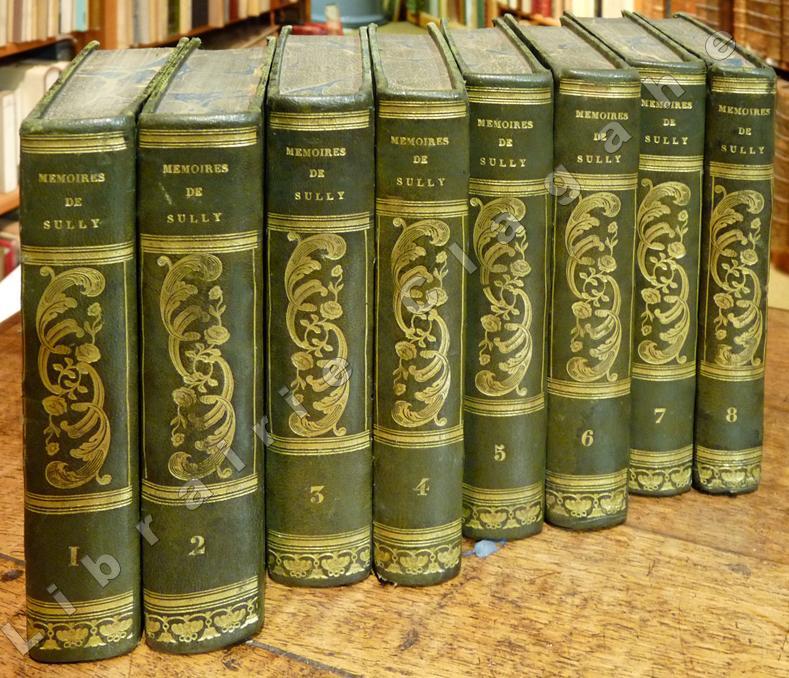
1763ref. 11860Londres, sans nom, 1763 ; 8 tomes in-12 ; demi-chagrin vert-sapin, dos lisses à grand décor de rinceaux et roses dorés, 4 faux-nerfs dorés, palette en queue, tranches marbrées multicolores (reliure du tout début XIXe) ; VIII, LX, 415 ; (4) en tête à chaque volume ; VIII, 560 ; IX, 566 ; VI, 454 ; VIII, 484 ; VI, 477 ; VI, 483 ; VI, 375, (1) pp. ; chaque tome a sa propre table alphabétique ; 2 portraits gravés par Legrand au tome 1er.
Ensemble de 2 ouvrages reliés en un volume in-12 (126 x 70 mm) , plein parchemin ivoire de l'époque. 1- Attribué par les contemporains à H. Estienne, ce pamphlet pourrait avoir été également composé par Th. de Bèze, Hotman ou R. de la Planche. "Pamphlet très violent, écrit pendant la régence de 1574 contre la 'tyrannie' et les 'vices' de Catherine de Médicis, histoire des guerres de religion où les responsabilités sont rejetées sur la reine. L'auteur, qui se donne comme un catholique modéré, semble être un huguenot apparenté au parti des Politiques" ('Sources de l'Histoire de France', 2240). (Cf. Renouard, 'Estienne', 142-143, n°8. Brunet, II, 751). 2- Recueil de pamphlets qui concernent autant Henri III qu'Henri IV. Contient : I- "Journal du règne de Henry III" [par Servin, avocat général au parlement de Paris]. II- "L'Alcandre, ou les amours du Roy Henry le Grand" [chronique scandaleuse attribuée à la Princesse de Conti]. III- "Le divorce satyrique, ou les amours de Reine Marguerite de Valois..." [pamphlet très violent contre Marguerite de Valois attribué à P.-V. Palma Cayet]. IV- "La confession de M. de Sancy par L.S.D.A. auteur du Baron Feneste" [texte peu connu de Théodore Agrippa d'Aubigné]. Léonce Brouillant (in 'Pierre du Marteau', p. 179) précise que ce dernier recueil, publié sous une adresse fictive de Cologne, aurait été comme le précédent publié à La Haye par Adrian Vlacq. (Brunet, IV, 1146) Bon exemplaire, relié à l'époque.
ref. 21937ST-BRIEUC, L. Prud'homme -1847 & 1850 - Complet en 2 volumes In-4 carré - Reliure 1/2 chagrin - Dos à nerfs à pointillés dorés - LLXVIII-836 pages & XI-594 pages - rousseurs d'usage - Bons exemplaires
3 parties reliées en 2 volumes in-8, demi-veau havane de l’époque, dos à 4 faux-nerfs plats ornés d’un jeu de filets dorés, pièces de titre et de tomaison de maroquin bleu, tranches marbrées (petits accrocs aux coif. sup.), xii, cxv (pour "Pétition aux chambres"), 337 p., (1) f. de table, 5 plans et 2 tableaux dépliants et xv, 448 p., 3 plans dépliants et (6), cxv, 44 p. Ensemble bien complet des trois parties reliées en 2 volumes. La troisième partie est formée par la Conclusion générale. L’un des ouvrages fondateurs de la réforme pénitentiaire en France. Membre de la "Société Royale pour l amélioration des prisons", devenu inspecteur général des prisons, Charles Lucas s’appuie sur son expérience et ses voyages d’études en Europe et aux Etats-Unis pour proposer une réforme dont l’objectif principal est la moralisation et l’amendement des détenus. Il envisage un système progressif, jusqu’à une libération aidée par des sociétés de patronage, système qui implique une individualisation de la peine. Il se montre favorable à l’isolement cellulaire des détenus les moins aguerris afin d’éviter la corruption. C’est immédiatement à la suite de la parution de la première édition de cet ouvrage que fut mise en œuvre une réforme des prisons départementales en France (cf. J.-C. Vimont, Saint-Brieuc et Charles Lucas, Criminocorpus). Accident à une planche sans manque. Quelques rousseurs éparses. Très bon exemplaire, bien relié à l’époque. Une note manuscrite précise que l’ouvrage provient de la bibliothèque de l'auteur, Charles Lucas.
1646ref. DEZ-8507Ss lieu, ss éditeur, 1646. Grand in-8 en plein veau de l'époque au dos à nerfs orné de fleurons et de filets dorés. 3 ff dont titre, préface de l'auteur et table. 313 pp, 74 pp, 58 pp. Mors fendus sur la moitié de leurs longueurs, coiffes arasées, coins émoussés, feuillets de page de titre en partie débroché. Sinon intérieur frais.
1751ref. 0046441751 Amsterdam, Wetstein et Smith, 1751. Trois volumes in-quarto (206 X 267 mm) veau fauve marbré, dos cinq nerfs, caissons dorés ornés, larges palettes en queue et tête, pièce de titre maroquin grenat, coupes filetées, tranches rouges (reliure de l'époque). Tome I : portrait-frontispice, (7) ff. dont titre, LXXII-562 pages - Tome II : (1) f. de titre, 644 pages - Tome III : (1) f. de titre, 531 pages (mal chiffrées "561"). Légères et habiles restaurations à la reliure, quelques rares rousseurs et brunissures dans le corps des ouvrages.
1743ref. PHO-1951Londres, Paris et La Haye, Rollin, Du Bosc et Darrès & Pierre Dehondt, 1743, 6 volumes in-4, demi veau (début 19eme), dos lisse avec pièce de titre rouge et tomaison verte, tranches cailloutées bleues, légers frottements, quelques rousseurs et brunissures, discrètes réparations à une carte, bon exemplaire.
1857ref. 26793United Kingdom: Various 1857. United Kingdom: various dates and publishers as below. Group of speeches and political pamphlets bound in one volume; as they appear and including: Rules and Regulations of the Commissioners of National Education in Ireland. Dublin: Printed by Alexander Thom. 1863. 31 pages; first and last leaves a little spotty trimmed close at bottom edges. Previous owner note at top edge in pencil "by John Stuart Mill Sir Robert Lowe and others." Rules and Regulations of the Commissioners of National Education in Ireland. Dublin: Printed by Alexander Thom. 1866. 29 pages; also trimmed close at bottom edge. Speech of the Chancellor of the Exchequer on the Bill for the Extension of the Suffrage in Towns. May 11 1864. Second Edition. John Murray 1864. With a couple of previous owner blue-pencil notes: "If the speech does not mean "manhood suffrage" what does it mean" and later in the Speech "like Sibthorp he has no confidence in either party." And marking a section "A hint for agitators to follow and a threat to intimidate his opponents" and a couple of other comments; this closely read & commented-upon. Couple of spots very good. Borough Franchise Extension Bill. The Speech of the Rt. Hon. Robert Lowe M.P. Upon the Second Reading of Mr. Baines' Bill for the Extension of the Borough Franchise Delivered in the House of Commons on Wednesday May 3rd 1865. London: Bickers and Son. 16 pages. Previous owner initial at top of title page edge. 1831-32 A Sketch. Reprinted from "Fraser's Magazine" of February 1862. By Lord Campbell. London: William Ridgway 1866. Previous owner name of Joseph Radcliff at top of title page edge. 49 pages. Parliamentary Reform Considered as a Question of Principle and not of Party. Dedicated by Permission to the Right Hon. Earl Grey by Edward J. Gibbs M.A. London: William Ridgway & William Parke. Not dated. 51 pages. Speech of the Right Hon. E. Horsman M.P. on the Second Reading of Mr. Baines' Borough Franchise Extension Bill in The House of Commons May 8th 1865. Westminster: Vacher and Sons 1865. 29 pages. Plea of the Unrepresented Commons for Restitution of Franchise. An Historic Enquiry. By Thomas Chisholm Anstey Esq. of the Honorable Society of the Middle Temple. London: William Ridgeway 1866. 143 pages. Speech of the Right Hon. Robert Lowe M.P. on the Irish Tenant-Right Bill; and A Letter of Lord Oranmore's to 'The Times.' Reprinted at the Expense of an Irishman. London: Trubner and Co. 1866. 22 pages. Name of Joseph Radcliff at top of title page edge. The Growth of our Law of Personal Property. An Introductory Lecture. Delivered to the Law Students at King's Inn. By William O'Connor Morris Esq. Barrister-at-Law Professor of the Law of Personal Property Pleadings and Evidence to the Hon. Society of the King's Inns Dublin. Dublin: Hodges Smith & Co. 1863. 24 pages. The History and Uses of The Law of Entail and Settlement. Buy Charles Neate Barrister-at Law Fellow of Oriel College and Member of Parliament for the City of Oxford. London: William Ridgway 1865. 44 pages. Considerations on the Punishment of Death. By Charles Neate Esq. Barrister-at Law Fellow of Oriel College and Member of Parliament for the City of Oxford. London: James Ridgway 1857. 83 pages. Speech of John Stuart Mill Esq. M.P. Etc. Speech only; no additional title page; 8 pages. Colophon notes as Judd & Glass Phoenix Printing Works London E.C. Representation of the People Bill. Second Reading. Speech of the Right Hon. Robert Lowe M.P. House of Commons Thursday April 26 1866. London: Robert John Bush. 31 pages. Name of Joseph Radcliff at top of title page edge. Reform Bill 1866. Epitome of the Debate on the Motion of the Rt. Hon. W.E. Gladstone for Leave to Bring in a Bill To Extend the Franchise in England and Wales 12th and 13th March 1866. London: Harrison 1866. 74 pages. Speech of H. Hussey Vivian Esq. M.P. F.G.S. on the Coal Question: Delivered in the House of Commons Tuesday June 12 1866. London: William Ridgway 1866. 61 pages. Last few leaves spotty. Approx. 6" x 8 1/4" size; bound in marbled paper covered boards polished calf corners and spine with simple dotted line and rules red leather spine label gilt titles all edges marbled endpapers to match. Some edge tips wear and rubbing to the binding; in very good condition. . Ephemera. Leather. Very Good. Various
1869ref. 43448Chicago: Ed. Bühler's Buchhandlung 1869. paperback. 1st edition. Original printed paper wrappers 12mo 26 pages. 22cm. In German. Title translates as "A Critique of Christian Missionary Activities in Particular the 'Jewish Mission.'" Singerman 2126. Leading Chicago Reform Rabbi Bernard Felsenthal here pushes back against Christian attempts to convert Jews to Christianity. Felsenthal 1822-1908 was born in Bavaria and ordained in America by David Einhorn serving the Zion-Gemeinde of Chicago starting with its formation in 1864. Felsenthal was among the first American Reform leaders to favor participation in the Zionist Congress at Basel in 1897 against overwhelming opposition from his Reform colleagues. SUBJECTS Descriptor:Missions to Jews. Christianity and other religions -- Judaism. Judaism -- Relations -- Christianity. Proselytizing -- Illinois -- Chicago. Missions aupre`s des Juifs. Christianisme -- Relations -- Judai¨sme. Judai¨sme -- Relations -- Christianisme. Prose´lytisme -- Illinois -- Chicago. Christianity. Interfaith relations. Judaism. Missions to Jews. Proselytizing. Missions to Jews OCLC: 475232105. Light wear to wrappers with expert repair to margin of upper corner; somewhat dusty small name stamp on blank reverse of title page tiny owner stamp on rear wrapper "ex-libris Tobias Schanfaber;" see en.wikipedia.org/wiki/Tobias_Schanfarber internally bright about Very Good- Condition B AMR-67-9-DRXBGGF-'le. Chicago: Ed. Bühler's Buchhandlung unknown
1846ref. 39101Philadelphia 1846. 16 of 18 issues lacking 1 and 2 bound together in contemporary three-quarter calf with marbled boards. Pages numbered 33-288. Some leaves browned. General title page is absent; a small bookplate "Bodichon Scalands Robertsbridge" covers the caption title of No. 3. This is the bookplate of Barbara Leigh Smith Bodichon notable British artist feminist writer and women's rights activist who founded the first women's college at the University of Cambridge. Bound in contemporary quarter calf rubbed and marbled paper over boards. Occasional text browning. Except as noted Very Good. This periodical is a literary anthology of American and British reformist prose and poetry with significant anti-slavery contributions. The authors included John Greenleaf Whittier James Russell Lowell Ralph Waldo Emerson Nathaniel Hawthorne Henry Longfellow John Pierpont Lydia Maria Child Harriet Martineau Lydia Sigourney Alfred Lord Tennyson Elizabeth Barrett and William Lloyd Garrison who wrote three poems for the journal one while imprisoned for libel of a merchant he had accused of illegal slave trading. The anti-slavery pieces are not only poetic most famous being Whittier's "Branded Hand" but also include his essay on the "Slave Market at Washington" Child on the "Economy of Slavery" the "Declaration of Sentiments of the American Anti-Slavery Society" and principles of the 1838 "Peace Convention" organized by Garrison. LCP 10848. AI 46-7277 6. Not in Lomazow or Mott. unknown books
ref. 57805Original illuminated document on parchment; hand-lettered in italic with gilt illuminations at upper left and right margins; signed beneath work by the calligrapher "E. von E." unidentified. With original signatures of 71 board members and staff of the Henry Street Settlement. Mild soil at margins; Near Fine. A handsome hand-lettered tribute to outgoing President of the Board of the Henry Street Settlement Newbold Morris. Morris 1902-1966 was an important figure in Henry Street history assuming the board presidency soon after the reorganization of the Settlement under Director Helen Hall in 1944. Morris also played a prominent role in New York City planning and politics during the Robert Moses era; he was among the more prominent members of the New York Planning Commission; was President of the City Council from 1938 to 1945 and an unsuccessful candidate for Mayor in 1945 and 1949. Later in 1961 Morris achieved some notoriety as the City Parks Commissioner when he rejected the permits of hundreds of folk musicians who had been performing in Washington Square Park sparking the so-called "Beatnik Riot" one of the opening salvos of Sixties countercultural activism. The document is undated but expresses appeciation for Morris's "completion of a decade of service" placing it in the vicinity of 1954-5. Beneath the calligraphic portion the document has been signed by seventy-one individuals including fellow board-members staff and residents. These include a host of prominent mid-century New York figures beginning with Hall herself and including the prominent civic leader Nicholas Kelley; choreographer Alwin Nikolais; economist Mary Keyserling; painter Jack Levine; long-time Henry Street youth worker Ralph Tefferteller and many others. A unique and visually attractive artifact marking the mid-century apex of one of the most successful and long-lived social welfare projects in New York. unknown books
1736ref. 857121736. London 1736. Fourth & final edition. London 1736. Fourth & final edition. A Spirited Call for Reform: A Layman's Guide to Law's "Evasions Tricks Turns and Quibbles" Legal Criticism. Law Reform. Great Britain. Law Quibbles: Or A Treatise of the Evasions Tricks Turns and Quibbles Commonly Used in the Profession of the Law To the Prejudice of Clients And Others; Necessary to be Perused by All Attornies And Those Who Are or May be Concerned in Law Suits Trials &c. To Avoid the Many Abuses Delays and Expences Introduc'd into Practice. With Abstracts of All the Late Statutes for Amending the Law Relating to Attornies Arrest and Bail Bribery Forgery and Perjury Juries Justices of Peace Prisoners in Execution Law Process Rents of Tenants &c. Under the Proper Heads. And an Essay on the Amendment and Reduction of the Laws of England And a New Proposed Act of Parliament For a Thorough Regulation of the Practice of the Law. Corrected and much Enlarged. To Which is Now Added a Second part Containing Every Curious Precedents of Conveyances in Extraordinary Cases; Likewise Proceedings and Precedents in Chancery And at Common Law in English; With Law-Notes Thereon. London: Printed by E. and R. Nutt and R. Gosling 1736. viii 72 132 135 13 pp. With an index and advertisement leaf. Collated and complete. Octavo 7-3/4" x 4-1/2"; 19.6 x 11.8 cm. Contemporary calf blind rules to boards blind fillets along joints raised bands and lettering piece to spine gilt tooling to board edges. Moderate rubbing to boards light wear to extremities joints starting at head chip to center of lettering piece spine ends lightly abraded small vertical surface crack to spine hinges cracked. Light toning to interior crack in text block between pp. 78 & 79 all leaves secure occasional small faint dampstains at page edges. Early owner signature of Thomas Winter dated 1781 to front pastedown. A good sound copy of a scarce and engaging title. $750. Fourth and final edition significantly expanded. First published in 1724 Law Quibbles is a lively and sharply critical guide to the procedural artifices and technical maneuvers of the English legal profession. Designed for the lay reader as much as the practitioner it functions both as a satirical expose and as a practical survival manual for navigating 18th-century litigation. The first part presents an alphabetical "dic. unknown
1736ref. 857121736. London 1736. Fourth & final edition. London 1736. Fourth & final edition. A Spirited Call for Reform: A Layman's Guide to Law's "Evasions Tricks Turns and Quibbles" Legal Criticism. Law Reform. Great Britain. Law Quibbles: Or A Treatise of the Evasions Tricks Turns and Quibbles Commonly Used in the Profession of the Law To the Prejudice of Clients And Others; Necessary to be Perused by All Attornies And Those Who Are or May be Concerned in Law Suits Trials &c. To Avoid the Many Abuses Delays and Expences Introduc'd into Practice. With Abstracts of All the Late Statutes for Amending the Law Relating to Attornies Arrest and Bail Bribery Forgery and Perjury Juries Justices of Peace Prisoners in Execution Law Process Rents of Tenants &c. Under the Proper Heads. And an Essay on the Amendment and Reduction of the Laws of England And a New Proposed Act of Parliament For a Thorough Regulation of the Practice of the Law. Corrected and much Enlarged. To Which is Now Added a Second part Containing Every Curious Precedents of Conveyances in Extraordinary Cases; Likewise Proceedings and Precedents in Chancery And at Common Law in English; With Law-Notes Thereon. London: Printed by E. and R. Nutt and R. Gosling 1736. viii 72 132 135 13 pp. With an index and advertisement leaf. Collated and complete. Octavo 7-3/4" x 4-1/2"; 19.6 x 11.8 cm. Contemporary calf blind rules to boards blind fillets along joints raised bands and lettering piece to spine gilt tooling to board edges. Moderate rubbing to boards light wear to extremities joints starting at head chip to center of lettering piece spine ends lightly abraded small vertical surface crack to spine hinges cracked. Light toning to interior crack in text block between pp. 78 & 79 all leaves secure occasional small faint dampstains at page edges. Early owner signature of Thomas Winter dated 1781 to front pastedown. A good sound copy of a scarce and engaging title. $750. Fourth and final edition significantly expanded. First published in 1724 Law Quibbles is a lively and sharply critical guide to the procedural artifices and technical maneuvers of the English legal profession. Designed for the lay reader as much as the practitioner it functions both as a satirical expose and as a practical survival manual for navigating 18th-century litigation. The first part presents an alphabetical "dic. unknown books
1565ref. 25771[Page de titre absente] - S.l., s.é., 1565. Un vol. au format gd in-12 (171 x 115 mm) de 1 f. n.fol., 310 (x 2) pp. Reliure postérieure de pleine basane mouchetée blonde, plats jansénistes, dos à nerfs orné de filets à froid, tranches mouchetées.
1812ref. 21623Genève, J.J. Paschoud et Paris, 1812-1813 ; 80 ; 104, 16 pp. (Catalogue des Livres Nouveaux).Relié à la suite : Bibliothèque Universelle de Genève Nouvelle série. Tome dix-neuvième ; Genève Glaser, Paris Anselin (Imprimerie Ferd. Ramboz), 1839 ; 215 pp., 1 pl. lithographiée eet aquarellée sur la Vaccine du Dr Lombard.Soit 3 tomes reliés en un volume in-8, demi-veau glacé, dos lisse à faux-nerfs décoratifs, titre doré (reliure de l’époque).