Le Rider, JacquesAntiquariat.de
336 Ergebnisse
2014Best.-Nr. 1143627Wien : Picus-Verl., 2014. 61 S. ; 19 cm, Hardcover.
19868vo., First Edition, with portrait frontispiece and plates; black cloth, gilt back, a very good, bright, clean copy. Enser, p.180.
1993Best.-Nr. 16023München, Kindler, 1993. Pappeinband, Schutzumschlag, 4°, Querformat, ganzseitige, fotografische s/w-Abbildungen, 116 Abbildungen; -sehr gutes Exemplar.
2009Best.-Nr. 22652Stuttgart, Klett-Cotta, 2009. 8°, 287 Seiten. mit zahlreichen, teils farbigen Abbildungen und Photos auf Tafeln. Orig.Pappband mit OSU.
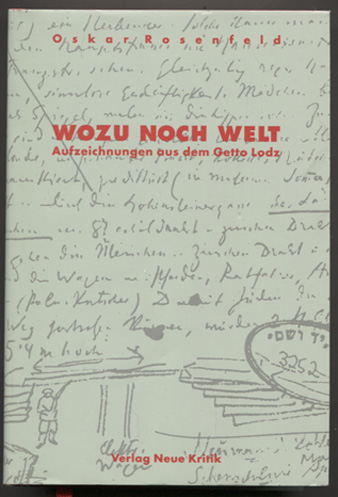
Best.-Nr. 2264o.J.; Neue Kritik, 1994; Frankfurt/Main
Best.-Nr. JUDA2214o.J. BLUMENTAL, Nachman (Ed.) Yizkor Baranow. A Memorial to the Jewish Community of Baranow. Jerusalem, Yad Vashem 1964. gr.-8°, XVI S., engl. Text, 236 hebräischer Text mit zahlr. Abb., OLn. m. hebr. Rückentit., leichte Gebrauchsspuren. / BAUMINGER, Arieh. L. Les Justes. Jerusalem, Yad Vashem (1969). gr.-8°, 102 (statt 104) S., letztes Bl. fehlt (herausgeriss.), OBrosch., lichtspurig, abgegriff., Umschlag vorne tlw. vom Textblock gelöst. / Der HOLOCAUST. Jerusalem, Yad Vashem 1979. 79 S., stark illustriert, OBrosch.
19651st edition. Original stiff paper wrappers. 4to. 11 sheets of illustrations, 33 cm. In Hebrew, English, and Yiddish, with a Hebrew introduction. Title translates to Children in the Ghetto. An assortment of illustrations from the Warsaw Ghetto. SUBJECTS: Jewish children -- Poland -- Warsaw -- History -- 20th century -- Pictorial works. The US Holocaust Museum keeps their copy in their Rare Book Collection. OCLC lists 12 copies worldwide (OCLC: 54613924) . Very light edge wear to stiff wrappers. Very Good Condition. (YID-41-44)
1999trad. di Anna Linda Callow e Rosella Carpinella Guarnieri n. 393 in 16°, bross. edit. con bandelle, timbro di appartenenza
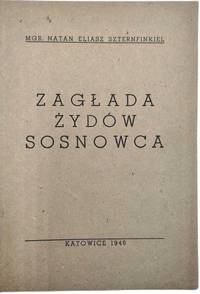
1946Best.-Nr. 43546Katowice: Centralna Zydowska Komisja Historyczna 1946. 1st edition. Original printed paper wrappers 8vo 80 pages. Includes seven photos and fold out map of the Ghetto in Bedzin and Sosnowiec. In Polish. Title translates as "The Extermination of the Jews of Sosnowiec." From the series "Wydawnictwa Centralnej Zydowskiej Komisji Historycznej w Polsce" Nr. 25. Wiener Library I: 1352. Published under the Kolegium Redakcyjne with leadership from Filip Friedman & Jozef Wulf among others. "The Sosnowiec Ghetto German: Ghetto von Sosnowitz was a World War II ghetto set up by Nazi German authorities for Polish Jews in the Srodula district of Sosnowiec in the Province of Upper Silesia. During the Holocaust in occupied Poland most inmates estimated at over 35000 Jewish men women and children were deported to Auschwitz death camp aboard Holocaust trains following roundups lasting from June until August 1943. The ghetto was liquidated during an uprising a final act of defiance of its Underground Jewish Combat Organization ZOB made up of youth. Most of the Jewish fighters perished. Before the war there were about 30000 Jews in Sosnowiec making up about 20% of the town's population. Over the next two years the Germans resettled thousands of Jews from smaller towns to Sosnowiec temporarily increasing the size of the local Jewish community to 45000. By late 1942 Bedzin and nearby Sosnowiec which bordered Bedzin became the only two cities in the Zaglebie Dabrowskie region that were still inhabited by Jews. The city located on the pre-war Polish-German border was taken over by the Germans on the first day of the invasion of Poland. Arrests and beatings among more prominent Jews began the next morning. On 9 September 1939 the Great Synagogue in Sosnowiec was burned. Local Jews were being evicted from better homes and terrorized on the streets. Jewish businesses were plundered by individual soldiers and closed by the Nazis pending confiscation proceedings. Shootings and first mass executions followed soon afterwards. Forced relocations into crowded tenements slowly created a ghetto. Judenrat and the Jewish police were soon established on German orders; the head of the Sosnowiec Judenrat was Moshe Merin Mojzesz Merin in Polish. Food rationing was introduced. The Jews were prohibited from buying anything outside their own community. In the first months of 1940 the Zentrale der Jüdischen Ältestenräte in Oberschlesien Central Office of the Jewish Councils of Elders in Upper Silesia headed by Merin was created in Sosnowiec representing about 45 communities. For a time Merin became infamous as the dictator of the Jews of the Zaglebie region with the power of life and death over local Jews. A labour camp was established for the Jews deported to Sosnowiec from Czechoslovakia to work at the factory of the Shine brothers. Numerous forced labour facilities were established for the locals; making uniforms underwear corsets bags leather handbags and military boots. In 1940 some 2592 German war profiteers arrived in the city. By 1942 their number rose to 10749 settlers constituting 10% of the general population. Ever since the ghetto was established numerous deportation actions were organized by the Germans with the help of the Judenrat and Merin selecting healthy men for slave labor at the camps. Large transfers of Jews took part in May 1500 and June 1942 2000. Around October 1942 - January 1943 the ghetto was moved to the Srodula district. Srodula also bordered the site of the Bedzin Ghetto. At this point about 13000 Jews still lived in Sosnowiec. The creation of the Sosnowiec ghetto ended on 10 March 1943 when it was finally closed off from the outside world. Thousands of Jews were deported from Sosnowiec to Auschwitz in June 1943 during the major deportation action extending to nearby Bedzin. The ghetto was liquidated two months later in August whereas almost all remaining Jews were also deported to Auschwitz. A few hundred Jews remained in the Srodula ghetto which was liquidated in January 1944. Frumka Plotnicka age 29 led the uprising in the Bedzin Ghetto adjacent to SosnowiecThere had been considerable underground activity among the Jews in Sosnowiec and Bedzin Ghetto nearby organized by the youth organizations Ha-No'ar ha-Ziyyoni Gordonia and Ha-Shomer ha-Za'ir. During the final major deportation push in August 1943 the Jewish Combat Organization Polish: Zydowska Organizacja Bojowa ZOB in Bedzin and Sosnowiec staged an uprising against the Germans. The uprising which began on 3 August 1943 was led by Cwi Tzvi Brandes Frumka Plotnicka and the Kozuch brothers. It was the final act of defiance of the local population with no chance of success. Most of the young Jewish fighters perished 400 killed in action fighting the overwhelming German forces. The last Holocaust transport to Auschwitz-Birkenau with Jews forced to bury the dead left Sosnowiec on 15 January 1944. Resistance of the ghetto inhabitants is commemorated by one of the streets in Sosnowiec bearing the name "Street of the Ghetto Heroes" Ul. Bohaterów Getta. There is also Kozuch Brothers square Plac Braci Kozuchów with a ghetto memorial. The Catholic convent of Carmelite Nuns led by Mother Teresa Kierocinska aided the Jews in the ghetto and hiding. Kierocinska was awarded a medal of the Righteous 46 years after her death. She was declared 'heroic in virtue' by Pope Francis in 2013. The Carmelite Sisters run an orphanage at the monastery. They delivered free bread to Jews in hiding send food parcels to Auschwitz and rescued Jewish children by hiding them under false names among the Christian orphans. The convent was frequently inspected by the Gestapo on suspicion of illegal activities."Other local rescuers were later identified by surviving Jews and were named "Righteous Among the Nations." Wikipedia. SUBJECTS:World War 1939-1945 -- Poland -- Sosnowiec Wojewo´dztwo S´laskie Jews. Holocaust Jewish 1939-1945 -- Judenverfolgung Joden. OCLC: 769381.Toning as expected Very Good Condition much better than usually found. B HOLO2-63-36B-XLABBBCCE. Katowice: Centralna Zydowska Komisja Historyczna unknown
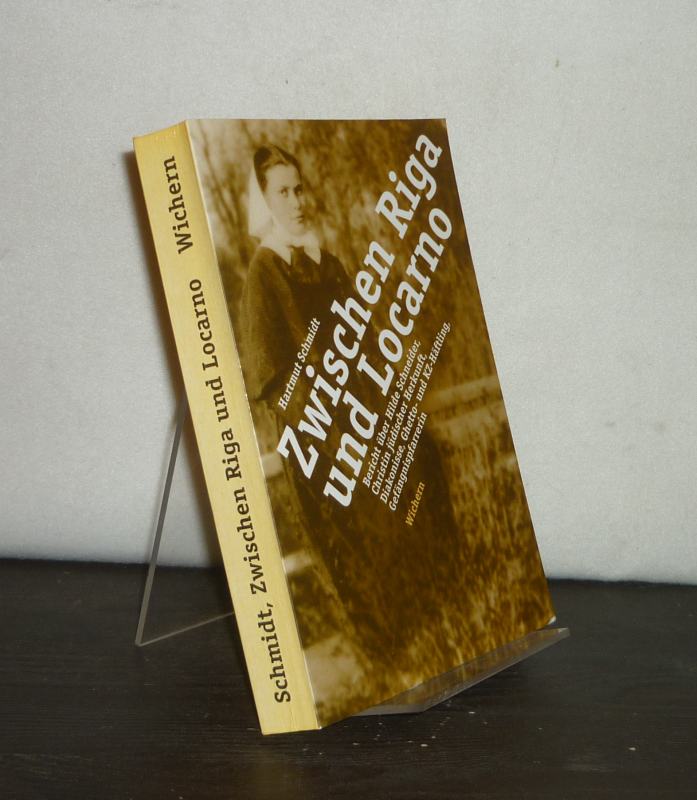
2000Best.-Nr. 3131013Berlin: Wichern-Verlag 2000. 298 Seiten. 8° (17,5-22,5 cm). Illustrierte Orig.-Broschur. [Softcover / Paperback].
1946Best.-Nr. 13981Lodzsh: Tsentraler Yidisher Historisher Komisye baym Tsentral-Komitet fun Poylishe Yidn 1946. 1st edition. Later cloth with original dramatic photgraphic cover mounted on front 8vo 70 1 pages 1 l. includes facsimiles. 21 cm. Poems. "Oysgabes fun Der Tsentraler Yidisher Historisher Komisye baym Tsentral-Komitet fun Poylishe Yidn. Serye yidishe literatur 1." A committee dedicated to recording the fate of Polish Jews published this book length poem by Simkhah Szajewics. Written in the Lodz Ghetto it appeared immediately after the war in 1946; Szajewicz perished in a concentration camp in 1944" from the permanent exhibit at the National Yiddish Book Center which houses their copy in their Rare Book Collection. The book actually includes two long poems: "Lekh-lekha" and "Friling 702 " as well as letters and other related material. See David Roskies interesting reflection on this work and it's stunning photographic cover at jtsa.edu/torah/go-forth-the-grammar-of-remembrance. For more about the author-poet see Chava rosenfarb's essay on Shayevitch in Tablet Magazine at tabletmag.com/sections/arts-letters/articles/the-last-poet-of-lodz. SUBJECTS: Jews -- Persecutions -- Poland -- Lódz. Holocaust Jewish 1939-1945 -- Poetry. Jews -- Correspondence. Expertly rebound in attractive black cloth with the original photographic front cover mounted on the front. Very Good Condition. B HOLO2-110-36-CCALX-'emm H-40-10. Lodzsh: Tsentraler Yidisher Historisher Komisye baym Tsentral-Komitet fun Poylishe Yidn unknown