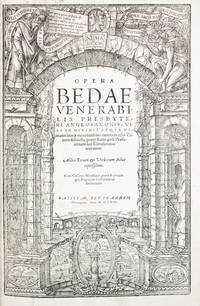
1563réf. 254015Basileae i.e. Basle: Per Joannem Hervagium 1563. First collected edition. Title within architectural border with device of Johann Herwagen. Profusely illustrated with iwoodcut maps music tables diagrams. Text in two columns; with Index. 4 vols. Folio. Contemporary calf rebacked new leather spine labels labels misnumbered later endpapers; covers worn but sound one joint starting but firm. Text show various degrees of slight worming and scattered light foxing but overall a very good sound set of this massive collected edition complete except for the final blank leaf of Volume VI. First collected edition. Title within architectural border with device of Johann Herwagen. Profusely illustrated with iwoodcut maps music tables diagrams. Text in two columns; with Index. 4 vols. Folio. This is the first of three continental editions of the works of Bede the others being from Cologne in 1612 and 1688. Johann Herwage a printer originally from Strassburg married the widow of the great Basel printer Johann Froben and for a while collaborated with his stepson Hieronymus Froben. From 1532 however he again started printing under his own name. RARE ON THE MARKET. Adams B-477 Per Joannem Hervagium unknown books
1931réf. 140941772Philadelphia: David McKay Publisher 1931. First Edition. Near Fine/Very Good. First edition. Unpaginated. Bound in illustrated paper-covered boards. Near Fine with wear along bottom edge and tips faint occasional thumbsoil and foxing in Very Good price-clipped dust jacket with a few short closed tears to edges sticker wear to bottom of front panel rectangular chip to top of back panel with associated closed tear and creasing a little foxing. Illustrated in color throughout. The very first book of Mickey Mouse published by Disney in its rare dust jacket. David McKay, Publisher unknown books
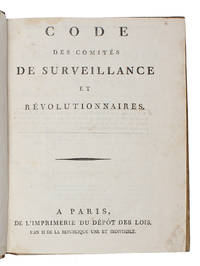
1793réf. 60748Paris Impremerie du depot des lois An II 1793. 4to. In contemporary half calf with gilt lettering and ornamentation to spine. Wear to extremities. Upper part of back hinge split with minor loss of letters. Small dampstain to upper inner margin otherwise a nice copy. 2 VII 2-116 100 8 pp. Exceedingly rare first edition of this highly interesting document being the Code of the Committees of Surveillance containing 106 regulations and guidelines for the functioning of these committees during the French Revolution. The Committees of Surveillance were established during the Reign of Terror September 5 1793 - July 27 1794 as part of the revolutionary government's efforts to identify and suppress counter-revolutionary activities. These committees were tasked with monitoring individuals' behavior enforcing revolutionary laws and ensuring loyalty to the revolutionary government. The document outlines the powers duties and procedures of these committees as well as the penalties for those found to be opposing the revolution providing a unique and fascinating insight into the legal and administrative framework of revolutionary France – arguable one of the most profound and radical moments in modern European history. The Committee of Surveillance in France during 1793 was established as a part of the radical phase of the French Revolution. Its function was to oversee and monitor the activities of suspected counter-revolutionaries and enemies of the Revolution as well as to enforce laws related to internal security and revolutionary principles. The committee was tasked with identifying individuals or groups deemed to be a threat to the revolutionary government often leading to arrests interrogations and in some cases executions by the Revolutionary Tribunal. It played a significant role in the Reign of Terror a period marked by extreme political violence and repression in France. The present work is of the utmost scarcity. We have not been able to trace a single copy at auction and OCLC only lists one copy in Paris. Nadaillac Catalogue d’une Collection Importante Sur la Revolution Francaise 724 unknown
1793réf. 60748Paris, Impremerie du depot des lois, An II (1793). 4to. In contemporary half calf with gilt lettering and ornamentation to spine. Wear to extremities. Upper part of back hinge split, with minor loss of letters. Small dampstain to upper inner margin, otherwise a nice copy. (2), VII, (2)-116, 100, 8 pp.
1976réf. 43497San Francisco CA Buddhist Text Translation Society 1976. Paperback First Edition First Printing so stated. First Edition First Printing so stated. Very Near Fine in Wraps: shows only the most minute indications of use: just a hint of rubbing and the faintest toning to the white background field of the wrapper covers; there is a small very faint thumb smudge at the fore-edge; faint foxing at the top edge. The Binding shows barely discernible lean while remaining perfectly secure; the text is clean. Very close to 'As New'. NOT a Remainder Book-Club or Ex-Library. 8vo. 339pp. Primary Translation by Bhikshuni Heng Yin and reviewed by Bhikshuni Heng Ch'ih. Edited by Bhikshu Heng Kuan and Upasaka Kuo Chou Rounds. Trade Paperback. Buddhist Text Translation Society, paperback
1893réf. 0002122CROTON-ON-HUDSON WESTCHESTER COUNTY NEW YORK. Good. 1893. On offer is a super original manuscript relic of late 19th Century secret societies and fraternal organizations being an 1893 - 1895 IMPROVED ORDER OF RED MEN TRIBES Minutes Book. The book proper published specifically for the Club has printed forms for the IMPROVED ORDER OF RED MEN TRIBES. Pages on the left side of the open ledger have a Printed Heading with space for filling in information by hand. The page heading reads: "HUNTING GROUNDS OF" "WIGWAM OF" "TRIBE NO" "IMP. O.R.M." "SLEEP" and "MOON G.S.D.4" then below the heading information is printed information for the TRIBE to record Minutes Activities Events the INITIATION OF NEW MEMBERS etc. Includes such titles as: "Keeper of Wampum" "Application of Paleface" "Record of Previous Council Fire read" "Twig box was opened by" "New Business" "Council Fire was then Quenched" etc. Almost all pages are filled in with various handwritten minutes and notes about the REDMEN meetings including dates 1893-1895 place Croton-on-Hudson New York events New Member Induction Bill needing Payment Committee Reports Problem members General Problems Plans Political Stands etc. Pinned-on to one of the pages is a 2 page handwritten letter on "Improved Order of Red Men Wigwam of Kitchawau Tribe No. 237" letterhead. We cannot help but note that this book and the Society it represents predates the Washington Redskins baseball team controversy declaring the team name racist yet this fraternal organization clearly honors Native Americans and stands as an homage to their tribal attributes. Please read the Wiki article after the description. The ledger is also a treasure trove of genealogical and social history of the Westchester County area with many many names of members and their activities. The book has a leather spine and corners leather edged with gilt paper title label on front cover 8.5" x 13.5" pages printed on watermarked paper "Kenilworth" approximately 200-300 unnumbered pages. The front cover is split at its spine fold and is almost disbound. Internally a couple signatures including the first are shaky; one page is loose and is pinned-on to another page otherwise the pages are quite nice - tight bright and clean with writing that is clear and fully legible. HISTORICAL NOTES: Wiki: The Improved Order of Red Men traces its origin to certain secret patriotic societies founded before the American Revolution. They were established to promote Liberty and to defy the tyranny of the English Crown. Among the early groups were: The Sons of Liberty the Sons of St. Tammany and later the Society of Red Men. Their rituals and regalia are modeled after those used by Native Americans. The organization claimed a membership of about half a million in 1935 but has declined to less than 38000. Notable members: Theodore Roosevelt Warren G. Harding and Franklin D. Roosevelt. ; Manuscript; Folio - over 12" - 15" tall; KEYWORDS: HISTORY OF RED MEN FRATERNITY IMPROVED ORDER OF THE RED MEN KITCHAWAU TRIBE CROTON-ON-HUDSON WESTCHESTER COUNTY NEW YORK WASHINGTON REDSKINS SECRET PATRIOTIC SOCIETIES AMERICAN REVOLUTION THE SONS OF LIBERTY THE SONS OF ST. TAMMANY THE SOCIETY OF RED MEN DEGREE OF POCAHONTAS KNIGHTS OF PYTHIAS FRATERNAL ORGANIZATIONS SOCIETIES BROTHERHOODS SECRET SOCIETIES MOUND CITY LODGE PYTHIAN CASTLES PYTHIAN SISTERS DRAMATIC ORDER KNIGHTS OF KHORASSAN THE NOMADS OF AVRUDAKA PYTHIAN SUNSHINE GIRLS AND THE JUNIOR ORDER ORDER OF THE EASTERN STAR HALF CENTURY MATRONS CLUB PRINCE HALL AFFILIATION SISTERHOODS RELIGION AOKMC THE ANCIENT ORDER OF KNIGHTS OF THE MYSTIC CHAIN MASONS MASONIC FREEMASONS CHIVALRY ARCANE OCCULT AMERICANA HANDWRITTEN MANUSCRIPT AUTOGRAPHED AUTHORS DOCUMENT LETTER AUTOGRAPH KEEPSAKE WRITER HAND WRITTEN DOCUMENTS SIGNED LETTERS MANUSCRIPTS HISTORICAL HOLOGRAPH WRITERS AUTOGRAPHS PERSONAL MEMOIR MEMORIAL PERSONAL HISTORY ARCHIVE DIARY DIARIES JOURNAL LOG PRIMARY SOURCE FIRST HAND ACCOUNT SOCIAL HISTORY PERSONAL STORIES LIVING HISTORY ANTIQUITÉ CONTRAT VÉLIN DOCUMENT MANUSCRIT PAPIER ANTIKE BRIEF PERGAMENT DOKUMENT MANUSKRIPT PAPIER OGGETTO D'ANTIQUARIATO ATTO VELINA DOCUMENTO MANOSCRITTO CARTA ANTIGÜEDAD HECHO VITELA DOCUMENTO MANUSCRITO PAPEL . hardcover
réf. #[61105]France first half of the 17th century. Loose only card board front cover remaining. In high quality modern cassette with a part of the original green dyed vellum front cover with a gold royal coat-of-arms pasted on the front. 81 paper sheets. Exlibris Daniel de Bruin. The coats-of-arms are hand painted and coloured many with gold and silver. ca. 18x14 cm. Most depict full armorial regalia. Some are copperengraved. All in good condition. With many manuscript and printed notes and annotations. This manuscript comes from the collection of Henry Chandon de Briailles 1898-1937 and his son. Some loose coats-of-arms out of this collection were auctioned by Christies Amsterdam on 15 February 2005 nrs. 17 19 31 and 673 and at Bubb Kuyper Haarlem on 19 November 2005. All coats-of-arms are of families that were conseillers advisors or presidents of the French Court. Names a.o.: Charles de Lorraine Duc de Mayenne 1554-1611 Charles de Lorraine Duc d'Elbeuf in 1581 died 1605 Spinola de los Balbares died 1630 Jacques d'Urfé from 1596 Grand Ecuyer in Savoye Michel Eygaem de Montaigne La Motte 1533-1591 Chabannes de Rochebrune Chanlecy. H197 hardcover
1774Kopenhagen und Leipzig, Heinecke und Faber, 1774-75. 4to. Bound in one contemp. hcalf. Raised bands. Lower compartments with scratches. Gilt lineborders on spine. Light wear to spine ends. Spine a bit rubbed. Titlelabel with gilt lettering. Stamp on title-page. (16),328 XVI,244 pp., 1 large folded engraved map (Nyt carte over Island, ved Erichsen og Schönning, 1771), 51 engraved plates, some folding (numb. I-L, + XXX bis). A few scattered brownspots. Occassional light browning.
1774réf. 56449Kopenhagen und Leipzig, Heinecke und Faber, 1774-75. 4to. Bound in one contemp. hcalf. Raised bands. Lower compartments with scratches. Gilt lineborders on spine. Light wear to spine ends. Spine a bit rubbed. Titlelabel with gilt lettering. Stamp on title-page. (16),328XVI,244 pp., 1 large folded engraved map (Nyt carte over Island, ved Erichsen og Schönning, 1771), 51 engraved plates, some folding (numb. I-L, + XXX bis). A few scattered brownspots. Occassional light browning.
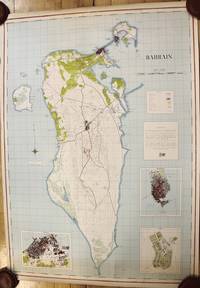
1951réf. M9730London c.1951-1953. Very Good mounted on contemporary linen. Notes: A very scarce wall map of Bahrain published jointly by the Royal Geographical Society and the Bahrain Petroleum Company. The map depicts roads tracks buildings cultivated areas marshland and the Bahrain Refinery. Major cities as Awali Manama Town and Muharraq Town are shown in detail. The map has three large insets of Muharraq Awali and Manama. Bahrain small Arab state situated in a bay on the southwestern coast of the Persian Gulf. It is an archipelago consisting of Bahrain Island and some 30 smaller islands. Its name is from the Arabic term al-baḥrayn meaning “two seas.” The economy has long relied on processing crude oil from neighbouring countries and more recently the financial commercial services and communications sectors have grown markedly as has tourism. Britain’s decision to withdraw all of its forces from the gulf in 1968 led Bahrain’s independence in August 1971. A treaty of friendship was signed with the United Kingdom terminating Bahrain’s status as a British protectorate. Size : 925x655 mm 36.42x25.79 Inches Coloring: Hand Colored Category: Maps Asia Middle East Persian Gulf; unknown
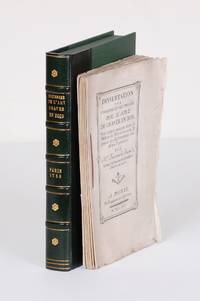
1758réf. 76869Paris: J. Barbou 1758. unbound cord tied housed in a green half-morocco goat over cloth boards clamshell case spine tooled in gold leaf with title author and date. large 12mo. unbound cord tied housed in a green half-morocco goat over cloth boards clamshell case spine tooled in gold leaf with title author and date. 92 3 pages. Pour éclaircir quelques traits de l"histoire de l'Imprimerie & prouver que Guttemberg n'en est pas l'Inventeur. Very rare first edition Bigmore and Wyman p.227. Unbound textblock lightly soiled with minor creasing at corners. Faint moisture staining throughout with some affecting the text. In this text Fournier sets out to prove that Gutenberg was not the inventor of the printing press by examining the history of printing. He believed that the technology Gutenberg made popular existed long before the German printer's work. Fournier also followed up this text with two additional works which are not present: De l'origine et des productions de l'imprimerie primitive en taille de bois 1759 and Observations sur un ouvrage intitulé Vindiciae Typographicae 1760. These two works provided further discussion of the origins of woodcut prints including a passage refuting popular belief about the origin wood engraving and some ideas for further study. Fournier 1712--1768 was born in Paris and trained as a wood engraver and type founder being a member of the 18th century dynasty of the well-known Fournier family. He later turned to steel engraving. He published a table of the proportions of the different printing characters whose purpose was to propose for all typefaces a fixed measurement in "typographic points" and a systematic gradation. He worked closely with the collaborators of the Encyclopédie providing the printer Le Breton with all the documentation relating to the typographic foundry and plans for his own instruments as well as providing Diderot with his collection of ancient alphabets. Finally after multiple disputes with his Parisian colleagues he became infamous for the printing of his famous Manuel Typographique 1764 1766 just prior to his death. J. Barbou unknown
1758réf. 76869Paris: J. Barbou 1758. unbound cord tied housed in a green half-morocco goat over cloth boards clamshell case spine tooled in gold leaf with title author and date. large 12mo. unbound cord tied housed in a green half-morocco goat over cloth boards clamshell case spine tooled in gold leaf with title author and date. 92 3 pages. Pour éclaircir quelques traits de l"histoire de l'Imprimerie & prouver que Guttemberg n'en est pas l'Inventeur. Very rare first edition Bigmore and Wyman p.227. Unbound textblock lightly soiled with minor creasing at corners. Faint moisture staining throughout with some affecting the text. In this text Fournier sets out to prove that Gutenberg was not the inventor of the printing press by examining the history of printing. He believed that the technology Gutenberg made popular existed long before the German printer's work. Fournier also followed up this text with two additional works which are not present: De l'origine et des productions de l'imprimerie primitive en taille de bois 1759 and Observations sur un ouvrage intitulé Vindiciae Typographicae 1760. These two works provided further discussion of the origins of woodcut prints including a passage refuting popular belief about the origin wood engraving and some ideas for further study. Fournier 1712--1768 was born in Paris and trained as a wood engraver and type founder being a member of the 18th century dynasty of the well-known Fournier family. He later turned to steel engraving. He published a table of the proportions of the different printing characters whose purpose was to propose for all typefaces a fixed measurement in "typographic points" and a systematic gradation. He worked closely with the collaborators of the Encyclopédie providing the printer Le Breton with all the documentation relating to the typographic foundry and plans for his own instruments as well as providing Diderot with his collection of ancient alphabets. Finally after multiple disputes with his Parisian colleagues he became infamous for the printing of his famous Manuel Typographique 1764 1766 just prior to his death. J. Barbou unknown books
1968réf. 2091502135413708Not Available 1968. Soft Cover. Fine. Volume: 49 Not Available paperback
1973réf. 2091502135703607National Palace Museum Gakushu Kenkyusha 1973. Soft Cover. Fine. The book is in fine condition. National Palace Museum Gakushu Kenkyusha paperback
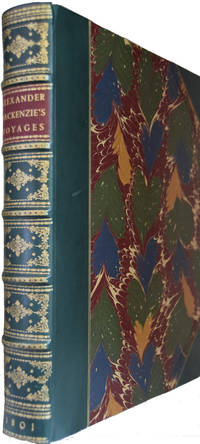
1801réf. 37620London: Printed for T. Cadell 1801. very good to fine. 4to. 27cm the First Edition cxxxii412p. complete with half title engraved frontis portrait by P. Condé after T. Lawrence and 3 engraved folding maps some transfer from the portrait and maps some slight toning to the text in antique style binding of half dark green calf wide gilt decorated raised bands gilt borders and center panel decorations crushed crimson morocco label marbled boards and endpapers in fine condition attractively bound. Copies of MacKenzie with the half title are scarce. ~ ~ T.P.L. 658. Lande 1317. Sabin 43414. Strathern 343. Peel 25. Gagnon 2190. Morgan p240. Hill p187. . First edition of the classic narrative of the first white man to cross the continent. "the earliest expedition made by a white man in this direction. His investigations although pursued at so early a period of Arctic exploration were remarkable for their accuracy; Sir John Franklin more than once expressed his surprise at being able to corroborate their correctness in his own explorations. Some Indian vocabularies are included. Sabin. Mackenzie's journals recount his two expeditions undertaken on behalf of the North West Company in their attempt to break the Hudson's Bay Company's monopoly of the fur trade. The first expedition in 1879 from Fort Chipewyan on Lake Athabaska down what is now known as the Mackenzie River to the Arctic constitutes the first trip to the Arctic from the Canadian Prairies. The second in 1792-93 from Fort Chipewyan over the Rocky Mountains by the Peace and Fraser Rivers to the Pacific is distinguished as the first overland expedition to reach the Pacific north of Mexico. The maps are the earliest of certain parts of Canada. Also included is a lengthy account of the development of the fur trade in the North West generally attributed to the author's cousin Roderick Mackenzie. Printed for T. Cadell unknown
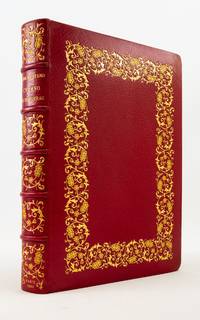
1899réf. ST20804Paris: Armand Magnier 1899. No. 42 OF 500 COPIES this ONE OF 20 ON JAPON WITH ENGRAVINGS IN THREE STATES. 300 x 207 mm. 12 x 8". 4 p.l. ELEGANT SCARLET CRUSHED MOROCCO GILT AND INLAID BY THE CLUB BINDERY and LEON MAILLARD Finisher both names stamp-signed in gilt on front turn-ins covers framed by curling gilt vines bearing citron morocco blossoms a total of 104 inlays on each cover raised bands spine panels with gilt vine circlets blooming with a total of 20 inlaid citron morocco flowers gilt lettering turns-ins elaborately gilt marbled endpapers top edge gilt other edges untrimmed. Original paper wrappers bound in the pictorial front cover present in three additional states black & white B&W before letters and color. In slightly worn matching morocco-backed jacket. With 54 wood engravings by Romagnol after François Thévenot cover and portrait Adrien Moreau Act I Charles Léandre Act II Albert Laurens Act III François Flameng Act IV and Albert Besnard Act V including five full-page plates all in three states one before letters the full-page plates also in a color state separately furnished to subscribers by the publisher per a notice bound in at the end of the text. Front pastedown with morocco bookplate of Robert Hoe. Lower corners a bit bumped tail edge of lower board with shallow one-inch dent occasional paper flaws or discoloration to edges of leaves but an excellent copy the interior clean and fresh and the binding lustrous. This is a luxurious illustrated edition of Rostand's classic work offered in a sumptuous binding done by the Club Bindery for its co-founder and manager Robert Hoe. Rostand's influential and enduringly popular 1897 verse play in five acts--sometimes referred to colloquially as the "Romance of the Nose"--is loosely based upon the real-life story of the French author and duelist Cyrano de Bergerac 1619-55 who was famous for having a prodigious proboscis. A theatrical triumph from its opening night the play focuses on the eloquent Cyrano's unrequited love for the comely Roxanne whom he must court as secret proxy for a friend of handsome visage but wooden tongue. Rostand 1868-1918 wrote a number of successful plays often like "Cyrano" based on figures from French history. The present beautiful large-format copy was originally owned by Robert Hoe a founder of the Grolier Club and one of the world's great book collectors. After Grolier was established in 1884 it soon became apparent that the country's few established hand binders were overtaxed in providing repairs and rebinding for the club members' rapidly accumulating acquisitions. As a consequence in 1895 Grolier members along with Edwin Holden and other wealthy collectors established the Club Bindery in order to attract European craftsmen to provide close to home fine quality binding work rivalling what was available abroad. The Club Bindery was in operation until 1909 with Hoe being its manager and most important client. It provided bindings that tended to be traditional in style--though frequently with elaborate decoration--and that lived up to its patrons' expectations in terms of excellence. The first members of the staff of the Club Bindery were the Englishmen R. W. Smith and Frank Mansell. They were subsequently joined by a number of French binders chief among them being Leon Maillard who had worked previously for Cuzin Gruel and Marius-Michel and whose precise and intricate finishing is impressively demonstrated on our binding here. It is said by Beverly Chew that Hoe 1839-1911 had a collection that was "the finest America has ever contained." He acquired illuminated manuscripts early printing he owned a Gutenberg Bible on paper and one on vellum fine bindings French and English literature and Americana and when his library was sold in 1911-12 it fetched nearly $2 million a record that held until the Streeter sale more than 50 years later. The present volume represents the fine level of aesthetic achievement typical of the bindery and it is especially impressive because of its significant dimensions. Armand Magnier unknown
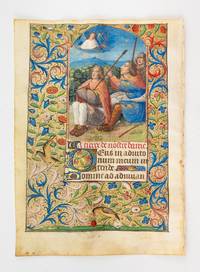
1500réf. ST20810PParis ca. 1500. 165 x 117 mm. 6 1/2 x 4 5/8". Single column 18 lines in a gothic book hand. Rubrics in red line fillers in blue and pink with gold bezant five one-line initials in burnished gold on pink and blue ground one two-line initial in blue on gold ground with a flower in the center one three-line initial in blue filled with ivy on gold ground recto with panel border of colorful flowers vase and acanthus verso with A LARGE ARCH-TOPPED MINIATURE OF THE ANNUNCIATION TO THE SHEPHERDS surrounded by A FULL BORDER of acanthus flowers and two birds all on a painted gold ground. Slight soiling to vellum but a very well-preserved leaf in fine condition. From what was surely a costly Book of Hours this leaf features a charming and skillfully painted miniature of the Annunciation to the Shepherds attributable to the workshop of Jean Pichore fl. ca. 1502-20 a major figure among illuminators of the period and one of the most sought-after artists in France at the turn of the 16th century. Depicting the traditional subject associated with the hour of Terce our miniature portrays as usual an angel appearing to shepherds tending their flock bringing news of the birth of Christ. Although the biblical narrative suggests that the shepherds were startled by the angel's appearance the three figures in this miniature appear remarkably unmoved--in fact only one of them seems to take any notice at all. The first shepherd sits on the ground looking straight ahead; the second holds his hands in prayer but looks little more than well prayerful at the angel in the sky; and a third figure maintains a slightly aloof expression taking no particular interest in the unfolding miraculous event. What may seem to be indifference can be explained easily enough by the artist's successful portrayal of nighttime cold! All three shepherds are thickly dressed one with his arms pressed tightly against his chest another with a hood partly covering his face and the sheep are tightly huddled together into one woolly white cluster. Another manifestation of the artist's success here is seen in the particularly well done molding of the faces with subtle shading attractively rendered features and clear individuation. Moreover although the shepherds seem essentially unmoved their garments are dusted with a glistening gold radiance from above a further subtle touch revealing a high level of achievement on the part of the painter. Finally the borders are one last source of delight with a small bird shown in mid-flight and a second one investigating a single strawberry that seems to have been placed there just for him. All of these indications of sophistication suggest that the original manuscript must have been commissioned by a patron able to pay a premium for the work of a highly skilled atelier. unknown
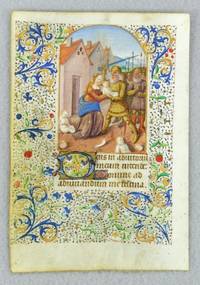
1450réf. ST11774-85Paris ca. 1450. 159 x 108 mm. 6 1/4 x 4 1/4". Single column four lines of text on the verso 15 on the recto in a very pleasing gothic book hand. Attractively matted. Recto with a line filler in colors and gold verso with a one-line initial in burnished gold on a maroon and blue background with white tracery and a three-line "D" in blue and white enclosing a spray of violets in the same colors the capital on a burnished gold ground the same side WITH A FULL SWIRLING BORDER of acanthus leaves flowers and berries and many burnished gold ivy leaves ENCLOSING A BLOODY ILLUMINATED MINIATURE OF THE MASSACRE OF THE INNOCENTS measuring approximately 78 x 54 mm. Fore and lower margins on the side with the miniature a bit rubbed and with a faint patina reflecting frequent use also minor fading and loss of paint and gold in the same place otherwise in fine condition THE MINIATURE itself REMARKABLY WELL PRESERVED WITHOUT ANY EROSION OF PIGMENT. This leaf comes from a Book of Hours decorated by extremely skilled members of what must have been a first-class workshop. The Massacre of the Innocents cannot help but be a moving subject and the composition here as well as the painter's considerable ability add to the emotional impact in the present miniature. The center of the scene is dominated by the gold-armored gray-bearded soldier whose sword is raised over the head of a woman clinging to her son. The blood-spattered foreground is littered with the dismembered bodies of infants looking like so many broken dolls. On the left we see a row of modest cottages providing considerable depth as they recede toward distant hills. On the right stands a crowd of grim-faced soldiers all as elderly as their commander and seemingly following orders that are unwelcomed; it is perhaps the acute sadness in their faces that makes this scene especially memorable. The clear sky green fields and serene blue mountains in the distance contrast markedly with the horrific events unfolding. unknown
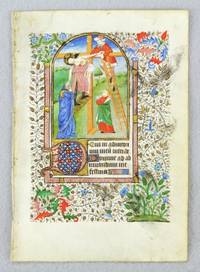
1420réf. ST12005fFrance probably Paris ca. 1420. 210 x 146 mm. 8 1/4 x 5 3/4". Single column recto with five lines of text verso with 16 lines all in a very pleasing very regular gothic book hand. Attractively matted. Rubrics in red verso with a one-line and two two-line initials as well as a line filler in colors and burnished gold recto with a one-line initial and a line filler in the same style and with a quite large five-line "D" in pink and white with enclosed floral diapering all on a burnished gold ground the same side WITH A LOVELY FULL BORDER of swirling hairline stems bearing numerous leaves and berries of burnished gold and with sprays of acanthus leaves and flowers in multiple colors spilling from the corners this ENCLOSING A POIGNANT ARCH-TOPPED MINIATURE OF THE REMOVAL OF CHRIST FROM THE CROSS measuring approximately 85 x 60 mm. the miniature within a thin gold frame and enclosed in turn on three sides by bars in colors and gold the scene showing two men on ladders unfastening Christ's lifeless body from the cross while Joseph of Arimathea waits below clutching cloth to be used for a burial shroud as the Madonna at the lower left of the picture reaches up to clasp her son's bloody arm. With a small cross stitched in white thread in each upper corner. ◆A little soiling right along hinge edge a few smudges in the border a couple of tiny flakes of paint missing from the cross and the sky otherwise fine the vellum clean and fresh the colors rich and the gold lustrous. This is an especially sorrowful scene depicted with power grace and sensitivity by an artist demonstrating very considerable skill in composition and execution. The scene is well designed with the cross providing a device for focus at the center of the miniature. Nicodemus identified by his expensive attire is atop a ladder behind the cross lowering Christ's limp body onto the shoulder of another man probably a servant whose ladder is set against the front. Despite the fact that the corpse is more bones than flesh the artist has made it seem a heavy burden draped over the shoulder of the man as he walks backward down his ladder. Fully stretched out Christ's left arm is held for balance by Nicodemus at the top right while the other arm hangs down toward the Virgin. While we can only see her back her image evokes great pathos as she reaches up with both hands to grasp the mangled arm of her son his blood running from his hand onto hers. Joseph of Arimathea whose position anchors the right side of the picture looks on with concern tightly holding linen to shroud the body. St. John and Mary Magdalen conventional participants in the Deposition are not present in this miniature. While it is possible and even likely that the same artist produced this scene and the miniature of Christ Carrying the Cross this one is better as the faces are more deftly painted and the folds in the various garments are more clearly defined. unknown
1899réf. ST20804Paris: Armand Magnier 1899. No. 42 OF 500 COPIES this ONE OF 20 ON JAPON WITH ENGRAVINGS IN THREE STATES. 300 x 207 mm. 12 x 8". 4 p.l. ELEGANT SCARLET CRUSHED MOROCCO GILT AND INLAID BY THE CLUB BINDERY and LEON MAILLARD Finisher both names stamp-signed in gilt on front turn-ins covers framed by curling gilt vines bearing citron morocco blossoms a total of 104 inlays on each cover raised bands spine panels with gilt vine circlets blooming with a total of 20 inlaid citron morocco flowers gilt lettering turns-ins elaborately gilt marbled endpapers top edge gilt other edges untrimmed. Original paper wrappers bound in the pictorial front cover present in three additional states black & white B&W before letters and color. In slightly worn matching morocco-backed jacket. With 54 wood engravings by Romagnol after François Thévenot cover and portrait Adrien Moreau Act I Charles Léandre Act II Albert Laurens Act III François Flameng Act IV and Albert Besnard Act V including five full-page plates all in three states one before letters the full-page plates also in a color state separately furnished to subscribers by the publisher per a notice bound in at the end of the text. Front pastedown with morocco bookplate of Robert Hoe. Lower corners a bit bumped tail edge of lower board with shallow one-inch dent occasional paper flaws or discoloration to edges of leaves but an excellent copy the interior clean and fresh and the binding lustrous. This is a luxurious illustrated edition of Rostand's classic work offered in a sumptuous binding done by the Club Bindery for its co-founder and manager Robert Hoe. Rostand's influential and enduringly popular 1897 verse play in five acts--sometimes referred to colloquially as the "Romance of the Nose"--is loosely based upon the real-life story of the French author and duelist Cyrano de Bergerac 1619-55 who was famous for having a prodigious proboscis. A theatrical triumph from its opening night the play focuses on the eloquent Cyrano's unrequited love for the comely Roxanne whom he must court as secret proxy for a friend of handsome visage but wooden tongue. Rostand 1868-1918 wrote a number of successful plays often like "Cyrano" based on figures from French history. The present beautiful large-format copy was originally owned by Robert Hoe a founder of the Grolier Club and one of the world's great book collectors. After Grolier was established in 1884 it soon became apparent that the country's few established hand binders were overtaxed in providing repairs and rebinding for the club members' rapidly accumulating acquisitions. As a consequence in 1895 Grolier members along with Edwin Holden and other wealthy collectors established the Club Bindery in order to attract European craftsmen to provide close to home fine quality binding work rivalling what was available abroad. The Club Bindery was in operation until 1909 with Hoe being its manager and most important client. It provided bindings that tended to be traditional in style--though frequently with elaborate decoration--and that lived up to its patrons' expectations in terms of excellence. The first members of the staff of the Club Bindery were the Englishmen R. W. Smith and Frank Mansell. They were subsequently joined by a number of French binders chief among them being Leon Maillard who had worked previously for Cuzin Gruel and Marius-Michel and whose precise and intricate finishing is impressively demonstrated on our binding here. It is said by Beverly Chew that Hoe 1839-1911 had a collection that was "the finest America has ever contained." He acquired illuminated manuscripts early printing he owned a Gutenberg Bible on paper and one on vellum fine bindings French and English literature and Americana and when his library was sold in 1911-12 it fetched nearly $2 million a record that held until the Streeter sale more than 50 years later. The present volume represents the fine level of aesthetic achievement typical of the bindery and it is especially impressive because of its significant dimensions. Armand Magnier unknown books
1500réf. ST20810PParis ca. 1500. 165 x 117 mm. 6 1/2 x 4 5/8". Single column 18 lines in a gothic book hand. Rubrics in red line fillers in blue and pink with gold bezant five one-line initials in burnished gold on pink and blue ground one two-line initial in blue on gold ground with a flower in the center one three-line initial in blue filled with ivy on gold ground recto with panel border of colorful flowers vase and acanthus verso with A LARGE ARCH-TOPPED MINIATURE OF THE ANNUNCIATION TO THE SHEPHERDS surrounded by A FULL BORDER of acanthus flowers and two birds all on a painted gold ground. Slight soiling to vellum but a very well-preserved leaf in fine condition. From what was surely a costly Book of Hours this leaf features a charming and skillfully painted miniature of the Annunciation to the Shepherds attributable to the workshop of Jean Pichore fl. ca. 1502-20 a major figure among illuminators of the period and one of the most sought-after artists in France at the turn of the 16th century. Depicting the traditional subject associated with the hour of Terce our miniature portrays as usual an angel appearing to shepherds tending their flock bringing news of the birth of Christ. Although the biblical narrative suggests that the shepherds were startled by the angel's appearance the three figures in this miniature appear remarkably unmoved--in fact only one of them seems to take any notice at all. The first shepherd sits on the ground looking straight ahead; the second holds his hands in prayer but looks little more than well prayerful at the angel in the sky; and a third figure maintains a slightly aloof expression taking no particular interest in the unfolding miraculous event. What may seem to be indifference can be explained easily enough by the artist's successful portrayal of nighttime cold! All three shepherds are thickly dressed one with his arms pressed tightly against his chest another with a hood partly covering his face and the sheep are tightly huddled together into one woolly white cluster. Another manifestation of the artist's success here is seen in the particularly well done molding of the faces with subtle shading attractively rendered features and clear individuation. Moreover although the shepherds seem essentially unmoved their garments are dusted with a glistening gold radiance from above a further subtle touch revealing a high level of achievement on the part of the painter. Finally the borders are one last source of delight with a small bird shown in mid-flight and a second one investigating a single strawberry that seems to have been placed there just for him. All of these indications of sophistication suggest that the original manuscript must have been commissioned by a patron able to pay a premium for the work of a highly skilled atelier. unknown books
1420réf. ST12005fFrance probably Paris ca. 1420. 210 x 146 mm. 8 1/4 x 5 3/4". Single column recto with five lines of text verso with 16 lines all in a very pleasing very regular gothic book hand. Attractively matted. Rubrics in red verso with a one-line and two two-line initials as well as a line filler in colors and burnished gold recto with a one-line initial and a line filler in the same style and with a quite large five-line "D" in pink and white with enclosed floral diapering all on a burnished gold ground the same side WITH A LOVELY FULL BORDER of swirling hairline stems bearing numerous leaves and berries of burnished gold and with sprays of acanthus leaves and flowers in multiple colors spilling from the corners this ENCLOSING A POIGNANT ARCH-TOPPED MINIATURE OF THE REMOVAL OF CHRIST FROM THE CROSS measuring approximately 85 x 60 mm. the miniature within a thin gold frame and enclosed in turn on three sides by bars in colors and gold the scene showing two men on ladders unfastening Christ's lifeless body from the cross while Joseph of Arimathea waits below clutching cloth to be used for a burial shroud as the Madonna at the lower left of the picture reaches up to clasp her son's bloody arm. With a small cross stitched in white thread in each upper corner. ◆A little soiling right along hinge edge a few smudges in the border a couple of tiny flakes of paint missing from the cross and the sky otherwise fine the vellum clean and fresh the colors rich and the gold lustrous. This is an especially sorrowful scene depicted with power grace and sensitivity by an artist demonstrating very considerable skill in composition and execution. The scene is well designed with the cross providing a device for focus at the center of the miniature. Nicodemus identified by his expensive attire is atop a ladder behind the cross lowering Christ's limp body onto the shoulder of another man probably a servant whose ladder is set against the front. Despite the fact that the corpse is more bones than flesh the artist has made it seem a heavy burden draped over the shoulder of the man as he walks backward down his ladder. Fully stretched out Christ's left arm is held for balance by Nicodemus at the top right while the other arm hangs down toward the Virgin. While we can only see her back her image evokes great pathos as she reaches up with both hands to grasp the mangled arm of her son his blood running from his hand onto hers. Joseph of Arimathea whose position anchors the right side of the picture looks on with concern tightly holding linen to shroud the body. St. John and Mary Magdalen conventional participants in the Deposition are not present in this miniature. While it is possible and even likely that the same artist produced this scene and the miniature of Christ Carrying the Cross this one is better as the faces are more deftly painted and the folds in the various garments are more clearly defined. unknown books
1450réf. ST11774-85Paris ca. 1450. 159 x 108 mm. 6 1/4 x 4 1/4". Single column four lines of text on the verso 15 on the recto in a very pleasing gothic book hand. Attractively matted. Recto with a line filler in colors and gold verso with a one-line initial in burnished gold on a maroon and blue background with white tracery and a three-line "D" in blue and white enclosing a spray of violets in the same colors the capital on a burnished gold ground the same side WITH A FULL SWIRLING BORDER of acanthus leaves flowers and berries and many burnished gold ivy leaves ENCLOSING A BLOODY ILLUMINATED MINIATURE OF THE MASSACRE OF THE INNOCENTS measuring approximately 78 x 54 mm. Fore and lower margins on the side with the miniature a bit rubbed and with a faint patina reflecting frequent use also minor fading and loss of paint and gold in the same place otherwise in fine condition THE MINIATURE itself REMARKABLY WELL PRESERVED WITHOUT ANY EROSION OF PIGMENT. This leaf comes from a Book of Hours decorated by extremely skilled members of what must have been a first-class workshop. The Massacre of the Innocents cannot help but be a moving subject and the composition here as well as the painter's considerable ability add to the emotional impact in the present miniature. The center of the scene is dominated by the gold-armored gray-bearded soldier whose sword is raised over the head of a woman clinging to her son. The blood-spattered foreground is littered with the dismembered bodies of infants looking like so many broken dolls. On the left we see a row of modest cottages providing considerable depth as they recede toward distant hills. On the right stands a crowd of grim-faced soldiers all as elderly as their commander and seemingly following orders that are unwelcomed; it is perhaps the acute sadness in their faces that makes this scene especially memorable. The clear sky green fields and serene blue mountains in the distance contrast markedly with the horrific events unfolding. unknown books
1850Very Good Burmese Original dark brown leather with embossing on the front board with an initial-like symbol. The black script in ink with several pencil annotations on rectangular pieces of thick hand-made mulberry paper. Closed size: 38x12,5 cm. Open size: 550x38 cm. Text in Pali, written in Burmese "round" script, richly illustrated in red, black, white, and yellow from the most influential Buddhist and astrological texts of the region. Well-preserved and in very good condition. Extremely rare example of one of the longest and a richly illustrated parabaik from Burma, "reflecting an old system of Theravardan magical beliefs pertaining to Burma / Myanmar over 100 years ago". A highly collectible item from the pre-colonial period of the Konbaung dynasty, formerly known as the Alompra dynasty, the Third Burmese Empire, the last dynasty that ruled Burma/Myanmar from 1752 to 1885, Buddhist Myanmar. With its open size, it is extremely rare in length with 44 folds; "The longest one would have 64 folds" (Harvard online). The scenes might show episodes from the Buddhist folk tales popular in Burma towards the end of the 19th century including many ancient tables and ca. 40 specific depictions of Buddha's life, Buddhist practices, some historical scenes, and religious practices like sky burial scenes, etc, as well as astrological and astronomical chapters. Folding-book manuscripts (Parabaiks in Burmese) are a type of writing material historically used in Mainland Southeast Asia, particularly in the areas of present-day Myanmar, Thailand, Laos, and Cambodia. The manuscripts are made of thick paper, usually of the Siamese rough bush (Khoi in Thai and Lao) tree or the paper mulberry, glued into a very long sheet and folded in a concertina fashion, with the front and back lacquered to form protective covers or attached to decorative wood covers. The unbound books are made in either white or black varieties, with the paper being undyed in the former and blackened with soot or lacquer in the latter. Along with paper made from bamboo and palm leaves, parabaik were the main medium for writing and drawing in early modern Burma/Myanmar.
1887réf. 47165New Haven Conn. J.D. & E.S. Dana 1887. 8vo. Contemporary half calf. Gilt lettering to spine. A small stamp to top of title-page. In: "The American Journal of Science. Editors James D. and Edward S. Dana" Third series Vol. XXXIV July to December 1887. VIII500 pp. textillustr. and 10 plates. Entire volume offered. The joint paper: pp. 333-345 and textillustr. Apparatus. A few faint brownspots to titlepage otherwise clean and fine. First appearance of this classic paper which announced one of the most celebrated experiments in the history of physics and eventually led Einstein to his Relativity Theory.The experiment was expected to show the rate of the earth's movement through the ether; they looked in vain for a difference between the speed of light in the direction of the earth's motion around the sun and the direction perpendicular to it. The failure of this experiment was a serious blow to classical scientific theories because it cast doubts on the existance of the universal ether which had been a basic principleof for example the Newtonian theories of the universe. Vide PMM: 378 401 408.The paper appeared first in the "American Journal of Science" in November as offered here and was published a month later in "Philosophical Magazine" in a slightly modified form."Michelson trained at the U.S. Naval Academy and Morley minister turned chemist began a series of experiments to determine the relation of ether drift and the velocity of light effects of extremely minute values. They used a slightly silvered glass set angular to a ray of sunlight so that a part ofthe ray was transmitted a part reflected out and again returned thereby providing two paths one perpendicular to the other. If drift existed the superimposed rays would produce interference. None was observed showing that the earth's motion did not affect the light's speed. The negative result held revolutionary implications which led directly thru Lorentz and Einstein to the acceptance of new standards of reference of time and space from geometry and cosmometry."DibnerIn 1919 Einstein met Michelson in California. At a dinner given in honor of them both Einstein said in a speech "You Michelson uncovered an insidious defect in the ether theory of light as it existed and stimulated the ideas of H.A. Lorentz and Fitzgerald out of which the Special Theory of Relativity developed. Without your work this theory would today be scarcely more than an interesting speculation." In an interview in 1842 Einstein said: "It is no doubt that Michelson's experiment was of considerably influence upon my work insofar as it strengthened my conviction concerning the validity of the Principle of relativity.On the other side I was pretty much convinced of the validity of the principle before I did know this experiment and its result. In any case Michelson's experiment removed practically any doubt about the validity of the principle in optics and showed that a profound change of the basic concepts of physics was inevitable."Michelson was awarded the 1907 Nobel Prize "for his optical precision instrument the inteferometer and the spectroscopic and metrological investigations he has carried on."Dibner: Heralds of Science: 161 lising the later version from "Philosophical Magazine" - Norman 1505.- Magee "A Source Book in Physics" pp. 369 ff. the later paper.The volume contains another paper by Michelson and Morley "On a method of Making the Wave-lenght of Sodium Light the actual and practical Standard of Lenght" pp. 427-430. unknown