MINISTERE DE L'INSTRUCTION PUBLIQUE BERNARD (Francis).Livre Rare Book

32 677 résultats
1931réf. 248301931 Affiche lithographiée signée à droite dans la planche, Éditions Paul Martial, 1931, 116 x 158 cm.
1946réf. 24978Paris 1946 Affiche. Affiche lithographiée signée en haut à gauche dans la planche, Paris, imprimerie Bedos, 1946, 114 x 155 cm.
1946réf. 24979Paris 1946 AFFICHE. Affiche lithographiée signée à droite dans la planche, Paris, imprimerie Bedos, (1950), 114 x 155 cm.
1988Prefazione di Andrea Branzi, ceramiche di Ettore Sottsass, Alessandro Mendini, Michele De Lucchi, Franco Raggi, Adolfo Natalini, Andrea Branzi, Riccardo Dalisi, Claudio Nardi, Anna Gilli, Andrea Nannetti, Daniela Puppa, Aldo Cibic, Junkyu Mutoh, Shama e Tarhito, Massimo Morozzi, brossura, formato 17x23, pagine 70, illustrato con tavole in nero e colori nel testo e fuori testo, ottime condizioni - 45059
1934réf. BAWDENED012618Faber & Faber London. 1934. First edition. Octavo. 276 pages. Pictorial cloth printed in brown and green title-page and 19 black-and-white illustrations by Edward Bawden. The first and arguably the finest of the series.Small contemporary 1934 ownership signature on front pastedown under the dustwrapper flap. Tail of spine slightly dusty. Near fine in very good indeed slightly marked dustwrapper with a few nicks to the edges. Scarce especially in this condition. Faber & Faber, London. hardcover
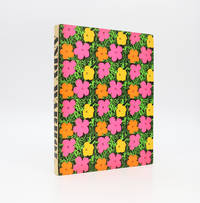
réf. 30746Stockholm: Moderna Museet. 1968. First edition first printing of the catalogue for Warhol's first major European retrospective. First edition first printing of the catalogue for Warhol's first major European retrospective. Illustrated card covers with a design after Warhol's 'Flowers' silk-screen. 614 black-and-white reproductions divided into three sections: black-and-white reproductions of Warhol's work followed by two sections of photographs of Warhol and his associates by Billy Name and Stephen Shore. A near fine copy the binding square and firm with light rubbing to the corners and some creasing to the upper right corner of the front cover the spine complete and just very mildly toned. The contents with a previous owner's name on the title and a little creasing to the upper corner of the prelims are otherwise clean throughout. An attractive example of a notoriously fragile publication. The catalogue was published on the occasion of the exhibition at the Moderna Museet in Stockholm 10 February - 17 March 1968. The first edition sold out quickly with a second and third edition called for in successive years. Parr & Badger: The Photobook II p.144-145. Further details and images for any of the items listed are available on request. All items are catalogued by humans. Lucius Books welcomes direct contact with our customers. Stockholm: Moderna Museet. 1968 unknown
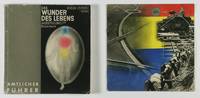
1935réf. 55920Berlin: Gemeinnützige Berliner Ausstellungs- Messe- und Fremdenverkahrs-G.m.b.H. 1935. First edition. Softcover. vg. Protected by modern mylar. Being educated at the Bauhaus in Weimar from 1921-1925 among others by Johannes Itten Paul Klee and Wassily Kandinsky Herbert Bayer had been appointed the head of the Bauhaus workshop Print and Advertising in Dessau in 1925. After the takeover by the Nazis in 1933 Bayer and his staff dorland studio worked for the Nazis designing exhibition literature as well as propaganda material. His first design of an exhibition and its catalog was for the groundbreaking NS-Exhibition "Die Kamera - Ausstellung für Fotografie The Camera - Exhibition for Photography." The second major project was the 1934 exhibition "Deutsches Volk - Deutsche Arbeit German People - German Work." Again he and his "dorland studio" designed the exhibition catalog. And in 1935 the third exhibition "Das Wunder des Lebens" followed by the exhibition "Deutschland" on the occasion of the Summer Olympics in 1936. This collection of three items relate to the exhibition "Das Wunder des Lebens" propaganda for the racial ideology of the National socialists. It was shown in Berlin at the Kaiserdamm and the Deutsche Hygiene-Museum Dresden in 1935 and traveled to other locations e.g. Vienna and Krakow. The exhibition was another step into the direction taken with the exhibition "Deutsches Volk - Deutsche Arbeit" in Berlin 1934. The exhibition "Das Wunder des Lebens" introduced new exhibition techniques around the theme "Der Mensch The Human." The major themes of this extensive exhibition were "Die Lehre vom Leben The Teachings of Life" with its hightlight sculpture "The Vitreous Human" produced of "Cellon" a cellulose acetate "Träger des Lebens Bearer of Life" featuring the German family and finally the "Erhaltung des Lebens The Preservation of Life" exhibiting facts about the health system in Germany. One of the highlights of the exhibition was the so-called Mikrovivarium a collection of small life-forms visible only through a microscope. Next to the thematic description of the exhibition the leaflet contains general information about the exhibition and two maps with information on transportation to the location within and from outside Berlin. Extremely scarce leaflet for the exhibition in near fine condition. 1. Amtlicher Führer durch die Ausstellung Das Wunder des Lebens. Berlin 1935 Kaiserdamm. Octavo. 160 viii 32pp. Original wraps with photomontage cover by Herbert Bayer. Official guide for the exhibition "The Miracle of Life." An important work by Bayer who designed both the exhibition "The Miracle of Life" and the exhibition catalog. Illustrated throughout with photographs and diagrams. Laid in two b/w postcards of the exhibition one of the the "Honor Hall" at the exhibition. Light weaar along edges of wraps minor chips and creasing and 0.5" closed tear at tail of spine. Wraps in overall good interior in very good condition. 2. Octavo. 20pp. Original color-illustrated stapled booklet. Elaborate avant-garde design incorporating various styles e.g. photomontage surrealist and constructivist elements. Designed by Herbert Bayer. The booklet with its modern visual aesthetics propagates the Nazi utopia of an Aryan society. The text is a romanticized though detailed version of the exhibition themes "Die Lehre vom Leben The Teachings of Life Träger des Lebens Bearer of Life and Erhaltung des Lebens The Preservation of Life" with an extraordinay visual display reproduced in high-quality color offset. Missing the cover. Light wear along edges. Overall in very good condition. 3. Three photo-postcards announcing the 1935 exhibition "Wunder des Lebens" in Berlin one featuring a photograph of the sculpture "Der gläserne Mensch" another showing one of the galleries of the exhibition in Berlin both in b/w and printed by Industrie-Fotografen Klinke & Co. Berlin. The third b/w photo-postcard features the "Ehrenhalle Honor Hall" of the exhibiton "Das Wunder des Lebesn" without photo credit. Dr. Herbert Michel department supervisor at the museum emphasized health as the great treasure of the individual and therefore the people at large. He strikes the typically nationalistic cords in depicting "the human as the highest organism a living example of the leadership principle. as part of the people he is obligated to develop his body to its highest capacity to acquire all inherited assets. The purpose of this exhibition is to help understand this concept." The guide contains chapters elaborating on the various functions of the body supported by b/w reproductions of photographs from the exhibition including a photograph of the Museum. There are no references to originators of exhibited works. Front cover with minor creasing. Some age toning of block. Wraps and interior in overall very good condition. Gemeinnützige Berliner Ausstellungs-, Messe- und Fremdenverkahrs-G.m.b.H. unknown
1935réf. 55920Berlin: Gemeinnützige Berliner Ausstellungs- Messe- und Fremdenverkahrs-G.m.b.H. 1935. First edition. Softcover. vg. Protected by modern mylar. Being educated at the Bauhaus in Weimar from 1921-1925 among others by Johannes Itten Paul Klee and Wassily Kandinsky Herbert Bayer had been appointed the head of the Bauhaus workshop Print and Advertising in Dessau in 1925. After the takeover by the Nazis in 1933 Bayer and his staff dorland studio worked for the Nazis designing exhibition literature as well as propaganda material. His first design of an exhibition and its catalog was for the groundbreaking NS-Exhibition "Die Kamera - Ausstellung für Fotografie The Camera - Exhibition for Photography." The second major project was the 1934 exhibition "Deutsches Volk - Deutsche Arbeit German People - German Work." Again he and his "dorland studio" designed the exhibition catalog. And in 1935 the third exhibition "Das Wunder des Lebens" followed by the exhibition "Deutschland" on the occasion of the Summer Olympics in 1936. This collection of three items relate to the exhibition "Das Wunder des Lebens" propaganda for the racial ideology of the National socialists. It was shown in Berlin at the Kaiserdamm and the Deutsche Hygiene-Museum Dresden in 1935 and traveled to other locations e.g. Vienna and Krakow. The exhibition was another step into the direction taken with the exhibition "Deutsches Volk - Deutsche Arbeit" in Berlin 1934. The exhibition "Das Wunder des Lebens" introduced new exhibition techniques around the theme "Der Mensch The Human." The major themes of this extensive exhibition were "Die Lehre vom Leben The Teachings of Life" with its hightlight sculpture "The Vitreous Human" produced of "Cellon" a cellulose acetate "Träger des Lebens Bearer of Life" featuring the German family and finally the "Erhaltung des Lebens The Preservation of Life" exhibiting facts about the health system in Germany. One of the highlights of the exhibition was the so-called Mikrovivarium a collection of small life-forms visible only through a microscope. Next to the thematic description of the exhibition the leaflet contains general information about the exhibition and two maps with information on transportation to the location within and from outside Berlin. Extremely scarce leaflet for the exhibition in near fine condition. 1. Amtlicher Führer durch die Ausstellung Das Wunder des Lebens. Berlin 1935 Kaiserdamm. Octavo. 160 viii 32pp. Original wraps with photomontage cover by Herbert Bayer. Official guide for the exhibition "The Miracle of Life." An important work by Bayer who designed both the exhibition "The Miracle of Life" and the exhibition catalog. Illustrated throughout with photographs and diagrams. Laid in two b/w postcards of the exhibition one of the the "Honor Hall" at the exhibition. Light weaar along edges of wraps minor chips and creasing and 0.5" closed tear at tail of spine. Wraps in overall good interior in very good condition. 2. Octavo. 20pp. Original color-illustrated stapled booklet. Elaborate avant-garde design incorporating various styles e.g. photomontage surrealist and constructivist elements. Designed by Herbert Bayer. The booklet with its modern visual aesthetics propagates the Nazi utopia of an Aryan society. The text is a romanticized though detailed version of the exhibition themes "Die Lehre vom Leben The Teachings of Life Träger des Lebens Bearer of Life and Erhaltung des Lebens The Preservation of Life" with an extraordinay visual display reproduced in high-quality color offset. Missing the cover. Light wear along edges. Overall in very good condition. 3. Three photo-postcards announcing the 1935 exhibition "Wunder des Lebens" in Berlin one featuring a photograph of the sculpture "Der gläserne Mensch" another showing one of the galleries of the exhibition in Berlin both in b/w and printed by Industrie-Fotografen Klinke & Co. Berlin. The third b/w photo-postcard features the "Ehrenhalle Honor Hall" of the exhibiton "Das Wunder des Lebesn" without photo credit. Dr. Herbert Michel department supervisor at the museum emphasized health as the great treasure of the individual and therefore the people at large. He strikes the typically nationalistic cords in depicting "the human as the highest organism a living example of the leadership principle. as part of the people he is obligated to develop his body to its highest capacity to acquire all inherited assets. The purpose of this exhibition is to help understand this concept." The guide contains chapters elaborating on the various functions of the body supported by b/w reproductions of photographs from the exhibition including a photograph of the Museum. There are no references to originators of exhibited works. Front cover with minor creasing. Some age toning of block. Wraps and interior in overall very good condition. Gemeinnützige Berliner Ausstellungs-, Messe- und Fremdenverkahrs-G.m.b.H. unknown books
2024réf. BRG-29_2_566Creative Homeowner 2024-05-28. paperback. Very Good. 10x0x8. Very Good condition.Crisp pages. Clean cover and pages. Book shows minimal shelf wear. No highlighting/marking. Not Satisfied Contact us to get a refund. Creative Homeowner paperback
2022réf. BRG-29_2_567Creative Homeowner 2022-09-27. paperback. Very Good. 8x0x10. Very Good condition.Crisp pages. Clean cover and pages. Book shows minimal shelf wear. No highlighting/marking. Not Satisfied Contact us to get a refund. Creative Homeowner paperback
1942réf. 58639Washington DC: El Coordinador de Asuntos Interamericanos 1942. Poster. Good. A suite of three WWII posters 20" x 14". Each poster has been mounted to a thin cardboard. With some creasing and occasional small losses from the edges. The largest loss is from the top right corner of the "palabra" poster measuring 4" x 3". The posters also have a general layer of light glue-staining. Three American WWII posters depicting the themes of Freedom of Worship Freedom from Want and Freedom of Speech. These posters were meant to highlight Franklin D. Roosevelt's four freedoms here three and to sway Latin American opinion against Germany Italy and Japan. The Spanish text at the foot of each poster reads: "One of the 4 liberties for which the allies fight." Edward McKnight Kauffer 1890-1954 was an American artist and graphic designer who worked mostly in the realm of poster art. He was born in Montana however he moved to England and became an expatriate. He was very influential in Europe however he was only known in the United States by a handful of those well versed in the study of design. Interestingly despite his obscurity in America in 1937 the Museum of Modern Art gave him a prestigious one-man show. At the time of the exhibition copy agents were continuing the tradition of using posters with romantic imagery and only a few designers were able to gain any attention from breaking free of this type of imagery. Still remaining in obscurity Kauffer returned to England only returning to New York City after the war broke out in 1940. He only received honors in the United States posthumously when he finally received an AIGA award. Russian born American artist Alexey Brodovitch 1898-1971 was most known for holding the art director's position at Harper's Bazaar fashion magazine during the years of 1934-1958. Like Kauffer Brodovitch played a significant role in introducing the United States to a substantially simplified modern design already popular in Europe. While at Harper's Brodovitch used art created by Man Ray Salvador Dali and A.M. Cassandre. Brodovitch received an AIGA award in 1987. Three boldly modern posters created by two artists who helped pioneer the modern poster in the United States with its symbolic imagery and social relevance. El Coordinador de Asuntos Interamericanos unknown
1942réf. 58639Washington DC: El Coordinador de Asuntos Interamericanos 1942. Poster. Good. A suite of three WWII posters 20" x 14". Each poster has been mounted to a thin cardboard. With some creasing and occasional small losses from the edges. The largest loss is from the top right corner of the "palabra" poster measuring 4" x 3". The posters also have a general layer of light glue-staining. Three American WWII posters depicting the themes of Freedom of Worship Freedom from Want and Freedom of Speech. These posters were meant to highlight Franklin D. Roosevelt's four freedoms here three and to sway Latin American opinion against Germany Italy and Japan. The Spanish text at the foot of each poster reads: "One of the 4 liberties for which the allies fight." Edward McKnight Kauffer 1890-1954 was an American artist and graphic designer who worked mostly in the realm of poster art. He was born in Montana however he moved to England and became an expatriate. He was very influential in Europe however he was only known in the United States by a handful of those well versed in the study of design. Interestingly despite his obscurity in America in 1937 the Museum of Modern Art gave him a prestigious one-man show. At the time of the exhibition copy agents were continuing the tradition of using posters with romantic imagery and only a few designers were able to gain any attention from breaking free of this type of imagery. Still remaining in obscurity Kauffer returned to England only returning to New York City after the war broke out in 1940. He only received honors in the United States posthumously when he finally received an AIGA award. Russian born American artist Alexey Brodovitch 1898-1971 was most known for holding the art director's position at Harper's Bazaar fashion magazine during the years of 1934-1958. Like Kauffer Brodovitch played a significant role in introducing the United States to a substantially simplified modern design already popular in Europe. While at Harper's Brodovitch used art created by Man Ray Salvador Dali and A.M. Cassandre. Brodovitch received an AIGA award in 1987. Three boldly modern posters created by two artists who helped pioneer the modern poster in the United States with its symbolic imagery and social relevance. El Coordinador de Asuntos Interamericanos unknown books
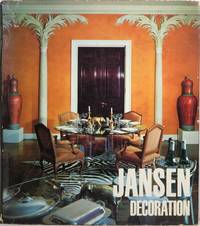
1971réf. 19316Paris: Société d'études et de publications économiques 1971. 1st. Hardcover. Very Good/Very Good. 11.2x10.0x1.0in. dust jacket with tear to front panel. Dust jacket in clear protector. The first monograph on this Parisian design house. Illustrations in color and in black and white. Text in French and English. 240pp 3.65lb 11.2x10.0x1.0in Société d'études et de publications économiques hardcover
1923réf. 004668London: Martin Secker first two issues Cecil Palmer third issue. Printed by Vincent Brooks Day & Son 1923. First edition. Wraps for first issue hardcover paper pastedown second two issues. Very Good. Literary journal with extraordinary roster of contributors including Max Beerbohm Siegfried Sassoon T. E. Lawrence John Doyle Enoch Soames Robert Graves John Crowe Ransome John Masefield John Galsworthy Thomas Hardy Walter de la Mare Rockwell Kent Vachel Lindsay Edwin Lutyens William Nicholson etc. 4to. 32 by 25 cm. Mostly poetry with also a mix of stories dialogues etc. and lovely plates quite a few in color. All produced handsomely and though short-lived the confluence of talent marks these as an unique undertaking. Minor edge chips to wraps of the first volume. Chips along the joints and the spine of the second. Within the leaves are age toned with some scattered light foxing. Martin Secker (first two issues), Cecil Palmer (third issue). Printed by Vincent Brooks, Day & Son unknown
1923réf. 004668London: Martin Secker first two issues Cecil Palmer third issue. Printed by Vincent Brooks Day & Son 1923. First edition. Wraps for first issue hardcover paper pastedown second two issues. Very Good. Literary journal with extraordinary roster of contributors including Max Beerbohm Siegfried Sassoon T. E. Lawrence John Doyle Enoch Soames Robert Graves John Crowe Ransome John Masefield John Galsworthy Thomas Hardy Walter de la Mare Rockwell Kent Vachel Lindsay Edwin Lutyens William Nicholson etc. 4to. 32 by 25 cm. Mostly poetry with also a mix of stories dialogues etc. and lovely plates quite a few in color. All produced handsomely and though short-lived the confluence of talent marks these as an unique undertaking. Minor edge chips to wraps of the first volume. Chips along the joints and the spine of the second. Within the leaves are age toned with some scattered light foxing. Martin Secker (first two issues), Cecil Palmer (third issue). Printed by Vincent Brooks, Day & Son unknown books
1934réf. 1497New York: Random House 1934. First American Edition. Saroyan's first book a collection of 26 short stories produced in small numbers. An important copy showing a young Saroyan's early admiration for Valenti Angelo the renown Italian-American illustrator and printmaker. Their friendship would evolve and the two would ultimately collaborate on at least two different projects - 'The Fiscal Hoboes' 1949 and 'The Simple Songs of Katchick Minasian' 1950. A warm inscription in the year of publication linking two important literary Californians. First Printing one of 2000 copies. Octavo 23.5cm; black and gray cloth with gold foil wraparound title band printed in black on spine and front cover; terracotta topstain; 270pp. Inscribed by Saroyan on front endpaper in the year of publication: "To "Val" Valenti Angelo a painter whose work I sincerely admire: With good wishes / William Saroyan / Dec. 1934." Mild sunning to upper board edges endpapers and text edges tanned as is nearly always the case with a touch of softening at the crown and mild dustiness to top edge; Very Good or better. Dustjacket is unclipped priced $2.50 lightly sunned at spine and extremities with some minor edge wear a few tiny nicks to spine ends and some light staining along upper edge of front panel; Very Good. Random House unknown
1940réf. 46606Berlin: Vereinigte Verlagsgesellschaften Franke & Co. KG 1940. First edition. Softcover. Very good condition. Quarto. 8pp. Original photo-illustrated wraps with white lettering on cover. Illustrated promotional supplement of the periodical Illustrierter Film-Kurier in gravure. The 1940 film "Der ewige Jude" is a propaganda documentary about the world Jewry after an idea by Eberhard Taubert. As part of Goebbels' anti-Semitic strategy this film followed the 1937 art exhibition "Der ewige Jude" in Munich and the publication of a book in the same year and with the same title both with derogatory captions asserting the "degenerate Jewish race." Goebbels took an active role in the production of the film and insisted on Fritz Hippler as the director for the film. After the invasion of Poland Goebbels instructed Hippler to send camera crews to Poland to collect footage of Polish Jews. The film starts with an "impressive" foray through the Jewish ghettos in Poland depicting the Jews in filthy living conditions making a living through profiteering instead of honest work. The footage was manipulated in a way to show the Jews as originating in Palestine and from there flooding the earth drawing parallels to the way rats spread through new territory stressing the Jew's ability to adapt to various life styles. The promotional is illustrated with photomontages depicting Jews from various walks of life Polish street scenes a Rabbi holding up a knife in line with the brutal depiction of a Shechita as the face of Jewry juxtaposed with gleaming pictures of content German people and thankfulness towards a government willing to solve the "Jewish problem." Text in German. Slight wear along edges small closed tear at bottom of last page and some minor chipping along edges. Vereinigte Verlagsgesellschaften Franke & Co. KG unknown
1940réf. 46606Berlin: Vereinigte Verlagsgesellschaften Franke & Co. KG 1940. First edition. Softcover. Very good condition. Quarto. 8pp. Original photo-illustrated wraps with white lettering on cover. Illustrated promotional supplement of the periodical Illustrierter Film-Kurier in gravure. The 1940 film "Der ewige Jude" is a propaganda documentary about the world Jewry after an idea by Eberhard Taubert. As part of Goebbels' anti-Semitic strategy this film followed the 1937 art exhibition "Der ewige Jude" in Munich and the publication of a book in the same year and with the same title both with derogatory captions asserting the "degenerate Jewish race." Goebbels took an active role in the production of the film and insisted on Fritz Hippler as the director for the film. After the invasion of Poland Goebbels instructed Hippler to send camera crews to Poland to collect footage of Polish Jews. The film starts with an "impressive" foray through the Jewish ghettos in Poland depicting the Jews in filthy living conditions making a living through profiteering instead of honest work. The footage was manipulated in a way to show the Jews as originating in Palestine and from there flooding the earth drawing parallels to the way rats spread through new territory stressing the Jew's ability to adapt to various life styles. The promotional is illustrated with photomontages depicting Jews from various walks of life Polish street scenes a Rabbi holding up a knife in line with the brutal depiction of a Shechita as the face of Jewry juxtaposed with gleaming pictures of content German people and thankfulness towards a government willing to solve the "Jewish problem." Text in German. Slight wear along edges small closed tear at bottom of last page and some minor chipping along edges. Vereinigte Verlagsgesellschaften Franke & Co. KG unknown books
1937réf. Alibris.0029529The Commercial Press. 1937. Trade paperback. paper along spine is falling apart cover has tears to edges & creasing cover is faded back cover is detached by present pages are in nice condition. 48 p. Includes illustrations. . 24 illustrations with description on facing translucent onion-skin pages xi pp. preliminary material. Prefaces in French and Chinese. The Commercial Press paperback
1992réf. 14255Paris: Michel Aveline Editor 1992. 1st. Hardcover. New/New. 13.2x9.5x1.1in. in shrinkwrap. Alberto Pinto 1945-2012 was a French interior designer of considerable acclaim. This is the first monograph on Pinto highlighting the first 20 years of his work. Exquisite photographs illustrate some of the sumptuous interiors he created including his own apartment in Paris. 301pp 4.74lb 13.2x9.5x1.1in Michel Aveline Editor hardcover
1936réf. 028488New York / Los Angeles: Merle Armitage / Lynton Kistler 1936. 1st Edition 1st Printing. Hardcover. Fine. 60 Pp. Yellow Cloth Printed In Brown And Black On Front Cover As Issued. 5 13/16" X 4 1/2". First Book Publication Of Two Magazine Articles By Picasso First Published In 1923 And 1930. One Of 112 Copies Designed By Merle Armitage Printed By Adcraft Under Supervision Of Lynton R. Kistler. Frontispiece Lithograph Portrait Of Picasso By Pasquale Giovanni Napolitano Pulled By Hand From Stone By Lynton Kistler And Signed In Pencil By Napolitano. Text Printed In Bodoni 12 Pt. Additionally Inscribed By Armitage To The Illustrator Napolitano And His Wife: "This First Copy- Born On April 3 1936 Is For Emmie And Jonnie Napolitano- Who Like This Book. Merle Armitage". A Fine Copy No Wear Or Stains. Merle Armitage / Lynton Kistler hardcover
1851réf. 2111902160201412Kawauchiya Shinjiro 1851. Soft Cover. Fine. Number of books: 5 Kawauchiya Shinjiro paperback
1921réf. 2091202133211949Momiyama shoten 1921. Soft Cover. Fine. Volume: 1 Momiyama shoten paperback
1863réf. 2111902160201223Not Available 1863. Soft Cover. Fine. Volume: 1 Not Available paperback
1996This is a fine hardcover copy with a fine hardshell slipcase with virtually no wear. Completely clean. Text in Spanish. This is number 50 of a limited edition of 1000 copies. Text by Patrick Mauries. Many tipped in color plates, reproductions of Serebriakoff's watercolors. 14" high X 10" wide, 153 pages. Scarce. Large heavy book, foreign shipping will be extra. This book will be securely wrapped and packed in a sturdy box and shipped with tracking.