LUCE (Maximilien).Livre Rare Book

10 815 résultats
réf. 1641030X39 cm.
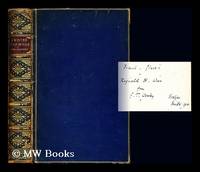
1901réf. 241609London ; New York ; Bombay : Longmans Green and Co. 1901. First Edition. Hardcover. Near fine copy bound in full aniline calf with gilt-blocked label to the spine. Spine starting with wear to the spine and panel edges. Remains well-preserved overall; tight bright clean and sharp-cornered. Physical description; viii 355 p. 23 leaves of plates : ill. ports. ; 23 cm. Notes; Prize inscription to the frontis and dated 1910. Title page printed in red and black. Includes bibliographical references. Subjects; Haggard Henry Rider 1856-1925 — Travel. Voyages and travels. Israel — Description and travel. Italy — Description and travel. Cyprus — Description and travel. Palestine — Description and travel. Italy. Cyprus. Description and Travel. Genre; Illustrated. London ; New York ; Bombay : Longmans, Green, and Co. hardcover
réf. 6142New York: George H. Doran. Hardcover. Very Good. Small 4to 206 pages pictorial red cloth gilt dulled top cover lightly stained edges rubbed. Tipped-in plates. by Arthur Rackham. 24 drawings in all of which most are in color. George H. Doran hardcover
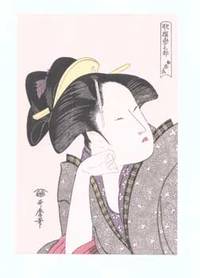
réf. 75-7129Tokyo: The East Publications Inc. ca. 1980. Woodcut. 18 x 12 cm sheet. Beautiful Reproduction Mid 20th century Cutting and Printing. It has a Fine Impression with Subtle Mica Kirazuri Finish to Background. The Original Utamaro Masterpiece is Oban size; this cut is about half scale to the Original. It was commissioned by East Publications Inc. as a limited gift edition for its customers making it akin to a present day Surimono. Echizen Kizuki Hosho Washi Paper. Quality is Very good with a minor dent above and left of the Artists Name.Provenance: From the Collection of Frederick Gale Ruffner Jr.The Founder of Gale Research Detroit [Tokyo]: The East Publications Inc., [ca. 1980] unknown
1920- Lucien Vogel éditeur, Paris 1920, 18x24cm, une feuille. - Estampe originale en couleur réalisée par Edouard Halouze, finement réhaussée à l'or, tirée sur papier vergé et signée en haut à droite de la planche. Peintre, illustrateur et décorateur, Edouard Halouze dessine des vignettes de mode pour la Gazette du Bon ton dès les débuts de la revue. Parallèlement à ce travail, il participe en 1920 à une exposition consacrée à "La mode vue par les peintres" et présentée au Musée des arts décoratifs. Il se distingue des autres dessinateurs de la Gazette par son style cubiste dans des décors, des costumes et des couvertures de programmes pour le music-hall. Gravure originale réalisée pour l'illustration de La Gazette du bon ton, l'une des plus belles et des plus influentes revues de mode du XXème siècle, célébrant le talent des créateurs et des artistes français en plein essor de l'art déco. Célèbre revue de mode fondée en 1912 par Lucien Vogel, La Gazette du bon ton a paru jusqu'en 1925 avec une interruption durant la Guerre de 1915 à 1920, pour cause de mobilisation de son rédacteur en chef. Elle se constitue de 69 livraisons tirées à seulement 2000 exemplaires et est illustrée notamment de 573 planches en couleurs et de 148 croquis représentant des modèles de grands couturiers. Dès leur parution, ces luxueuses publications « s'adressent aux bibliophiles et aux mondains esthètes » (Françoise Tétart-Vittu « La Gazette du bon ton » in Dictionnaire de la mode, 2016). Imprimées sur beau papier vergé, elles utilisent une police typographique spécialement créée pour la revue par Georges Peignot, le caractère Cochin, repris en 1946 par Christian Dior. Les estampes sont réalisées grâce à la technique du pochoir métallique, rehaussées en couleurs et pour certaines soulignées à l'or ou au palladium. L'aventure commence en 1912 lorsque Lucien Vogel, homme du monde et de la mode - il a déjà participé à la revue Femina - décide de fonder avec sa femme Cosette de Brunhoff (sur de Jean, le père de Babar) la Gazette du bon ton dont le sous-titre est alors « Art, modes et frivolités ». Georges Charensol rapporte les propos du rédacteur en chef : « En 1910, observe-t-il, il n'existait aucun journal de mode véritablement artistique et représentatif de l'esprit de son époque. Je songeais donc à faire un magazine de luxe avec des artistes véritablement modernes [...] J'étais certain du succès car pour la mode aucun pays ne peut rivaliser avec la France. » (« Un grand éditeur d'art. Lucien Vogel » in Les Nouvelles littéraires, n°133, mai 1925). Le succès de la revue est immédiat, non seulement en France, mais aussi aux Etats-Unis et en Amérique du Sud. À l'origine, Vogel réunit donc un groupe de sept artistes : André-Édouard Marty et Pierre Brissaud, suivis de Georges Lepape et Dammicourt ; et enfin ses amis de l'École des beaux-arts que sont George Barbier, Bernard Boutet de Monvel, ou Charles Martin. D'autres talents viennent rapidement rejoindre l'équipée : Guy Arnoux, Léon Bakst, Benito, Boutet de Monvel, Umberto Brunelleschi, Chas Laborde, Jean-Gabriel Domergue, Raoul Dufy, Édouard Halouze, Alexandre Iacovleff, Jean Émile Laboureur, Charles Loupot, Charles Martin, Maggie Salcedo. Ces artistes, inconnus pour la plupart lorsque Lucien Vogel fait appel à eux, deviendront par la suite des figures artistiques emblématiques et recherchées. Ce sont ces mêmes illustrateurs qui réalisent les dessins des publicités de la Gazette. Les planches mettent en lumière et subliment les robes de sept créateurs de l'époque : Lanvin, Doeuillet, Paquin, Poiret, Worth, Vionnet et Doucet. Les couturiers fournissent pour chaque numéro des modèles exclusifs. Néanmoins, certaines des illustrations ne figurent aucun modèle réel, mais seulement l'idée que l'illustrateur se fait de la mode du jour. La Gazette du bon ton est une étape décisive dans l'histoire de la mode. Alliant l'exigence esthétique et l'unité plastique, elle réunit pour la première fois les grands talen
1920réf. 73137Lucien Vogel éditeur | Paris 1920 | 18 x 24 cm | une feuille
1948RARE! COPY No.52 of 200 copies SIGNED BY ARTIST - ARTHUR KOLNIK, printed on Lana paper (altogether were printed 1126 numbered copies, only 226 of them signed by artist). This album is the HEBREW version of a hasidic story by the great Yiddish writer Isaac Leib Peretz illustrated by the renowned Jewish painter and printmaker Arthur Kolnik (1890-1972) who was born in Stanislaviv (today Ivano-Frankovsk), Ukraine and studied at the Academy of Fine Arts in Krakow in the studio of Professor Joseph Mehoffer. After an exhibition in the United States of America in 1921 settled in Chernivtsi and moved to Paris in 1931 where he worked as illustrator. Tel Aviv Art Museum organized a major exhibition of his works in 1968. 320x240mm. 25 pages. 20 woodcuts. Unbound double sheets with softcover. Each woodcut protected by a layer of transparent foil. Red lettering on front cover. Cover yellowing and slightly dirty. Front cover detached from rear cover. Cover edges tattered. Whitepages yellowing/age-stained. Pages slightly yellowing. Woodcuts in mint condition. [SUMMARY]: This extremely rare copy of illustrated Jewish prose has sustained some external damage to cover, but is otherwise in very good condition.
réf. B197792-1Genève 1986. 20pp. 100 plates. Tall 4to. Wraps. The exhibition subsequently traveled to four additional venues. Genève, 1986. paperback books
1660réf. 13609Le massacre des Innocents; Burin. Rare. En feuille moyen Rome Billy 1660
1922réf. 84850Lucien Vogel éditeur | Paris 1922 | 19 x 24.50 cm | une feuille
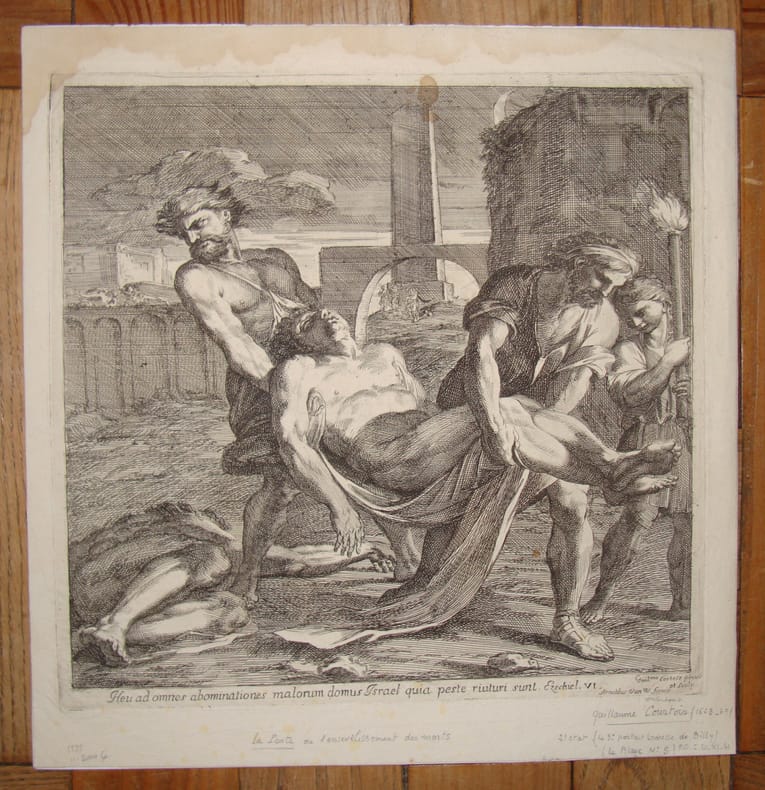
1655réf. 5599Belles marges. Taches dans la marge supérieure. Épreuve du 2è état (sur 3), avec la lettre complète mais avant l’adresse de Billy. Filigrane : fleur de lys dans un cercle. “ Toutes les estampes de ce Maître sont d'une extrême rareté" (Robert-Dumesnil). Très bon état; 300 x 312 mm. vers 1655 - 1660. Pas de couverture Très bon Arnoldus Van W. 1655-1660 300 x 312
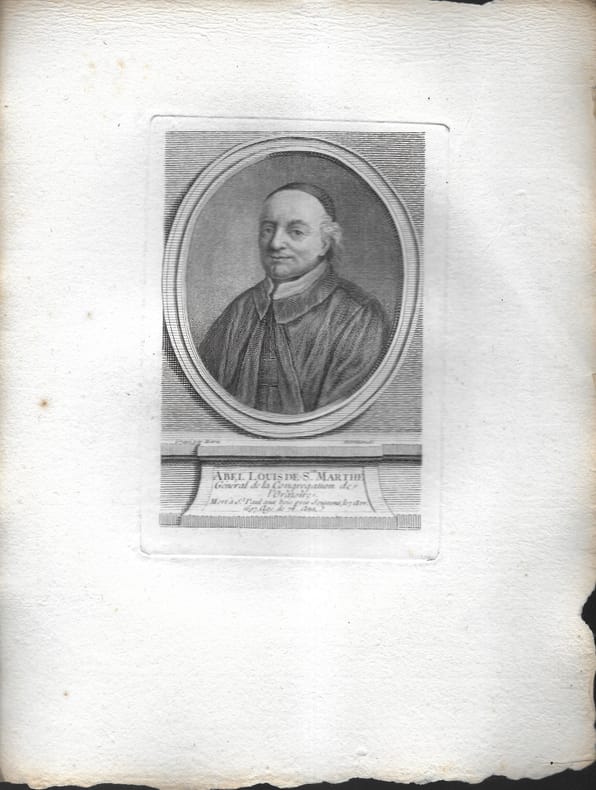
réf. 15204Épreuve sur beau papier filigrané. en feuille Très bon Paris 15 x 11 cm
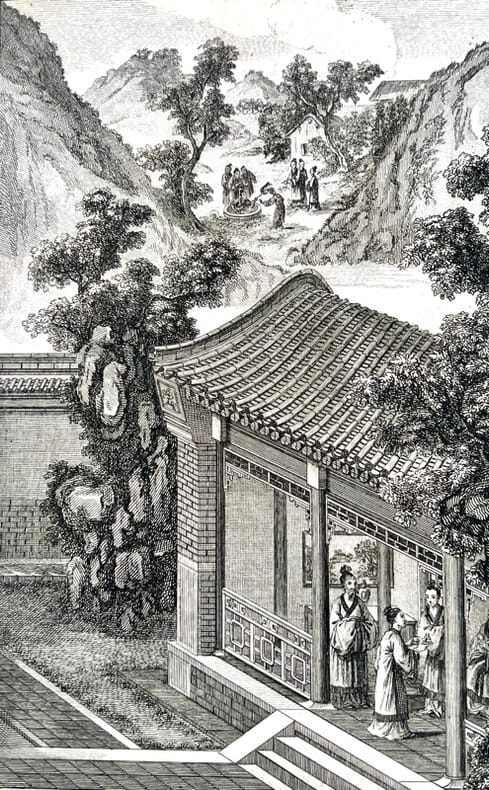
1788réf. 42928Paris, chez l'auteur, Ponce, [1788]. In-4 de 1 page de titre, 24 planches, 24 pages de textes explicatifs en regard de chaque planche, demi-maroquin bordeaux, dos lisse orné, tête dorée (reliure du XIXe siècle).
1960réf. 140946279New York: Tiber Press 1960. First Edition. Fine. First edition. Complete in four folio volumes each measuring 17½" x14¼". Each volume with three full-page color silkscreen prints and additional prints at title page and upper cover original cloth-backed illustrated boards. First Edition. No. 77 of 200 copies. Each volume signed by the poet and artist on the limitation page. A Fine set bright and sharp in publisher's thick acetate jackets housed in cloth slipcase with trivial shelf wear. A visionary collaboration between the leading lights of the New York School of poetry and four second generation abstract expressionist artists produced at the height of their creative collective powers. A heady encapsulation of the New York literary and visual avant garde at the dawning of the '60s. Tiber Press unknown
1960réf. 140940127New York: Tiber Press 1960. First Edition. Fine. Complete in four folio volumes each measuring 17½" x14¼". Each volume with three full-page color silkscreen prints and additional prints at title page and upper cover original cloth-backed illustrated boards. First Edition. No. 47 of 200 copies. Each volume signed by the poet and artist on the limitation page. A Fine set bright and sharp in publisher's thick acetate jackets housed in cloth slipcase with light shelf wear. A visionary collaboration between the leading lights of the New York School of poetry and four second generation abstract expressionist artists produced at the height of their creative collective powers. A heady encapsulation of the New York literary and visual avant garde at the dawning of the '60s. Tiber Press unknown
1960réf. 140946279New York: Tiber Press 1960. First Edition. Fine. First edition. Complete in four folio volumes each measuring 17½" x14¼". Each volume with three full-page color silkscreen prints and additional prints at title page and upper cover original cloth-backed illustrated boards. First Edition. No. 77 of 200 copies. Each volume signed by the poet and artist on the limitation page. A Fine set bright and sharp in publisher's thick acetate jackets housed in cloth slipcase with trivial shelf wear. A visionary collaboration between the leading lights of the New York School of poetry and four second generation abstract expressionist artists produced at the height of their creative collective powers. A heady encapsulation of the New York literary and visual avant garde at the dawning of the '60s. Tiber Press unknown books
1960réf. 140940127New York: Tiber Press 1960. First Edition. Fine. Complete in four folio volumes each measuring 17½" x14¼". Each volume with three full-page color silkscreen prints and additional prints at title page and upper cover original cloth-backed illustrated boards. First Edition. No. 47 of 200 copies. Each volume signed by the poet and artist on the limitation page. A Fine set bright and sharp in publisher's thick acetate jackets housed in cloth slipcase with light shelf wear. A visionary collaboration between the leading lights of the New York School of poetry and four second generation abstract expressionist artists produced at the height of their creative collective powers. A heady encapsulation of the New York literary and visual avant garde at the dawning of the '60s. Tiber Press unknown books
réf. AQ20609London and Stuttgart Und Tubingen: J. H. Bohte and in der J.G. Cotta'schen Buchhandlung 1824 and 1823. Three volumes within publisher's folder with paper title label. 10; 4 11pp 1; 8 full-page engravings. Two text volumes sewn with small cloth strip glued to spine the plates stitched as issued. Occasional spotting. The beautifully illustrated first illustrated edition of Schiller's 'Fridolin or the Road to the Iron Forge' - a ballad which the German poet Schiller 1759-1805 composed for a poetry competition against Goethe in 1797 with the text volume of the parallel German-English edition published in London by Bohte ‘foreign bookseller to his majesty’. The engravings by Moritz Retzsch 1779-1857 German painter and draughtsman were much praised: accompanied by the illustrations the ballad 'assumes a new and more exalted character' provided by Retzsch's ability to give them 'an airy dimness that softens what is beautiful and deepens all that is terrific' Monthly Review 1825 p.522. OCLC locates a single copy in the British Isles BL and three in North America. . Oblong quarto. J. H. Bohte [and] in der J.G. Cotta'schen Buchhandlung, 1824 [and] 1823. hardcover
2000réf. 140680Fondation Custodia. Paris 2000. 383, (1) pages. With a lot of b/w illustrations. Original hardcover binding. 26x20 cm
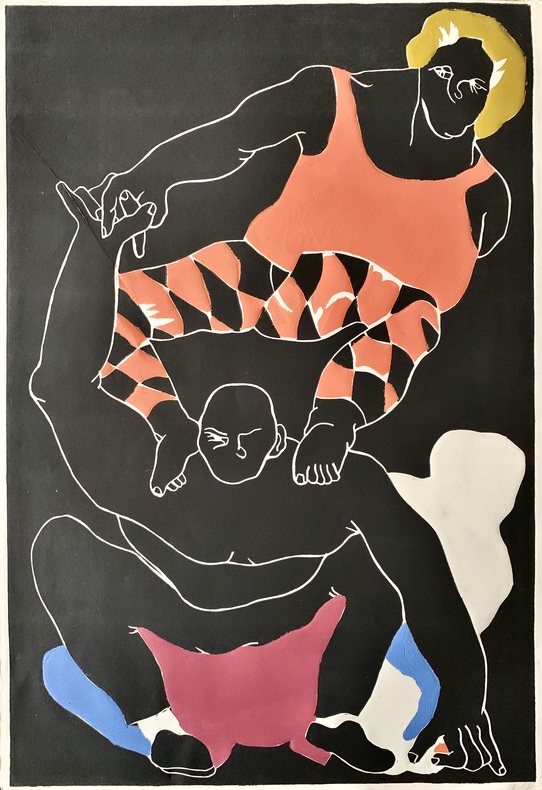
réf. awd-649Linogravure signée et datée 1971, tirage à 3 ex. (52,5/75 cm). Bon état.
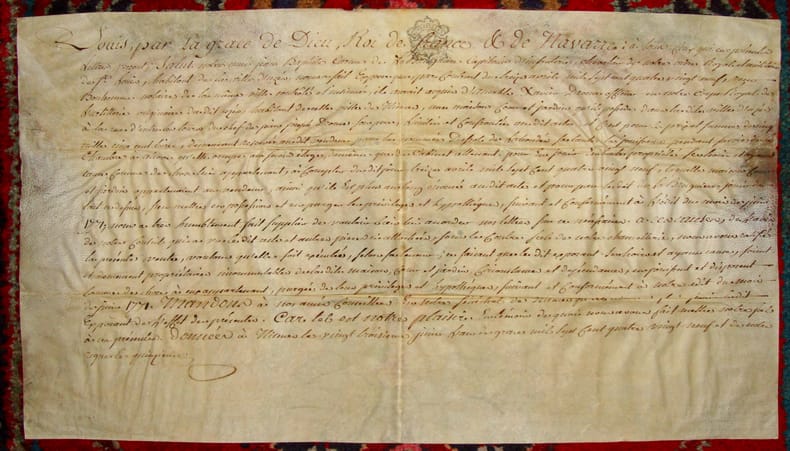
1789réf. 13599Acte d'achat d'une maison située à Uzès , rue d'entre les tours. L'acte est daté du 23 juin 1789 … Parchemin bon Nismes 1789 70 x 54 cm
réf. 25494Le Charivari, trente-cinquième année, vendredi 14 septembre 1866 - Lithographie : Hauteur: 43.7cmx Largeur: 30.6cm - Trait carré : Hauteur: 22.2cmx Largeur: 18.7cm - 1 feuillet (4 pages) ; illustration page 3. - Au-dessus de l'image, au centre : "ACTUALITÉS.", et à droite : "173" ; signé dans l'image en bas à gauche : "CHAM", et à droite : "82" ; sous l'image à gauche : "A.de Vresse, R. Rivoli, 55." et à droite : "Lith Destouches, R. Paradis Pre 28" ; au-dessous, au centre : "30 millions d'indemnité à payer ! faudra-t-il qu'il en mette de l'eau dans sa bière pour se rattraper !" -- texte imprime au dos,bon etat.
réf. 25483Le Charivari, trente-troisième année, mercredi 1er juin 1864- Lithographie = Hauteur: 43.8cmx Largeur: 30.6cm - Trait carré : Hauteur: 22.1cmx Largeur: 20cm- 1 feuillet ,illustration page 3.- Au-dessus de l'image, au centre : "ACTUALITÉS", et à droite : "84" ; signé dans l'image, en bas à droite : " 36 / CHAM", sous l'image à gauche : "M[ais]on Martinet, 172, r. Rivoli et 41 r Vivienne" et à droite : "Lith Destouches 28, r.Paradis Pre" ; au-dessous : " Les membres du Congrès s'adjoignent un chinois dans la pensée qu'habitué au jeu / du casse tête chinois cet étranger pourrait trouver plus facilement une solution à / la question Danoise."-- texte imprime au dos,bon etat.
1867réf. 254351867 Le Charivari, trente-sixième année, vendredi 18 janvier 1867 - Lithographie : Hauteur: 43.6cmx Largeur: 31.1cm - Trait carré : Hauteur: 24.6cmx Largeur: 21cm ; illustration page 3. Au dessus de l'image, centré : "ACTUALITES" ; et à droite : "10" ; signature en bas de l'image à droite : "5 / CHAM" ; en dessous de l'image à gauche : "A de Vresse, R. Rivoli, 55" ; en dessous de l'image à droite : "Lith Destouches r. Paradis Pre 28" ; en dessous, centré : "1867 arrivant en costume cosmopolite vu l'exposition universelle qu'elle doit ouvrir",texte imprime au dos,bon etat
réf. 25442Le Charivari, trente-sixième année, vendredi 15 novembre 1867 - Hauteur: 43.5cmx Largeur: 31cm- Trait carré : Hauteur: 25.5cmxLargeur: 20.1cmillustration page 3.- Au dessus de l'image, centré : "ACTUALITES" ; et à droite : "230" ; signature en bas de l'image à droite : "STOP" ; en dessous de l'image à gauche : "A. de Vresse R. Rivoli, 55" ; en dessous de l'image à droite : "Lith. Destouches r Paradis Pre 28" ; en dessous, centré : "- A qui le tour ?",texte imprime au dos,bon etat.