9 195 résultats
1799- le carte edite dal Depot de la Marine -Per contrastare lo strapotere navale della flotta inglese re Luigi XIV comprese la necessita di dotare le sue navi di carte nautiche in grado di renderle competitive con la marina antagonista. Un primo tentativo si ebbe con il Neptune Francais del 1693, ma solo agli inizi del diciottesimo secolo iniziò una grande campagna di rilievo delle coste del Mediterraneo e di altri mari, che portò alla realizzazione di numerose mappe, raccolte nel Dépot des Cartes et Planes de la Marine del 1720. Tuttavia il fondatore dell’idrografia francese può essere considerato a tutti gli effetti Jacques Nicolas Bellin (1703-1772) che per oltre cinquant’anni fu al servizio della Marina quale ingegnere e cartografo, tanto che gli venne assegnato il titolo quale primo “Ingegnere Idrografo della Marina” e quindi addirittura quello di “Idrografo Reale”. Durante il suo servizio gli furono commissionati i rilievi delle coste francesi prima e successivamente quelle di praticamente tutto il mondo conosciuto. La sua produzione fu immensa e le sue carte nautiche, di grande qualità, apparvero in più edizioni fino oltre la fine del diciottesimo secolo. Questo grande fondo cartografico diede vita alla produzione ed alla vendita di carte navali, prima basate su quelle del Bellin, successivamente ampliate e migliorate da altri ingegneri di marina, sia francesi che non. Le carte nautiche venivano vendute separatamente e recavano tutte l’inconfondibile timbro con l’ancora e le corone (quando regnava la monarchia) del Depot Generale de la Marine. Raccolte delle stesse carte venivano invece pubblicate sotto il nome di Neptune Francois, monumentale opera che ebbe numerosissime ristampe fino alla metà del secolo successivo. Il seguente gruppo di carte è tratto da un volume denominato Neptune de la Méditerranée, riguardante il Mediterraneo. Dove possibile sono indicati il nome del cartografo, spesso un capitano di vascello, e la data della carta. Incisioni in rame, in eccellente stato di conservazione, salvo controindicazioni.Carta nautica della città spagnola sulla Costa Blanca, ridotta sulla base di quella realizzata dal Tofino nel 1788. To fight against the powerful English fleet, king Louis XIV decided to endow his ships with nautical charts that could enable them to compete with the enemy. The Neptune Francais, in 1693, can be considered a first attempt, but it was only at the beginning of the Eighteenth century that a campaign of study of the Mediterranean coasts and sea was started, leading to the realization of maps, collected in the Dépot des Cartes et Planes de la Marine in 1720. Nevertheless, the real founder of French hydrography can be considered Jacques Nicolas Bellin (1703-1772), who served for more than fifty years the navy as engineer and cartographer, which win him first the title of "Hydrographer Engineer of the Navy" and then of "Royal Hydrographer". His first commitment was to study the French coasts fisrt, and then of the whole world. His production was massive and his nautical charts, due also to their quality, were published in many edition until the end of the XVIII century. This allowance led to the production and the selling of sea charts, at first based on those from Bellin, then developed by other navy engineers. The sea charts were sold separately, all bearing the stamp with the anchor and the crowns of the Depot Generale de la Marine. Collections of the same charts have been published under the name of Neptune Francois, a monumental work which has been reissued many times until the half of the following century. The following group of charts is taken from a volume entitled Neptune de la Méditerranée, about the Mediterranean sea. Where possible, there is the name of the cartographer, very often the captain of the ship, and the date of the chart. Sea chart of the Spanish city on the Costa Blanca, based onl Tofino's example of 1788.
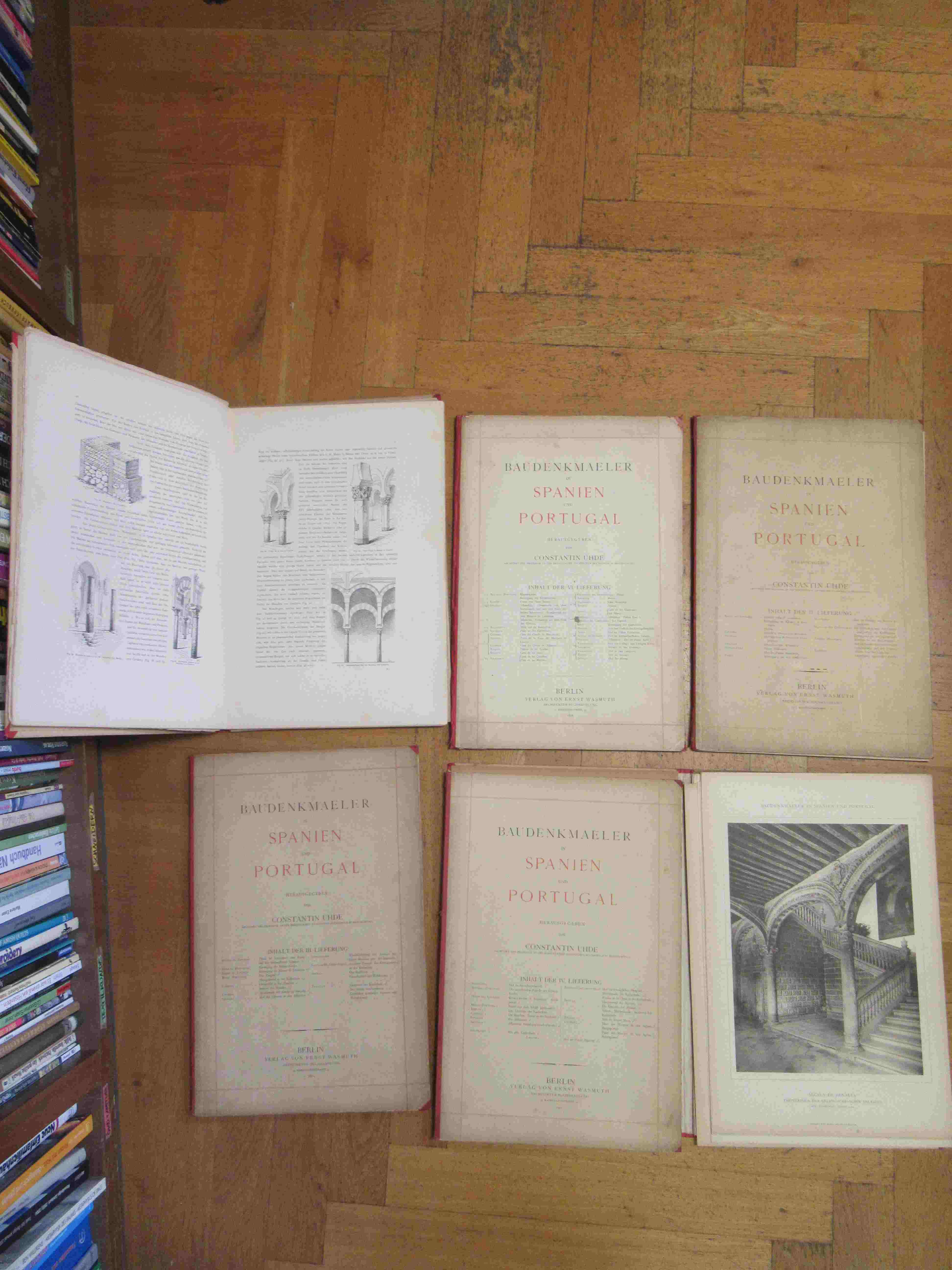
1889réf. 33502ABBerlin, Wasmuth, 1889-1892. 2°, 74 Textseiten mit zahlreichen s/w-Illustrationen sowie insgesamt 120 etwas stärkere Pappseiten mit s/w-Abbildungen (wenige doppelblattgroße auch farbig), in den dicken original Pappmappen mit rotem Leinenrückenstreifen, [2 Warenabbildungen] Erstausgabe die sehr großen Klapp-Mappen stellenw. etwas fleckig/altersspurig, bei der ersten Mappe der Leinenrücken teilw. etwas angeplatzt, auch einige Blätter altersfleckig, insg. aber guter Zustand in den raren original Lieferungs-Mappen
1775Carta geografica tratta dall’Atlante novissimo, illustrato ed accresciuto sulle osservazioni e scoperte fatte dai più celebri e più recenti geografi. Stampato in quattro volumi da Antonio Zatta tra il 1779 ed il 1785. Atlante fra i più belli e completi mai pubblicati in Italia nel XVIII secolo, l'opera più famosa dello Zatta. L’Atlante Novissimo, come si specifica anche nel titolo, è “accresciuto sulle osservazioni scoperte fatte dai più celebri e più recenti geografi”. Tra le novità più significative vi è la comparsa delle nuove isole scoperte nell'Oceano Pacifico da James Cook e la prima carta italiana della Nuova Zelanda. Le illustrazioni furono ideate e disegnate dai suoi collaboratori Giovanni Marco Pitteri, Anton Friedrich Busching, Pietro Antonio Novelli ed incise da Giuliano Zuliani. Il primo tomo dell’atlante è introdotto da un breve saggio di geografia generale dove l’autore definisce in modo sintetico e preciso gli elementi che compongono i reticoli eclittico ed equatoriale usati nelle tavole. Interessante la sezione dove si sofferma a descrivere il fenomeno della precessione degli equinozi e quello della variazione ciclica dell'obliquità dell'eclittica. Acquaforte, stampata su carta vergata coeva, coloritura coeva dei contorni, in buone condizioni. Map from the Atlante novissimo, illustrato ed accresciuto sulle osservazioni e scoperte fatte dai più celebri e più recenti geografi. Printed in four volumes by Antonio Zatta between 1779 and 1785. Atlas among the most beautiful and complete ever published in Italy in the eighteenth century, the most famous work of Zatta. The Atlante Novissimo, as also specified in the title, is “increased on the observations made by the most famous and most recent geographers”. Among the most significant innovations there is the appearance of the new islands discovered in the Pacific Ocean by James Cook and the first Italian map of New Zealand. The illustrations were designed and drawn by his collaborators Giovanni Marco Pitteri, Anton Friedrich Busching, Pietro Antonio Novelli and engraved by Giuliano Zuliani. The first volume of the atlas is introduced by a brief essay of general geography where the author defines in a concise and precise way the elements that make up the ecliptic and equatorial grids used in the tables. Interesting is the section where he pauses to describe the phenomenon of precession of the equinoxes and the cyclical variation of the obliquity of the ecliptic. Etching, printed on contemporary laid paper, contemporary outline coloring, in good condition.
1998réf. 46430The Royal Canadian Military Institute Heritage Society. VG/VG. 1998. Hardcover. 1552460460 . Hardback first printing of volume 4 only; signed by author and inscribed to previous owner. Clean bright covers and contents. Crisp glossy DJ with minimal shelfwear no tears. Not library discard. ; . The Royal Canadian Military Institute Heritage Society, hardcover
réf. DADAX023052561XNew unknown
1993réf. x-9810213875World Scientific Pub Co Inc 1993. Hardcover. New. World Scientific Pub Co Inc hardcover
réf. 183307Lisbon National Archives of Rhodesia & Nyasaland-Centro de Estudas Históricos Ultramarinos. 1962-1965. Original publisher's red cloth hardback gilt lettering spine thick large 8vo: Vol. I 1497-1506: xxxvi 832pp. Vol. II 1507-1510: xxx 612pp. Vol. III 1511-1514: xxvvii: 662pp. Vol. IV 1515-1516: xiv 604pp. Fine copies. Documentos Sobre Os Portugueses Em Mocambique E Na Africa Central 1497-1840 Lisbon, National Archives of Rhodesia & Nyasaland-Centro de Estudas Históricos Ultramarinos. 1962-1965 hardcover
réf. ria9783319978123_inpHardcover. New. New Book; Fast Shipping from UK; Not signed; Not First Edition; The revised edition of this book offers an extended overview of quantum walks and explains their role in building quantum algorithms in particular search algorithms.Updated throughout the book focuses on core topics including Grover's hardcover
réf. ria9783030074074_inpPaperback. New. New Book; Fast Shipping from UK; Not signed; Not First Edition; The revised edition of this book offers an extended overview of quantum walks and explains their role in building quantum algorithms in particular search algorithms.Updated throughout the book focuses on core topics including Grover's paperback
réf. ria9780851996196_inpHardback. New. New Book; Fast Shipping from UK; Not signed; Not First Edition; This book provides a comprehensive review of our current knowledge of the diversity of the species. The book describes the inter-relationships between populations based on morphological and molecular markers. It also examines the conser hardcover
1945Six medium octavo volumes in red faux leather (plastic leatherette) boards with original wrapers bound in ; approx 300-500 pages per volume; b/w/ illus., ports., facsims; onomastic index to last volume. In Portuguese. Series: Biblioteca historica de Portugal e Brasil ; Serie ultramarina, no. 6. Portuguese -- India. Discoveries (in geography) -- Portuguese. Portugal -- History -- Period of discoveries, 1385-1580. India -- History -- European settlements, 1500-1765. Orient -- History. Goa, Cochim, || Vol. 1 tr. by Isabel Ferreira do Amaral Pereira de Matos and Maria VitÛria Garcia Santos Ferreira; v. 2, 5-6, by Maria Vitoria Garcia Santos Ferreira; v.3-4, by Manuel Busquets de Aquilar. || ** Extra shipping costs may apply **.
réf. 6560Philadelphia: Lea Brothers & Company. Very Good-. Hardcover. Wear to extremities. Contemporary endpapers. First few pages show chipping; No one expects a Spanish Inquisition!; 8vo; 522 pages . 1890. 0781237793 . Lea Brothers & Company hardcover
1803réf. 6227Madrid: Imprenta De Sangha. Very Good. Hardcover. Rubbing to boards. Library markings; In Spanish. Fancy marbled endpapers; 16mo; 125 pages . 1803. Imprenta De Sangha hardcover
réf. 44535Lisboa, A.M. Teixeira 1906, 215x140mm, XIII- 559 + 599páginas, demi-veau marbré, pièce de titre de tomaison rouges, ornementations dorés, nom de possesseur manuscrite sur les deux pages de titre, dans le tome 1 un cahier sort un peu de la reliure, autrement bon état.
réf. BN67270Genießer unterwegs Spanien & Portugal: Rezepte und kulinarische Notizen Geniesser unterwegs Goldstein Joyce; Barnhurst Noel and Rothfeld Steven unknown
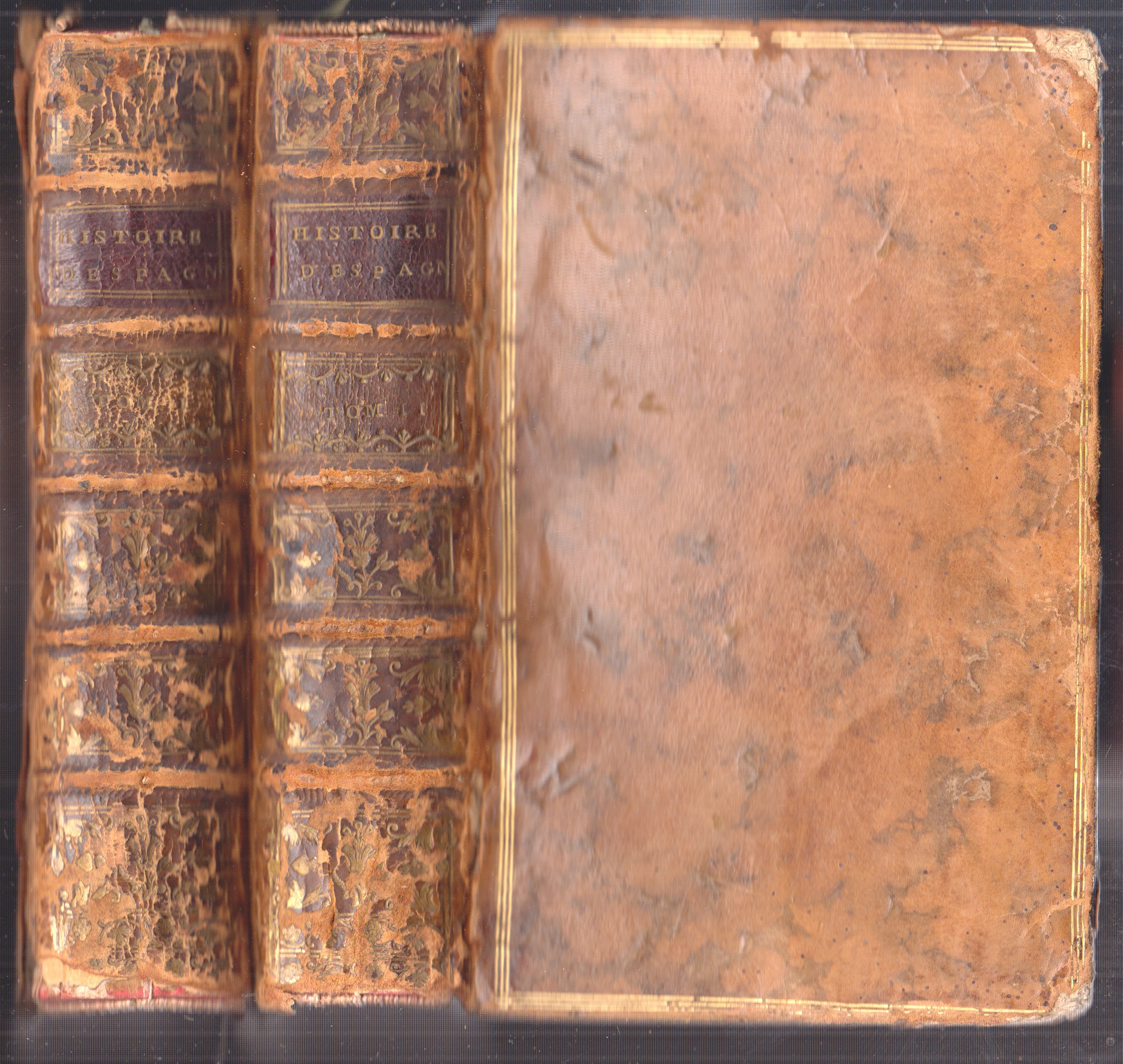
1765réf. 1737-20Paris, Jean-Thomas Herissaant 1765. 2 vols. 8°. 1 Bl., 745 S.; 1 Bl., 704 S., 2 Bll. Ldr.-Bd. d. Zt. m. Goldpräg. Rückenkanten stärker berieb. Exlibris. 4 Ss. 739-742 (Remarques) verbunden. Édition originale [2 Warenabbildungen]
1936Album photo oblong format, avec 24 photos format Contient : Album Photo : Croisière du "Champlain" du 5 au 20 avril 1936 Le Havre - Lisbonne - Malaga - Casablanca - Canaries - Madère - Açores [ Contient : ] Champlain Départ du Havre - Lisbonne. Cathédrale Le cloître - Cintra Le château - Entre Malaga et Grenade - L'Alhambra - Gitanes à l'entrée des jardins du Generalife - Gibraltar - Rabat. Jardin des Oudayas - Canaries. Pic de Teyde - Vieille femme au jardin botanique d'Orotava - Le Champlain à Funchal - Toboggan de Terreiro da Lucta à Funchal - Chars à boeufs à Funchal - Madère. Toboggan - Le Champlain entre Madère et les Açores. Bénédiction de la mer [Avec Paul Chack, Abbé Guinchard, Commandant Sylvestre, Commissaire Ameil, Mme Cangardel, Mr Coquillat ] - Açores. Punta Delgada - Juan Miguel des Açores. Geysers à Furnas Exploité par la Compagnie Générale Transatlantique, mis en service en juin 1932, le Champlain coulera sur une mine allemande en juin 1940. Bon état (second plat un peu frotté avec pliure, bon exemplaire par ailleurs). Français
réf. 5770Carte touristique dépliante couleur dans son étui d'origine, Blondel La Rougery, Paris, 1948
1986réf. 230284Saint-Marie Zodiaque 1986/87. 346 (3), 326 (2) S., zahlr. s/w, einzelne farb. Abb. im Text und auf Taf., Reg., Lit.verz. Ln.mS. *Umschläge etwas lichtrandig, am Kapital mit kl. Randläsur* sonst sehr gute, saubere Expl.*.
réf. 426291Na Impressão Regia Lisboa 1817 In-12 carré ( 150 X 100 mm ) de 261-2 pages, plein veau tabac, dos à nerfs orné de filets dorés, pièce de titre de maroquin grenat, tranches mouchetées de rouge ( Reliure de l'époque ). EDITION ORIGINALE. Anciennes mouillures aux contre plats, bel exemplaireJoaquim José Pedro LOPES, né à Lisbonne dans le dernier quart du XVIIIe siècle, absolutiste, occupa le poste de secrétaire du ministère des Affaires étrangères et de rédacteur en chef de la Gazeta de Lisboa, devenue plus tard Diário do Governo, jusqu'en 1833, année où il fut démis de toutes ses fonctions politiques. Il souffrit alors de cécité et de pauvreté, ce qui le contraignit à vendre de son vivant une grande partie de son immense bibliothèque. Disciple du père José Agostinho de Macedo, il participa à certaines de ses polémiques. Outre ses articles dans des périodiques, il se consacra à la traduction et à l'adaptation de divers ouvrages, dont celui-ci contre la franc-maçonnerie. Inocêncio mentionne deux autres éditions outre la première ( Lisbonne, 1817 ) : une seconde en 1818 et une troisième en 1823.
réf. 46814o.J. Mit 1 gestochenen Flaggentafel. 4 Bl., 530 S. Hldr.d.Zt.; Ecken u. Kapitale beschabt. [2 Warenabbildungen]
1800réf. 40184France 1800. Oblong folio 228 x 317 mm. Sewn. i title 8 ii blank pp. Notated in black ink on 10-stave rastrum-ruled paper. With small oval handstamp of the Glasgow Society of Musicians to title and final page of music; "81" in contemporary manuscript to upper center of title; "480" in contemporary manuscript to lower inner corner of final blank page. Blank margins of title and final blank page soiled; occasional stains; minor loss to lower outer corner of title; small tear to blank lower margin of final leaf. Drawn from the opera "Adrasto re d'Egitto" to a libretto by G. de Gamerra first performed in Lisbon at the Teatro S Carlos on 21 December 1800. "Marcos Portugal was not only one of the most prolific Luso-Brazilian composers ever but also the most successful. His European fame rests above all on his comic operas especially Le confusioni della somiglianza Lo spazzacamino principe La donna di genio volubile Le donne cambiate and L'oro non compra amore and on the prima donna showpiece arias in La morte di Semiramide and Gli Orazi e i Curiazi. However he was equally famed in Portugal and Brazil as a composer of sacred music which he composed throughout his working life apart from the Italian period. His three best-known works remained in the repertory until the early 20th century: the Missa Grande c1790 the Matinas da Conceição 1802 and the Te Deum 1802. Portugal's operas were rooted in the Neapolitan style of Cimarosa. Yet as early as 1794 in Le donne cambiate he was more melodious and forward-looking using such devices as a 'stupefaction ensemble' and certain turns of phrase more readily associated with Rossini. His Lisbon operas were perhaps less adventurous musically relying more on Catalani's virtuosity. In his church music the elaborate stile concertato of his early years for the Patriarcal gradually developed into a pompous grandiloquent style fit to exhibit royal power. This is particularly so with the works for male voices and six organs at the Mafra Basilica many of which were reworked for mixed voices and orchestra for the Royal Chapel in Rio de Janeiro where the virtuosi castrati much appreciated by the King played a very influential role." António Jorge Marques and David Cranmer in Grove Music Online. unknown
1800réf. 40184France 1800. Oblong folio 228 x 317 mm. Sewn. i title 8 ii blank pp. Notated in black ink on 10-stave rastrum-ruled paper. With small oval handstamp of the Glasgow Society of Musicians to title and final page of music; "81" in contemporary manuscript to upper center of title; "480" in contemporary manuscript to lower inner corner of final blank page. Blank margins of title and final blank page soiled; occasional stains; minor loss to lower outer corner of title; small tear to blank lower margin of final leaf. Drawn from the opera "Adrasto re d'Egitto" to a libretto by G. de Gamerra first performed in Lisbon at the Teatro S Carlos on 21 December 1800. "Marcos Portugal was not only one of the most prolific Luso-Brazilian composers ever but also the most successful. His European fame rests above all on his comic operas especially Le confusioni della somiglianza Lo spazzacamino principe La donna di genio volubile Le donne cambiate and L'oro non compra amore and on the prima donna showpiece arias in La morte di Semiramide and Gli Orazi e i Curiazi. However he was equally famed in Portugal and Brazil as a composer of sacred music which he composed throughout his working life apart from the Italian period. His three best-known works remained in the repertory until the early 20th century: the Missa Grande c1790 the Matinas da Conceição 1802 and the Te Deum 1802. Portugal's operas were rooted in the Neapolitan style of Cimarosa. Yet as early as 1794 in Le donne cambiate he was more melodious and forward-looking using such devices as a 'stupefaction ensemble' and certain turns of phrase more readily associated with Rossini. His Lisbon operas were perhaps less adventurous musically relying more on Catalani's virtuosity. In his church music the elaborate stile concertato of his early years for the Patriarcal gradually developed into a pompous grandiloquent style fit to exhibit royal power. This is particularly so with the works for male voices and six organs at the Mafra Basilica many of which were reworked for mixed voices and orchestra for the Royal Chapel in Rio de Janeiro where the virtuosi castrati much appreciated by the King played a very influential role." António Jorge Marques and David Cranmer in Grove Music Online. unknown books
1909réf. 318597London: Constable 1909. First edition. 21 colour plates numerous photographs. xviii4052pp. 4to. Bound in modern half crimson morocco and cloth sides gilt spine. Fine. First edition. 21 colour plates numerous photographs. xviii4052pp. 4to. Constable unknown
1758réf. 19230Paris: Chez la Veuve Didot Nyon.Brocas 1758. New Edition reviewed and enlarged. 1 vols. 8vo. Contemporary mottled calf morocco label. Some rubbing small holes and chips at head and tail of spine. New Edition reviewed and enlarged. 1 vols. 8vo. This historian is best known for his history on the knights of Malta. Chez la Veuve Didot, Nyon...Brocas unknown