VIEIRA, Antonio (1608-1697).MareMagnum

9 126 résultats
Lisboa, na officina de Miguel Deslandes, a custa de Antonio Leyte Pereyra, 1686. 4to. 4 hojas, 421 pp. (i.e. 511), seguido de páginas numeradas 146 a 178 (46 pp.). Error de páginación: de la pp. 116 pasa a la pp. 127. Impresión a doble columna. Ejemplar en buen estado. Encuadernación de época en piel, con lomera ornada y tejuelo.
réf. SKU1009897Chivalry Bookshelf. HARDCOVER. VG. Sewn in ribbon marker intact. Binding solid pages a bit toned along top edge but crisp and clean no markings found. Dust jacket bright and shiny with a bit of ruffling along the top light scuffs and dents. Extremities lightly bumped with minimal tip wear. Chivalry Bookshelf hardcover
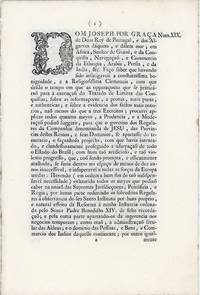
1759réf. 43057Lisboa: Impressa na Secretaria de Estado dos Negocios do Reino 1759. Removed from a larger volume. A very good fresh crisp copy tiny stain to fore edge pinprick to upper margin. 7 1 pp. 11.5 x 8 inches. Issued on the anniversary of the supposed plot against the King of Portugal by the Jesuits the "Lei de expulsão da Companhia de Jesus de Portugal e seus Domínios" of September 3 1759 promugated on October 3 1759 condemned the Jesuits as rebels and traitors banishing them from all Portuguese territiories under pain of death along with anyone who either helped or communicated with them. It was the culmination of a long list of actions by the Marquês de Pombal who was behind these laws and who had written in a letter to Conde de Unhão in February before the law was published that "nothing can be omitted or ought to be omitted to disarm the Jesuits' diabolical machinations so that they may not be reborn and any hidden roots remain in our land." This was reflected in the document which accused the Jesuits of attempting to assassinate the king ruin the kingdom destroy Portugal and "clandestinely pursuing the usurpation of the entire state of Brazil with such an artificial and so violent progress that if it was not promptly and effectively shut down".the Company of Jesus' goal would be accomplished. "within a space of less than ten years and become inaccessible and insurmountable." Dated and signed in print: "Dada no palacio de Nossa Senhora da Ajuda aos tres de setembro de mil setecentos cincoenta e nove. Rey." And then "Lisboa 3 de outubro de 1759 Rodrigo Xavier Alvares de Moura. Foi impressa na Secretaria de Estado dos Negocios do Reino." Printed as Section XIX of "Collecçaõ dos Breves Pontificios e Leys Regias . sobre a liberdade das pessoas . dos Indios do Brasil" Lisbon Impressa na Secretaria de estado por especial ordem de Sua Magestade 1759. See Gauz: Portuguese and Brazilian Books in the John Carter Brown Library 759/1. Impressa na Secretaria de Estado dos Negocios do Reino unknown
1759réf. 43057Lisboa: Impressa na Secretaria de Estado dos Negocios do Reino 1759. Removed from a larger volume. A very good fresh crisp copy tiny stain to fore edge pinprick to upper margin. 7 1 pp. 11.5 x 8 inches. Issued on the anniversary of the supposed plot against the King of Portugal by the Jesuits the "Lei de expulsão da Companhia de Jesus de Portugal e seus Domínios" of September 3 1759 promugated on October 3 1759 condemned the Jesuits as rebels and traitors banishing them from all Portuguese territiories under pain of death along with anyone who either helped or communicated with them. It was the culmination of a long list of actions by the Marquês de Pombal who was behind these laws and who had written in a letter to Conde de Unhão in February before the law was published that "nothing can be omitted or ought to be omitted to disarm the Jesuits' diabolical machinations so that they may not be reborn and any hidden roots remain in our land." This was reflected in the document which accused the Jesuits of attempting to assassinate the king ruin the kingdom destroy Portugal and "clandestinely pursuing the usurpation of the entire state of Brazil with such an artificial and so violent progress that if it was not promptly and effectively shut down".the Company of Jesus' goal would be accomplished. "within a space of less than ten years and become inaccessible and insurmountable." Dated and signed in print: "Dada no palacio de Nossa Senhora da Ajuda aos tres de setembro de mil setecentos cincoenta e nove. Rey." And then "Lisboa 3 de outubro de 1759 Rodrigo Xavier Alvares de Moura. Foi impressa na Secretaria de Estado dos Negocios do Reino." Printed as Section XIX of "Collecçaõ dos Breves Pontificios e Leys Regias . sobre a liberdade das pessoas . dos Indios do Brasil" Lisbon Impressa na Secretaria de estado por especial ordem de Sua Magestade 1759. See Gauz: Portuguese and Brazilian Books in the John Carter Brown Library 759/1. Impressa na Secretaria de Estado dos Negocios do Reino unknown books
1893réf. biblio14First edition. Gurney & Jackson. 1893. Octavo. xx 472pp. Double-page frontispiece map 52 plates further text emgravings. Half calf marbled boards. Marbled endpapers. Spine in six compartments with gilt embellishment leather labels with gilt lettering bound and signed by Sangorski & Sutcliffe. Slight foxing to preliminary pages occasional spotting. From the library of Humphrey Adam Gilbert 1886-1961 of Bishopstone Hereford hunter shooter and fisher; author of a Tale of a Wye Fisherman with his signature dated 1932 to first blank. Gurney & Jackson hardcover
1769réf. 4064Couverture rigide Chez Georges Rey, et Compagnie, Libraires do Poço Novo 1769 20x15 cm
réf. 6708Nova-Goa, Imprensa Nacional, 1862. 1 volume in-8, reliure moderne demi-basane à coins, 248 pp., couvertures imprimées conservées, mais piquées, intérieur propre et frais, bon exemplaire.
Paris, Baudouin Frères, 1827. Cuatro volúmenes en 4to.; 4 hojas, XV pp., 403 pp. y dos facsímiles de documentos, uno de ellos plegado + 2 hojas, 421 pp., 1 h. y dos láminas plegadas + 2 hs., 406 pp. y dos láminas plegadas + 2 hs., 379 pp., dos láminas plegadas y un gran estado plegado. Ejemplar sin el Atlas de mapas. Encuadernación uniforme de época en media piel, con lomeras ornadas con dorados y gofrados en seco y doble tejuelo.
1801réf. 18134Kiel / Helmstädt u. Braunschweig, neue Academische Buchhandlung / Fleckeisen, 1801-04. 8°, XII, 285 Seiten, 1 Blatt; IV, 265 Seiten, 1 Blatt und 1 mehrfach gefaltete, gestochene Karte (Portugal); XVI, 316 Seiten, 1 Blatt. Pappbände der Zeit mit goldgeprägtem Rückenschild und handschriftlichem Rückenschild.
1678réf. 200041AG1678. Paris Sanson d'Abbeville 1678. Original hand-coloured engraving. Plate Size: 53.6 cm x 41.7 cm. Sheet Size: 61.8 cm x 46.5 cm. Original map. In very good condition. Faint signs of browning to map. Minor paper imperfections to the outer margins. Small stain to map near centre-fold. A richly detailed map showing the northern part of Portugal. Relief on map depicted pictorially and border inlaid with longitudinal and latitudinal details The map is dominated by three rivers: the Tajo Tagus in the south the Douro and the Minho further north. The Spanish kingdom and regions such as Leon are included and the great city of Salamanca can be seen. The lower part of the map runs out before the Tagus estuary empties into the Atlantic at Lisbon. The ornamental title cartouche is in the lower right corner of the map. Off the coast is a large warship flying the coat-of-arms Kingdom of Portugal and the Algarves. The sails of the boat carry Latin text commemorates the commercial and maritime exploits of King John IV in Africa Arabia Ethiopia Persia India and Brazil. Nicolas Sanson 20 December 1600 7 July 1667 was a French cartographer termed by some the creator of French geography in which he's been called the "father of French cartography." The French school of Geography was unprecedented in its attention to precision and scientific detail and discarded much of the decorative embellishments of previous maps as irrelevant. From Sanson's time in the second half of the seventeenth century until the latter part of the eighteenth century French geographical conceptions were more influential than those put forward by any other nation. He was tutor to Louis XIII and Louis XIV. Sanson published over 300 maps. In 1692 Hubert Jaillot collected Sanson's maps in an Atlas nouveau. Wikipedia unknown
Lisboa, Typographia do Progresso, 1855 [y] Lisboa, Typographia de Castro e Irmão, 1856. Dos tomos en un volúmen en folio; 573 pp. y 288 pp. Con varios estados plegados y un total de cuatro láminas litográficas con retratos de escritores hispanos y lusos. Textos en portugués y español. Encuadernación de época, fatigada, en media tela. Impulsada por Juan Valera durante su embajada en Lisboa, la "Revista Peninsular" es una excelente muestra de las aspiraciones de los iberistas españoles y portugueses del siglo XIX. Entre otros muchos temas se trata de: los ferrocarriles peninsulares, las contribuciones directas en España, el comercio exterior, la explotación de la hulla y el hierro en España, la Exposición General de Bellas Artes en Madrid en 1856, y Portugal en la Exposición Universal de Paris. La nómina de los autores es significativa: Alexandre Herculano, Almeida Garrett, Florez Estrada, Quintana, Estévanez Calderón, Mesonero Romanos, Espronceda, Cánovas del Castillo, Latino Coello, Mousinho de Oliveira, Campoamor, Vicente Barrantes, Gertrudis Gómez de Avellaneda junto a otras poetisas españolas, Bulhão Pato, Maldonado Macanaz, Sinibaldo de Mas, Donoso Cortés, Aureliano Fernandez Guerra, José Guell y Renté, Salvador Costanzó, Juan Valera, Heriberto Gonzalez de Quevedo y muchos otros,, incluidos autores americanos.
Venezia: Venetiis, apud Paulum Baleonium, 1644. 4to.; 20 hojas, 305 pp. (numeradas desde la 293 a la 598) para ésta Segunda Parte. Más un estado plegado que contiene "Series Morborum Muliebrium, quae etiam continet Indicem Capitum Secundae Partis". Encuadernación en plena piel marbreada, de la época, con lomera ornada. Rodrigo de Castro, nacido en Lisboa en el seno de familia judía de tradición médica (uno de sus tios, Emmanuel Vaëz atendió a cuatro reyes de Portugal) estudió Medicina en Evora y en Salamanca donde recibió los grados de Doctor en Filosofía y en Medicina, para ulteriormente completar sus estudios y practicar en Lisboa, como jóven promesa, con posterioridad a 1580, tiempo en el cual le llegó una propuesta de Felipe II, Rey de Portugal a la sazón, para realizar un viaje a la India con el propósito de recoger hierbas medicinales y estudiarlas científicamente. Rechazó la oferta, sintiendose perseguido ya por la Inquisición, y huyó a Amberes, donde se instaló con su mujer, Catalina Rodriguez, y sus dos hijos, alcanzando allí una alta estima por algunas curas afortunadas, no obstante lo cual, a la reestablecida ocupación española de los Paises Bajos, sintiendose nuevamente inseguro, se trasladó al Norte de Holanda durante algunos años, hasta que un colega, portugués y posiblemente familiar, Enrico Rodriguez, le indujo en 1594 a pasar definitivamente a Hamburgo, la capital hanseatica, ciudad de la que hizo su hogar permante hasta su muerte y a la que dedicó sus devociones y sacrificios, como lo prueba su actuación durante la Peste de 1596. Entre sus pacientes de la época se cuentan el Rey de Dinamarca, el Landgrave de Hesse, el Conde de Holstein y el Arzobispo de Bremen. Durante los treinta y cinco años que residió en Hamburgo su actuación tanto como físico sabio, como de ayuda para la humanidad sufriente le hicieron acreedor de títulos tales como "maestro de su arte" y "príncipe de la medicina de su tiempo". Fue enterrado en el Cementerio de la Congregación Judeo-Portuguesa de Altona. La primera edición de la presente obra, fundamental sobre la Medicina de las Mujeres, apareció en Hamburgo en 1604, y su difusión fue enorme en los Estados Germánicos, con ediciones en Hanover, Colonia y Frankfurt. Su difusión en Europa se debe a esta edición de Venecia, 1644, en dos Partes, de las que la Primera está dedicada a la Anatomía y Naturaleza de la Mujer, mientras que esta Segunda Parte contiene por entero la Práctica Médica en las Enfermedades que afectan a las Mujeres. # Friedenwald, Jewish Luminaries in Medical History, pp. 54-56 : "One of the foremost physicians in establishing Gynaecology in the Renaissance period". # Wellcome, II, pp.312. # Hirsch, I, 681. # Krivatsky, 2289.
1823réf. 38967Paris Jules Didot l'aîné 1823 in-8 broché, couverture de papier bleu de l'époque
1922Abundant black and white illustrations and reproductions of photos. Features: The Man Who Turned Thief - Part I - remarkable narrative of an honest man turned criminal who conducted the most mysterious one-man robberies in American history; With a Camera in Portugal - nice photo-illustrated article; Mr. Todbury's Trawler Trip - a confirmed landlubber, advised by his doctor, goes on a sea-voyage on a little trawler; A Record Laugh - A story from Kimberley, South Africa involving an unsophisticated Kaffir, a "live" wire, and a laugh that could be heard from miles away!; Mistaken Identity - H.A. Garrett went to Chile to make a living but narrowly escaped being hanged instead; Through the East by Air - Part I - Richard Carline and his brother Sydney were commissioned to paint scenes in Egypt, Palestine, Syria, Mesopotamia, Kurdistan, and Persia for the National War Museum after WWI, and did so for ten months - with much adventure - article with photos; The Golden Cheeses - an expedition hopes to recover 2 million pounds of German gold from a ship torpedoed in the war; The Little Captain - some joyous fragments from the chequered life-history of one of the most irresponsible dare-devils imaginable - a young Mexican; Trailing the Gun-runners - Part III - continuation of the adventures of U.S. authorities attempting to block the flow of arms to revolutionaries in Dominica; Big-Game Shooting in Northern India - exciting stories about pursuing tigers and leopards; The Sea-Devil - two men are lucky to escape with their lives after a prolonged battle with a shark; and more. 85 pages plus 8 pages of vintage ads. Clean and unmarked with light wear. Binding tight. A high-quality copy of this excellent vintage issue. Book
1815réf. RO80102801JEUNEHOMME, DELAUNAY et PLANCHER. 1815. In-12. Relié demi-cuir. Etat passable, Couv. défraîchie, Mors arrachés, Intérieur acceptable. 241 pages. 1er plat de couverture détaché. Etiquette de code sur la coiffe en-tête et tampons de bibliothèque sur la page de titre et dans quelques marges. Petit manque sur la coiffe en pied.. . . . Classification Dewey : 946-Espagne, Portugal
Paulin, Libraire-Editeur, Paris. 1836. In-8 Carré. Broché. Etat d'usage. Couv. convenable. Dos satisfaisant. Non coupé. 419 pages pour le tome I, 381 pages pour le tome II, 478 pages pour le tome III, 377 pages pour le tome IV et 519 pages pour le tome V. Tome V illustré d'une grande carte dépliable en noir et blanc en fin d'ouvrage. Etiquettes de code sur les dos. Dos du tome I fendu, séparant l'ouvrage en 2 parties. Rousseurs (fortes dans le tome V). Plats du tome V abîmés, avec quelques manques, ses premières pages étant jaunies. Seconde édition. Des Révolutions du temps et de la Paix de Presbourg (tome I) à la Convocation des Cortes ordinaires pour 1813 (tome V).
1980réf. ARTE2396Lisabon, Associação dos Arquitectos Portugueses 1980. 4°. XXIII, 763 S. mit zahlreichen s/w Abb., OKst. mit OUmschlag, gut erhalten.
réf. 202658Paris, Charpentier et Cie, 1873 in-12, XX-423 pp., portrait-frontispice, index, demi-maroquin marron à coins, dos à nerfs, tête dorée, couverture conservée (Creuzevault). Dos légèrement passé.
réf. 222569S.l., s.d. (vers 1820) in-folio, [24] ff. n. ch., couverts d'une écriture moyenne et très lisible (environ 30 lignes par page), broché sous couverture d'attente de papier crème.
1841réf. 13655Lisboa, Vicente Jorge de Castro & Irmao, 1841. 3 tomes en 1 vol. in-12 de (4)-VI-(2)-219, 247-(1), 201 pp., demi-cuir de Russie noir, dos lisse orné (reliure de l'époque).
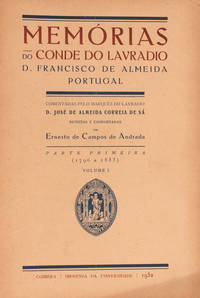
réf. 2003PG038Comentadas pelo Marquês do Lavradio D. José de Almeida Correia de Sá revistas e coordenadas por Ernesto de Campos de Andrada. Parte Primeira 1796 a 1833 Volume I. Volume II a Volume VI e VIII Imprensa da Universidade. Coimbra.1932 1933 1934 1937 e 1938. 5 Volumes de 233x16 cm. Com viii 432; viii 478; 401 iv; viii 379 viii 347 Brochado. Ilustrado em extratexto sobre papel couché com 94 gravuras. Obra dividida em três partes. A primeira ocupa os volumes I e II e abrange o período de 1796 a 1833. A segunda parte ocupa o 3º e 4º volumes e abrange o período de 1834 a 1853 a terceira parte ocupa o 5º volume e abrange o período de 1854 a 1857. Cada volume contém índice dos capítulos e índice onomástico. Exemplar com todos os volumes por abrir. 5 de 8 volumes. Memórias que registam pormenorizadamente quer os acontecimentos da vida privada quer os acontecimentos políticos diplomáticos militares e sociais de uma época conturbada que foi dominada pelas invasões francesas pela revolução Liberal de 1820 e pela Guerra Civil entre Liberais e Absolutistas. D. Francisco de Almeida Portugal Lisboa 1796 - Roma 1870 oitavo filho do 3º Marquês do Lavradio distinguiu-se como diplomata representando Portugal em diversos países europeus desde 1818 até ao fim da sua vida. O lugar mais importante que ocupou foi o de ministro plenipotenciário em Londres desde 1851 a 1869. Neste último ano foi transferido para Roma onde faleceu. Desempenhou por diversas vezes as funções de Ministros dos Negócios Estrangeiros e foi elevado á dignidade de 2º Conde do Lavradio em 1 de dezembro de 1834. D. José Maria do Espírito Santo de Almeida Correia de Sá Lisboa 1874 - Lisboa 1945 que sucedeu a seu bisavô como 6.º Marquês de Lavradio e 9º Conde de Avintes foi um aristocrata e intelectual oficial do Exército Português. Distinguiu como memorialista e no campo da historiografia militar. Frequentou a Academia Militar e em 1910 aquando da imposição da República o Marquês de Lavradio passou à reserva e acompanhou o Rei Dom Manuel II para o exílio em Inglaterra. Além da colaboração na edição destas memórias do seu tio avô e escreveu igualmente as suas memórias que incluem as impressões do exílio em Inglaterra com o rei D. Manuel II. I-95-H-54 unknown
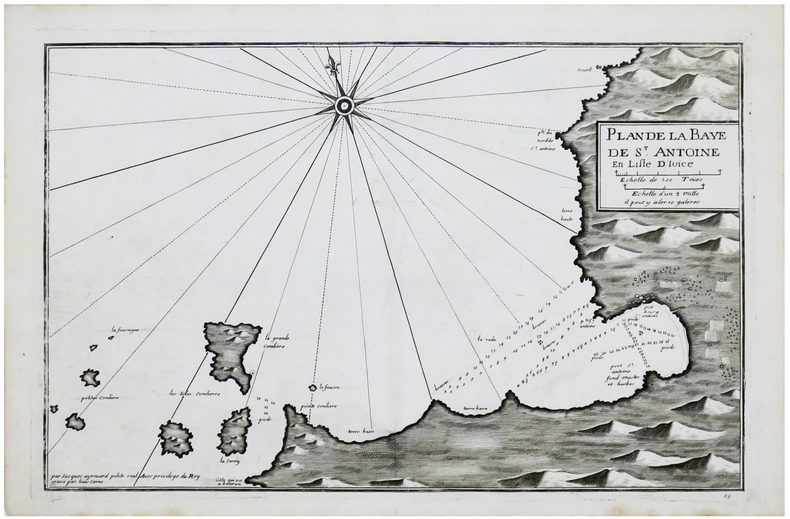
1730réf. LBW-6149[circa 1730]. 289 x 450 mm.
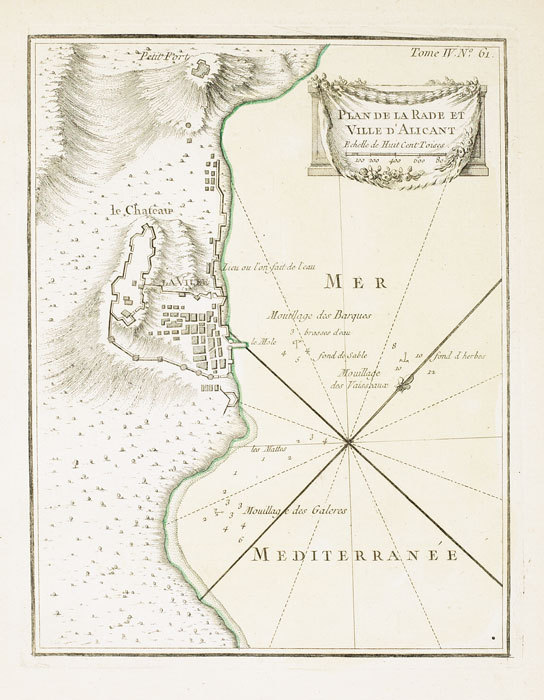
1764réf. LBW-7021764 216 x 172 mm.
1764réf. LBW-6991764 227 x 176 mm.
1836réf. LBW-5980[1836]. 596 x 878 mm.