1409 resultados
1864ref. 53487Selma AL. 1864. Civil War Laws Civil War–era state laws passed by the Mississippi legislature. The two parts of the session were held before and after the Vicksburg campaign during which Jackson fell to the Union and necessitated a change in venue. The ongoing war in the state also suggests a likely cause for these acts to have been printed in Alabama. 20th-century buckram spine gilt lettered. Light wear to cloth. Foxing and tanning. Good. PARRISH & WILLINGHAM 3294. hardcover
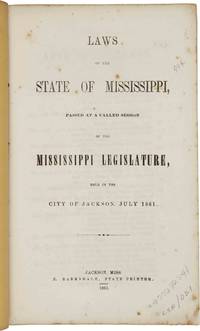
1861ref. 31893Jackson Ms.: E. Barksdale 1861. The laws of Mississippi passed at a special session at the beginning of the Civil War ending in September 1861. Laws treat the incorporation of military training at the state university the administration of funds from the sale of runaway slaves and responses to sundry petitions for relief. Scarce. Contemporary plain wrappers. Minor creasing of rear wrapper. Old institutional stamp on upper inner corner of front wrapper. Moderate foxing. Very good. PARRISH & WILLINGHAM 3292. OCLC 5869036. unknown books
1864ref. 53487Selma AL. 1864. Civil War Laws Civil War–era state laws passed by the Mississippi legislature. The two parts of the session were held before and after the Vicksburg campaign during which Jackson fell to the Union and necessitated a change in venue. The ongoing war in the state also suggests a likely cause for these acts to have been printed in Alabama. 20th-century buckram spine gilt lettered. Light wear to cloth. Foxing and tanning. Good. PARRISH & WILLINGHAM 3294. hardcover books
1908ref. 1144960State of Mississippi 1908. Hinge starting between ffep and frontis. Crease of spine. Presentation card signed by Dunbar Rowland Director of the Dept. of Archives and History tipped in at title page. Owner's name. 1911 date written on ffep. Hardcover. Good/No Jacket as Issued. Thick Large Octavo. Book. State of Mississippi Hardcover
1835ref. 354311Grand Gulf Mississippi 1835. 4pp. Folio newspaper. Minor fold lines light browning. Institutional deaccession stamp in lower margin. Contemporary ownership signature in right margin. Very good. 4pp. An early issue of this scarce Mississippi newspaper. Edited by W.M. Smyth publication of the GRAND GULF ADVERTISER began on Feb. 17 1834 and continued to 1839 after which it became known as the WEEKLY GRAND GULF ADVERTISER. The bulk of the present issue is comprised of Andrew Jackson's Dec. 7 1835 address to both houses of Congress. Jackson touches on Spain's internal conflicts political unrest in South America and the abandonment of an Indian policy rooted in engagement. A wealth of advertisements occupy the verso of the last leaf. EBERSTADT 135:543. OCLC 10134360 unknown
1835ref. 354311Grand Gulf Mississippi 1835. 4pp. Folio newspaper. Minor fold lines light browning. Institutional deaccession stamp in lower margin. Contemporary ownership signature in right margin. Very good. 4pp. An early issue of this scarce Mississippi newspaper. Edited by W.M. Smyth publication of the GRAND GULF ADVERTISER began on Feb. 17 1834 and continued to 1839 after which it became known as the WEEKLY GRAND GULF ADVERTISER. The bulk of the present issue is comprised of Andrew Jackson's Dec. 7 1835 address to both houses of Congress. Jackson touches on Spain's internal conflicts political unrest in South America and the abandonment of an Indian policy rooted in engagement. A wealth of advertisements occupy the verso of the last leaf. EBERSTADT 135:543. OCLC 10134360 unknown books
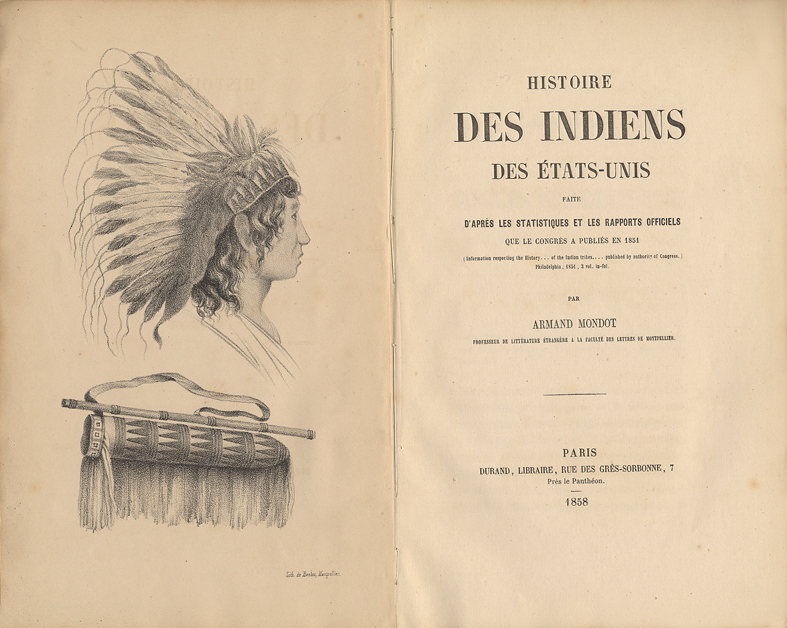
1858ref. 11257Paris, Durand, 1858 ; in-8, broché ; (4), 352 pp., lithographie en frontispice, couverture imprimée.
1876In-4 p. (mm. 295x225), legatura edit. in p. marocchino, dorso a cordoni con tit. oro, tagli dorati, dentelle dorata ai risg., pp. XXIV,692, con 25 grandi tavole, f.t. e piu' volte ripieg., incluse carte geografiche e piante. Relazione "based upon surveys and investigations made under the Acts of Congress directing the topographical and hydrographical survey of the delta of the Mississippi river, with such investigations as might lead to determine the most practicable plan for securing it from inundation, and the best mode of deepening the channels at the mouths of the river - Submitted to the Bureau of Topographical Engineers, War Department, 1861. Reprinted with additions". Solo le tavv. talvolta con strappi, altrimenti esempl. ben conservato.
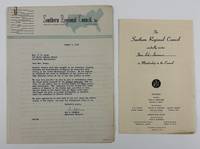
1946ref. 5498Atlanta; Cleveland MS 1946. Very good. Two typed letters totaling 3pp. plus printed form completed in manuscript. Previously folded. Minor edge wear. Light tanning. A pair of typed letters that comprise an inquiry from Guy B. Johnson President of the Southern Regional Council and a response from Mrs. E.H. Green a resident of Bolivar County Mississippi concerning Black voting there in the July 1946 primary election. In his letter Johnson asks Green if she can corroborate stories in the Jackson Advocate that "all Negro votes were challenged" in Bolivar despite the fact that "Large numbers of Negroes were qualified to vote." Green responds that the votes of 241 qualified Blacks in Mound Bayou "the all Negro town" were all challenged on the basis that eligible African Americans had previously voted only in November general elections not primary elections. She also adds several observations from other districts in the county including the second where the votes of registered Blacks who appeared were also challenged and set aside. As a matter of prudence Green asks that "You do not give my name any publicity in this matter." The Southern Regional Council was a multiracial group founded in 1944 that sought equality and an end to racial violence. Also included with the two letters is a printed invitation for Mrs. E.H. Green to join the council with some information on its founding and goals. unknown
1946ref. 5498Atlanta; Cleveland MS 1946. Very good. Two typed letters totaling 3pp. plus printed form completed in manuscript. Previously folded. Minor edge wear. Light tanning. A pair of typed letters that comprise an inquiry from Guy B. Johnson President of the Southern Regional Council and a response from Mrs. E.H. Green a resident of Bolivar County Mississippi concerning Black voting there in the July 1946 primary election. In his letter Johnson asks Green if she can corroborate stories in the Jackson Advocate that "all Negro votes were challenged" in Bolivar despite the fact that "Large numbers of Negroes were qualified to vote." Green responds that the votes of 241 qualified Blacks in Mound Bayou "the all Negro town" were all challenged on the basis that eligible African Americans had previously voted only in November general elections not primary elections. She also adds several observations from other districts in the county including the second where the votes of registered Blacks who appeared were also challenged and set aside. As a matter of prudence Green asks that "You do not give my name any publicity in this matter." The Southern Regional Council was a multiracial group founded in 1944 that sought equality and an end to racial violence. Also included with the two letters is a printed invitation for Mrs. E.H. Green to join the council with some information on its founding and goals. unknown books
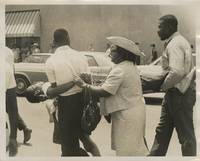
1966ref. List3703Mississippi 1966. Press photo measuring 8 x 10 inches. Text verso reading "SEGREGATION / MISS.: MEMPHIS TO JACKSON MARCH" and "JUL 6 1966. Excellent contrast. Near Fine. A press photo from the Mississippi end of the 1966 March Against Fear showing a Black man apparently injured being carried by a group likely of fellow protestors as white people look on from across the street. The March Against Fear started as a one-man protest against racism and for improving Black suffrage by James Meredith who planned to walk from Memphis to Jackson. When Meredith was shot and hospitalized on the second day of his walk a number of major Civil Rights organizations-the SNCC led by Stokely Carmichael and Cleveland Sellers; the SCLC led by Martin Luther King Jr.; CORE led by Floyd McKissick; and others-took up the banner. By the time the marchers reached Jackson there were 15000 of them and they had registered over 4000 African Americans to vote along the way. Though the march was generally peaceful occasional violence against the protesters broke out; it is not clear where in Mississippi this was taken but there were several conflicts in the state. The march also intensified the conflict between King and the SCLC with its strategy of nonviolence and more radical groups like the SNCC. In Greenwood Mississippi Stokely Carmichael and two others were arrested prompting on his release the delivery of his "Black Power" speech. The SNCC and CORE disavowed non-violence and shifted towards separatism and the Black Panther Party was founded four months later.1 1 Samuel Momodu "Stokely Carmichael's Black Power Speech 1966" BlackPast.org January 16 2024 https://blackpast.org/african-american-history/stokely-carmichaels-black-power-speech-1966/. unknown
1966ref. List3703Mississippi 1966. Press photo measuring 8 x 10 inches. Text verso reading "SEGREGATION / MISS.: MEMPHIS TO JACKSON MARCH" and "JUL 6 1966. Excellent contrast. Near Fine. A press photo from the Mississippi end of the 1966 March Against Fear showing a Black man apparently injured being carried by a group likely of fellow protestors as white people look on from across the street. The March Against Fear started as a one-man protest against racism and for improving Black suffrage by James Meredith who planned to walk from Memphis to Jackson. When Meredith was shot and hospitalized on the second day of his walk a number of major Civil Rights organizations-the SNCC led by Stokely Carmichael and Cleveland Sellers; the SCLC led by Martin Luther King Jr.; CORE led by Floyd McKissick; and others-took up the banner. By the time the marchers reached Jackson there were 15000 of them and they had registered over 4000 African Americans to vote along the way. Though the march was generally peaceful occasional violence against the protesters broke out; it is not clear where in Mississippi this was taken but there were several conflicts in the state. The march also intensified the conflict between King and the SCLC with its strategy of nonviolence and more radical groups like the SNCC. In Greenwood Mississippi Stokely Carmichael and two others were arrested prompting on his release the delivery of his "Black Power" speech. The SNCC and CORE disavowed non-violence and shifted towards separatism and the Black Panther Party was founded four months later.1 1 Samuel Momodu "Stokely Carmichael's Black Power Speech 1966" BlackPast.org January 16 2024 https://blackpast.org/african-american-history/stokely-carmichaels-black-power-speech-1966/. unknown books
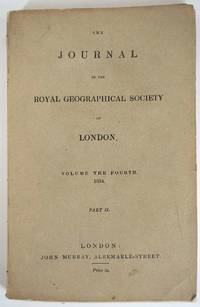
1834ref. 29276London: Royal Geographical Society 1834. Paper wrappers pamphlet. Overall very good condition. Early RGS report in the original paper wrappers. It includes articles & maps on the failed settlement in North Australia "Geographical Memoir of Melville Island & Port Essington on the Cobourg sic Peninsula Northern Australia"; "Expeditions through the Upper Mississippi in 1832"; "Sketch showing the Routes of Lieutenants Conolly & Burnes" through India Pakistan Afghanistan Uzbekistan Iran down to the Persian Gulf where they travel through "Ormuz" straits. All three articles are illustrated by folding maps. 5pp letter towards the end about Volcanoes in Hawaii by David Douglas. This is in fine unopened uncut condition which we purchased from the RGS as they were deaccessing duplicate archives. Interestingly the list of publisher's offerings has a date of April 1837 which advertises Wellsted's account of his 1835 journey through Oman. He "reached areas which no European had previously seen and which were not visited again by Europeans for another hundred years" ODNB. 8vo gray paper wraps iv 129 - 422pp viii advertisements publisher's announcements of new books 4 maps and 2 lithographed plates bound in rear plates browned. Covers slt dusty. Volume the Fourth Part II complete in itself in original printed wrappers. Royal Geographical Society unknown
1920ref. 41182Washington D.C.: Published by the United States Coast and Geodetic Survey 1920. Large folding nautical chart printed on heavy paper stock. Colored. A rare original coastal survey of coast between Louisiana and Mississippi and includes Lake Borgne Lake Ponchartrain the Mississippi Sound St Louis Bay Cat Island Long Beach and Gulfport. Established by President Thomas Jefferson in 1807 as the Survey of the Coast the U.S. Coast and Geodetic Survey was the United States' first civilian scientific agency. This agency has followed its mission to survey the U.S. coastline create nautical charts of the coast and help increase maritime safety since its founding and has often played fascinating roles in significant chapters of U.S. history. It served in all theaters of the Civil War in the service of the Union Army and Navy pioneered acoustic exploration in the wake of the sinking of the Titanic and during WWI it worked to detect enemy submarines. In addition this agency worked to survey and produce detailed maps and renderings of the U.S. coast. These nautical survey maps commonly referred to as "T-sheets" provide fascinating insights into the history of the United States coastline which has and will continue to shift. These maps are the most important data source for understanding the physical and ecological characteristics of the U.S. shoreline. The present map is notable for its inclusion of Gulfport as it was gridded in 1920 and Cat Island a barrier island used for an undercover WWII program Dogs for Defense. Cat Island was chosen as the training camp dedicated to a specialized training program based off the untrue belief that dogs could differentiate humans by smell based on their cultural heritage. The top secret program attempted to train dogs to track and attack Japanese soldiers in the Pacific Theater and was held at Cat Island because of its similar terrain to that of the Pacific Islands and its uninhabited status. This operation was unsuccessful due to the incorrect assumption and shut down in 1944. This map is a highly detailed and accurate sea chart of the coastal border between Louisiana and Mississippi and is an important historical view of the developing Louisiana and Mississippi. Published by the United States Coast and Geodetic Survey unknown
1920ref. 41182Washington D.C.: Published by the United States Coast and Geodetic Survey 1920. Large folding nautical chart printed on heavy paper stock. Colored. A rare original coastal survey of coast between Louisiana and Mississippi and includes Lake Borgne Lake Ponchartrain the Mississippi Sound St Louis Bay Cat Island Long Beach and Gulfport. Established by President Thomas Jefferson in 1807 as the Survey of the Coast the U.S. Coast and Geodetic Survey was the United States' first civilian scientific agency. This agency has followed its mission to survey the U.S. coastline create nautical charts of the coast and help increase maritime safety since its founding and has often played fascinating roles in significant chapters of U.S. history. It served in all theaters of the Civil War in the service of the Union Army and Navy pioneered acoustic exploration in the wake of the sinking of the Titanic and during WWI it worked to detect enemy submarines. In addition this agency worked to survey and produce detailed maps and renderings of the U.S. coast. These nautical survey maps commonly referred to as "T-sheets" provide fascinating insights into the history of the United States coastline which has and will continue to shift. These maps are the most important data source for understanding the physical and ecological characteristics of the U.S. shoreline. The present map is notable for its inclusion of Gulfport as it was gridded in 1920 and Cat Island a barrier island used for an undercover WWII program Dogs for Defense. Cat Island was chosen as the training camp dedicated to a specialized training program based off the untrue belief that dogs could differentiate humans by smell based on their cultural heritage. The top secret program attempted to train dogs to track and attack Japanese soldiers in the Pacific Theater and was held at Cat Island because of its similar terrain to that of the Pacific Islands and its uninhabited status. This operation was unsuccessful due to the incorrect assumption and shut down in 1944. This map is a highly detailed and accurate sea chart of the coastal border between Louisiana and Mississippi and is an important historical view of the developing Louisiana and Mississippi. Published by the United States Coast and Geodetic Survey unknown books
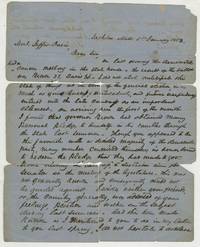
1854ref. BK0118Jackson Mississippi 1854. Autograph letter signed written recto and verso on blue paper with original blue-paper envelope addressed to "Hon. Jeffn. Davis Washington City D.C." marked "Private" with remnant of red wax seal. Poor condition though complete the letter broken along the old folds into five pieces. A revealing political letter written to Jefferson Davis while he was serving as Secretary of War under Franklin Pierce reporting the result of the Mississippi Democratic caucus held in advance of the election for the state's vacant United States Senate seat. The vacancy had existed since March 1853; two days after this letter on January 7 the Mississippi legislature elected former governor Albert G. Brown to the seat. Davis remained in Pierce's cabinet until 1857 when he returned to the Senate. Cooke writes Davis immediately after the caucus with the unwelcome result: "On last evening the Democrats had a caucus meeting in the State house-the result of the ballot was Brown 38 Davis 34." He had expected Davis to prevail believing that his "success antecedent and future usefulness" had been an important factor in the recent campaign. On arriving in Jackson however Cooke discovered that Brown had spent the previous summer obtaining personal commitments from legislators throughout the state: "Though you appeared to be the favorite with a decided majority of the democratic party many members conceived themselves in honor bound to redeem the pledges that they had made to Gov. Brown during the canvass." Cooke's letter gives an account of the mechanics behind the result. Davis's intentions he explains had not been sufficiently clear during the preceding summer leaving Brown free to secure pledges that legislators subsequently felt obliged to honor. "This was not generally known and consequently could not be guarded against" he writes adding that neither Davis's friends nor the broader electorate had been advised of his "feelings position and wishes on the subject." Had Davis declared himself earlier Cooke believed "your success now would have been most triumphant." Brown was elected by the legislature on January 7 and entered the Senate later that month; the official legislative ballot was considerably more lopsided than the private Democratic caucus reported here. The letter thus records the much closer contest occurring behind the formal vote with Davis losing the Democratic nomination by only four votes and offers a contemporary explanation from one of his supporters for how Brown had assembled the commitments necessary to defeat him. . unknown
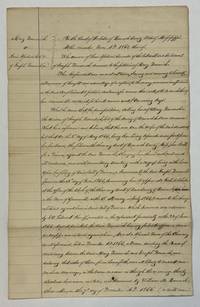
1868ref. 40969Hancock County MS 1868. 6 pp on lined legal-size paper entirely in ink manuscript. Consisting of the answer of the Executor to the complaint of Mary Tomasich. Light wear a couple of short closed tears without loss. Very Good. Mary Tomasich calling herself "the widow of Joseph Tomasich late of the County of Hancock but now deceased" filed a claim against Joseph's estate. But in 1866 while Joseph was still alive she petitioned for a divorce from Joseph "charging him therein with continued ill treatments and with committing adultery with a negress living with him." The Hancock County Court issued a decree of divorce which the Executor attaches to this Answer. Having dissolved the bonds of holy matrimony Mary thus has no claim to Joseph's estate. unknown
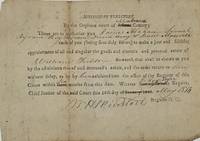
1810ref. 69180Natchez M. T. 1810. Partially printed document 5 ¼ x 7 5/8 inches completed ion manuscript at a later date with four printed portions struck through and replaced in manuscript. The completed document replaced "Adams" county with "Madison" "three" months to "six" for a deadline "Samuel Brooks" with "L. Ray Pope" as Chief Justice of the Court and "January 1810" the 1810 printed with "May 1814"; docketed verso. The completed document requires five citizens of Madison County including James Mahan to appraise the estate of Williams Fields and is signed by the court Register "W. H. Winston" who served in a variety of public offices during the territorial phase of Alabama. At this time government printing in Mississippi Territory came only from Natchez; McMurtrie records 54 items through 1810. Old fold lines a little browning but very good. unknown
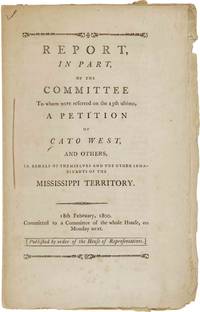
1800ref. 35085Philadelphia: Published by order of the House of Representatives 1800. Report from the House of Representatives regarding a petition for change of government in the Mississippi Territory. The Congress has resolved to defer the institution of changes until the population of the Territory has reached or exceeded five thousand free male inhabitants. Includes two pieces of correspondence from Naseworthy Hunter a fellow petitioner of Cato West to the Congress in early February. Printed self-wrappers stitched. Light tanning and edge wear. Very good untrimmed and partially unopened. EVANS 38817. unknown
1854ref. BK0118Jackson Mississippi 1854. Autograph letter signed written recto and verso on blue paper with original blue-paper envelope addressed to "Hon. Jeffn. Davis Washington City D.C." marked "Private" with remnant of red wax seal. Poor condition though complete the letter broken along the old folds into five pieces. A revealing political letter written to Jefferson Davis while he was serving as Secretary of War under Franklin Pierce reporting the result of the Mississippi Democratic caucus held in advance of the election for the state's vacant United States Senate seat. The vacancy had existed since March 1853; two days after this letter on January 7 the Mississippi legislature elected former governor Albert G. Brown to the seat. Davis remained in Pierce's cabinet until 1857 when he returned to the Senate. Cooke writes Davis immediately after the caucus with the unwelcome result: "On last evening the Democrats had a caucus meeting in the State house-the result of the ballot was Brown 38 Davis 34." He had expected Davis to prevail believing that his "success antecedent and future usefulness" had been an important factor in the recent campaign. On arriving in Jackson however Cooke discovered that Brown had spent the previous summer obtaining personal commitments from legislators throughout the state: "Though you appeared to be the favorite with a decided majority of the democratic party many members conceived themselves in honor bound to redeem the pledges that they had made to Gov. Brown during the canvass." Cooke's letter gives an account of the mechanics behind the result. Davis's intentions he explains had not been sufficiently clear during the preceding summer leaving Brown free to secure pledges that legislators subsequently felt obliged to honor. "This was not generally known and consequently could not be guarded against" he writes adding that neither Davis's friends nor the broader electorate had been advised of his "feelings position and wishes on the subject." Had Davis declared himself earlier Cooke believed "your success now would have been most triumphant." Brown was elected by the legislature on January 7 and entered the Senate later that month; the official legislative ballot was considerably more lopsided than the private Democratic caucus reported here. The letter thus records the much closer contest occurring behind the formal vote with Davis losing the Democratic nomination by only four votes and offers a contemporary explanation from one of his supporters for how Brown had assembled the commitments necessary to defeat him. . unknown books
1868ref. 40969Hancock County MS 1868. 6 pp on lined legal-size paper entirely in ink manuscript. Consisting of the answer of the Executor to the complaint of Mary Tomasich. Light wear a couple of short closed tears without loss. Very Good. Mary Tomasich calling herself "the widow of Joseph Tomasich late of the County of Hancock but now deceased" filed a claim against Joseph's estate. But in 1866 while Joseph was still alive she petitioned for a divorce from Joseph "charging him therein with continued ill treatments and with committing adultery with a negress living with him." The Hancock County Court issued a decree of divorce which the Executor attaches to this Answer. Having dissolved the bonds of holy matrimony Mary thus has no claim to Joseph's estate. unknown books
1810ref. 69180Natchez M. T. 1810. Partially printed document 5 ¼ x 7 5/8 inches completed ion manuscript at a later date with four printed portions struck through and replaced in manuscript. The completed document replaced "Adams" county with "Madison" "three" months to "six" for a deadline "Samuel Brooks" with "L. Ray Pope" as Chief Justice of the Court and "January 1810" the 1810 printed with "May 1814"; docketed verso. The completed document requires five citizens of Madison County including James Mahan to appraise the estate of Williams Fields and is signed by the court Register "W. H. Winston" who served in a variety of public offices during the territorial phase of Alabama. At this time government printing in Mississippi Territory came only from Natchez; McMurtrie records 54 items through 1810. Old fold lines a little browning but very good. unknown books
1800ref. 35085Philadelphia: Published by order of the House of Representatives 1800. Report from the House of Representatives regarding a petition for change of government in the Mississippi Territory. The Congress has resolved to defer the institution of changes until the population of the Territory has reached or exceeded five thousand free male inhabitants. Includes two pieces of correspondence from Naseworthy Hunter a fellow petitioner of Cato West to the Congress in early February. Printed self-wrappers stitched. Light tanning and edge wear. Very good untrimmed and partially unopened. EVANS 38817. unknown books
1869ref. 27439Vicksburg 1869. 3 1 blank pp. Folded. Toned old folds with a short closed margin tear. Title printed within a border. Good. Signed in ink by Brevet Major John Tyler Aide-de-Camp and Acting Assistant Adjutant General. The pamphlet lists Staff Officers Quartermasters at the Vicksburg Depot and Commanding Officers of troops stationed at Vicksburg Jackson Natchez Grenada Columbus Corinth Holly Springs and Lauderdale. Rare. See OCLC 48113898 1- NYPL. unknown
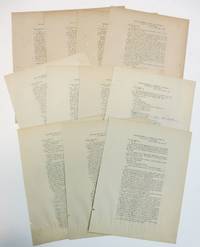
1869ref. 27316Jackson Miss. 1869. Eleven Special Orders May 6-8 10 12-18 1869. Each 2-4 pages. Special Orders Nos. 92 93 94 95 96 98 99 100 101 102 103. Several manuscript emendations. Each signed in type and manuscript at the end by William Atwood Aide-de-Camp and Acting Assistant Adjutant General. Light wear light spotting Very Good. Mississippi's Reconstruction occurred under military rule. As evidenced by these Special Orders the military authorities appointed and removed Justices of the Peace members of the Board of Police Marshals Constables District Attorneys Clerks County Treasurers Mayors and other officers normally elected by the people or appointed by civil authorities. Not located on OCLC as of March 2024. unknown