389 486 résultats
1915réf. ST17129-042Chicago: Written and Illuminated for The Renaissance Society ca. 1915. 216 x 153 mm. 8 1/2 x 6". ii 28 pp. 1 leaf colophon. Single column 18 lines in an attractive calligraphic hand. VERY PRETTY VIOLET CRUSHED MOROCCO GILT AND INLAID for The Renaissance Society stamp-signed in gilt on front doublure smooth spine with gilt titling FULL MOROCCO DOUBLURES consisting of a green morocco panel framed by purple morocco with gilt dots and scrolling floral motifs at each corner each with an inlaid white morocco flower cream-colored watered silk endleaves. In a lavender buckram chemise and matching purple morocco-backed slipcase with raised bands and gilt lettering. With many one-line initials in pink each leaf with a different two- to four-line initial in a different style with both painted and gilt elements and exuberantly decorated most leaves with a panel or "L"-shaped border ranging from simple lines to elaborate decorative bars a few borders with small landscapes and a total of FOUR FIGURAL SCENES decorative title page with colorful initials lettering and decorative flourishes text beginning with A HALF-PAGE MINIATURE OF ST. JEROME AT HIS DESK surrounded by A FULL BORDER of flowers gilt detailing and stylized heads of putti all by Louis Bauhan. Front free endpaper with bookplate of Phoebe Boyle. Leather with a slight chalky appearance silk endleaves starting to fray at fore edge a few leaves with a hint of waviness but THE MANUSCRIPT IN BEAUTIFUL CONDITION the vellum entirely clean and the paint especially bright and fresh. Exuberantly decorated by a major illustrator of the period this manuscript was commissioned and bound for The Renaissance Society of Chicago before making its way into the superb collection of American bibliophile Phoebe Boyle. The text here comes from a poem by "Atlantic Monthly" writer and editor Thomas Bailey Aldrich 1836-1907 imagining the agony and the ecstasy of St. Jerome as he sat down to write his translation of the Bible. The illumination though certainly inspired by the decorative programs of Medieval manuscripts is decidedly modern in appearance drawing on the Art Nouveau movement and utilizing bold color combinations and whimsical design motifs. It is not clear why the illustrator here Louis Bauhan 1855-1941 has used the ananym "Siuol Na-Huab" because there is no reason to hide responsibility for producing the clean elegant script the imaginative marginal decoration and the finished human and animal images that enliven the manuscript. Bauhan was a very successful painter and illustrator perhaps best known to the public as art editor of "Cosmopolitan Magazine" under John Brisben Walker who edited and published the magazine from 1889 to 1905. In 1881 Bauhan helped to found the Kit-Kat Club of New York a bohemian artists' and cultural association; he was persistently in demand as a book illustrator; and among other things he painted landscapes and portraits in oil. The colophon here states that the manuscript was written and illuminated for The Renaissance Society--an artistic group associated with the University of Chicago whose mission was to cultivate and promote modern art--and it was given an appropriately luxurious binding by the same organization. The manuscript was obviously valued highly enough to join the collection of Phoebe A. D. Boyle a client George Sutcliffe described as "rivalling the Medici in her patronage of the production of beautiful books." Shepherd "The Cinderella of the Arts" p. 63 Stephen Ratcliffe describes the Boyle collection as "unrivalled" for its jewelled bindings and modern illuminated manuscripts and any book from the Boyle collection which was put together with the greatest taste and discrimination is recognized as desirable beyond its intrinsic literary merit. Written and Illuminated for The Renaissance Society unknown books
1729Very Good Turkish, Ottoman (1500-1928) Contemporary fine quarter leather binding. Five raised bands to spine, second gilt title as "Tarih-i seyyâh", others gilt decorations. Brown boards are embossed decoratively. Demy 8vo. (21 x 15 cm). In Ottoman script (Old Turkish with Arabic letters). [12], 194 p. Hegira: 1142 = Gregorian: 1729. Slightly wear on colophon and the first page. Otherwise a good copy. Extremely uncommon first Ottoman edition printed in the first printing house of the Islamic world as the third Islamic incunabula, of this eye witness and first-hand account, and one of the most important chronicles describing the history of late Safavid Iran in the 18th century, the Iranian invasion of Afghanistan and the siege and the fall of Isfahan in 1722 written by Kruzinski who was a Polish Jesuit missionary served in the Persia in the early 18th century. In 1720 he was nominated advocate general of the mission in Persia and became the secretary to the Bishop of Isfahan. Krusinski himself, however, claimed later on that he is not only the author but also the translator of this work. As a chronicle, this is a history of Iran under the Safavids from 1499 up to 1727 with a special focus on the 1722 Afghan invasion that terminated the Safavid dynasty. "His account of the conditions and events preceding and during the siege and the subsequent demise of the Safavids is unique. It also offers key insights into the workings of the late Safavid state and government as well as the functions of the royal harem." (Bloomsbury). Translated and expanded by Ibrahim Müteferrika of Kruzinski's Latin manuscript written in 1726 in Istanbul and entitled "Historia revolutionis monarchia Persica". The book was first published in Italian, French, and English translations, in Rome (1727), Paris (1728), and London (1728). The founder of the legendary first printing house in the Islamic world, Ibrahim Müteferrika (1674-1745), was the editor and translator of this book. Ceridehâne [i.e. Journal House] Printing House is the successor of the Müteferrika Press in the early 19th century. "The book is a Turkish translation of the history of Iran written in Latin by the Jesuit missionary Judas (Jan) Tadeusz Krusinski (1675-1751). The work, whose title can be translated as 'A voyager's description on the apparition of the Afghans and on the reasons of the Safavid Empire being undermined', focuses on the Afghan invasion of 1722 which led to the fall of the Safavid dynasty, but also offers an overview on the historical processes of early 18th-century Safavid Iran. The publication of this work was made actual not only by the vicinity of Iran to the Ottoman Empire but also by the historical turn reorganizing the relations of power in the region and triggering the intervention of the Ottomans as well. This may have been the reason that among the first Turkish incunabula this was the work published in the highest number of copies. This publication also offers an early example of copyright disputes, as Krusinski considered the Turkish translation as his own work, while Müteferrika, who does not mention his name in the printed version, suggests himself to be the translator". (Source: The Mysterious Printer Ibrahim Muteferrika and the Beginnings of Turkish Book Printing: Library of Hungarian Academy of Sciences Online). The workshop of Müteferrika began its historical mission in 1728. They published 17 works in 22 volumes. The printing house served as a means to the long-term goal of Müteferrika, his efforts to broaden the horizon and modernize the knowledge of Ottoman society and Islamic civilization. This is evidenced by the subjects of the books selected for publishing, the motivations put forth in the publisher's introductions, as well as by the documents illuminating the background of the publication of each book, also published in print. One of 1200 copies. OCLC: 312516053 (For printed copies: Two copies).; Özege: 19897.
1938First Edition signed and inscribed by Jomo Kenyatta, dated 1944, atop front free endpaper. xxvi, 339 pp. Index. Glossary. Eight pages of black and white photographic plates. One-page map of Gikuyu Country. "One of the first really competent and instructive contributions to African ethnography by a scholar of pure African heritage. Through his upbringing Mr. Kenyatta combines to an unusual extent the knowledge of Western ways and Western modes of thought with a training and outlook essentially African. As a first-hand account of a representative African culture, as an invaluable document in the principles underlying culture-contact and change; last, not least, as a personal statement of the new outlook of a progressive African, this book will rank as a pioneering achievement of outstanding merit." - from Introduction. Author was the founding father of Kenya and led the nation from its independence in 1963 until his passing in 1978. Somewhat above-average soiling and wear to tan fabric-covered boards. One-inch split in fabric between foot of backstrip and front board. Brilliant gilt lettering in green panels upon backstrip. Contents unmarked with occasional moderate soiling and minimal foxing. Binding tender in places but intact. Two openings, each less than one centimetre, to central portion of front hinge. A special copy of this important work. Book
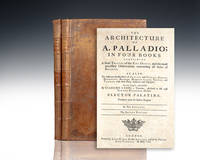
1721réf. 146284London: Printed by John Darby for the Author 1721. Rare second English edition of Leoni's English translation of Palladio's monumental work containing new typesetting but reusing the same plates from the first edition. Folio two volumes bound in full contemporary polished calf with gilt titles and ruling to the spine in six compartments within raised bands double gilt ruling and decorative stamping to the front and rear panels engraved frontispiece portrait of Palladio illustrated with 104 numbered engraved plates on 203 leaves including 15 double-page plates as well as 12 engraved in-text plates. Armorial bookplate to the pastedown of each volume. In very good condition. One of the giants of Venetian Renaissance architecture of the 16th century Andrea Palladio based his designs on the values of Greek architecture and the traditions of Roman architecture as outlined by Vitruvius. He is regarded as one of the greatest architects in the history of Western art best known for his villas in the Veneto as well as his palaces Vicenza and churches Venice all located within the Venetian Republic. His architectural theories were laid out in his treatise Quattro Libri dell Architettura The Four Books of Architecture which had a profound impact on building design throughout Europe and America. His style of architecture - a blend of Greek Roman and Renaissance art later known as Palladianism - accorded the greatest priority to maintaining symmetry perspective and overall harmony in the manner of Greco-Roman temple architecture and was widely imitated during the 17th and 18th centuries. Printed by John Darby for the Author hardcover
1962réf. 83782New York: Duell Sloan and Pearce 1962. First edition of this early biography of The Dalai Lama. Octavo original cloth frontispiece. Signed and dated in the year of publication by His Holiness The Dalai Lama on the front free endpaper. Laid in is a note to the recipient on official Tibetan letterhead from the private secretary to the Dalai Lama stating that The Dalai Lama has signed this copy. Also inscribed on the half-title page by the author "With warmest regards and best wishes to Kenneth Crouch- and with a special salute from- Lowell Thomas Jr. Dec. 14 62." Near fine in a very good dust jacket with some tape to the exterior. Jacket design by Gary Gore. Contemporary signatures of His Holiness are scarce. Housed in a custom half morocco clamshell box by the Harcourt Bindery. Rare and desirable signed. Recognized at the age of two as the reincarnation of the Thirteenth Dalai Lama Tenzin Gyatso was brought to Lhasa the capital of Tibet and enthroned two years later as the fourteenth Dalai Lama. In 1959 following the Chinese suppression of the Tibetan national uprising he was forced to seek asylum in India. As Tibet's leader-in-exile he has worked tirelessly not only on behalf of the Tibetan people but as a voice for human rights worldwide. Duell, Sloan and Pearce hardcover
réf. 202804to 267 x 204 mm 32 pp. the second leaf mispagin. but text complete 16 engraved plates finely coloured by a contemporary hand under original tissue guards. Contemporary citron morocco gilt by Bradel l'Aîné with his ticket on verso of the first free endpaper covers decorated with a border of gilt rules decorative rolls and repeating garlands and bows large cross with the Instruments of the Passion gilt in the centre smooth spine divided into compartments with gilt cross and stars black morocco label lettered in gilt turn-ins gilt edges gilt light blue silk pastedowns and endleaves. Expert restorations to corners; minor spotting. An exquisite copy of this rare devotional work illustrated with oval engravings c. 100 mm high of the Stations of the Cross beautifully heightened with hand colouring. The series follows Christ's journey from his condemnation to his Crucifixion and Entombment through the traditional cycle of fourteen scenes preceded and concluded by two additional related engravings. As Christ bears the cross and suffers the insults of his persecutors he encounters the principal figures of the Passion—his mother Simon of Cyrene the women of Jerusalem and St. Veronica—before arriving at the place of execution. The engraver Jean Antoine Pierron active in Paris 1780–1812 renders each station with notable sensitivity emphasizing the emotional intensity of the scenes. Fine copy in an attractive binding by Alexis-Pierre Bradel known as Bradel l'aîné nephew and successor of Nicolas-Denis Derome and binder to the Bibliothèque Nationale de France at the end of the 18th century. Three-line ink call number on blank flyleaf at front. References: Bibliographie de l'Empire français III 1814 p. 190 n°1306. Fléty p. 33. This work appears to be rare: OCLC locates only three copies in institutions two in France Lyon and the Bibliothèque Nationale and one in the U.S. Bridwell Library. Paris, Pierron et Bance aîné, 1813. hardcover
1732Very Good Turkish, Ottoman (1500-1928) Contemporary quarter dark burgundy leather bdg. Grey cloth boards. Four compartments at spine. Cr. 8vo. (20 x 14 cm). In Ottoman script (Old Turkish with Arabic letters). 96 p. [48 leaves]. 19 lines on each page. Printed on paper with European watermarks. A small tear up to the last page with no loss of text. Overall a fine copy. The 9th incunable of the Islamic world, written by Ibrahim Müteferrika and printed in his legendary Basmahane. Known as the most significant work by Müteferrika, this incunable is a political and state-theoretical treatise composed in order to improve the Ottoman government. In his book, Ibrahim Müteferrika used the sources written in Latin in the Europe of his period, and he presented it to Sultan Mahmud I right after the Patrona Halil Revolt (1730). Müteferrika divided the state forms of government in Europe into three groups with the titles "monarkiya" [i.e. monarchy], "aristokrasiya" [i.e. aristocracy], and "demokrasiya] [i.e. democracy]. In the work, the importance of the sciences (physics, astronomy, and geography) in the state administration was emphasized, and it was stated that a solid-state order could not be established in a country where these sciences were not developed. In addition to this, he used the term "Nizâm-i Cedîd" [i.e. The New Order] for the first time and stated that the Ottoman Empire should definitely adopt and implement the new military orders of the 18th century Europe. In addition, this work is one of the earliest in which the "democracy" term is used in the Islamic world. The book was published in French in Vienna and Paris in 1769 (Traite de la tactique ou méthode artificielle pour l'ordonnance des troupes, Vienne, 1769. Translated by Karl Emerich Alexander von Reviczky von Revisnye [Baron Reviczki]), and was translated from French into Russian in 1777. One of only 500 copies. The volume appeared in 1732, about one and a half years after the uprising of Patrona Halil Revolt which had overthrown the system of Sultan Ahmed III and Grand Vizier Damad Ibrahim. The writing, recalling the characteristics of Ottoman siyâsetnâme [i.e. the book of politics], calls the attention of the Ottoman leaders to the results of the state and military development and to the reasons for the strategic superiority of the rival European powers, while strongly condemning the several centuries long disinterest of the Ottomans to the external world. An important feature of the work is to break with the hitherto prevailing nostalgic attitude to bygone golden ages. Although observes the stylistic conventions in as much he speaks contemptuously about the Christian nations, in the content, already turns away from the indifference referring to the superiority of Islam. It announces in a list organized by items the reasons for the state's weakness and the conditions of rising. In harmony with the main aspects of contemporary Ottoman reforms, the work mainly focuses on the necessity of the reorganization of the army. It also offers a broader historical background by describing after the Greek philosophers the various types of states (6v-7v), or by treating the origins and reasons for the success of the foundations of European culture, the Roman Empire (19v-20v). The concept "Nizâm-I Cedîd" (i.e. the New Order), which would be used for the newly organized military formations of Sultan Selîm III (1789-1807), appears here for the first time referring to the modernized European army (17v-18r). "The utopistic optimism of Risâle-i Islâmîye may have had some rational basis, if one takes into account the Karlovci Treaty (1699) which was a rather positive correction in contrast to the previous series of Turkish failures in the Balkans, the European 'internal wars' of the first decade of the 18th century, and the experiences of the reform and peace years of the Tulip Period. However, the Usûl ül-hikem. was already inspired by the atmosphere after the Pozarevac Treaty (1718) which was a further stro
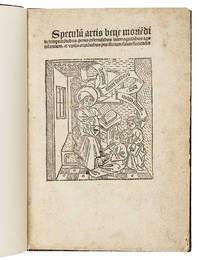
1495réf. ABC_47543Cologne: Heinrich Quentell 1495. Recent marbled paper over boards by the Geneva bookbinder Jean-Luc Honegger b. 1953 who set up his atelier ca. 1978 signed with his honegger stamp in blue ink at the foot of the back paste-down sewn on 3 recessed supports the marbled paper in an antique spot pattern see Wolfe 162-163 with black spots on unusually fine-grained grey Stormont spots and with veins in red turquoise orange dark blue and white black morocco spine label with the title in gold roman capitals reading up the spine. Small Chancery 4to 20.5 x 14.5 cm. With a large woodcut 10.0 x 8.8 cm on the title page: depicting a teacher Pope Gregory the Great ca. 600 CE declared a saint in 1295 with a dove on his shoulder his attribute seated behind a lectern with an open book instructing two of his pupils seated before him each with a book in his hands with above them a scroll inscribed Accipies tanti doctoris dogmata sancti. Set in a single column with 36 lines to the page in a rotunda gothic type Quentell type 7 here 79G though in the Typenrepertorium 80G with a larger textura gothic for the first line of the title Quentell type 10 155G though the only capital in that line is the 8 mm lombardic initial S Quentell initials e described as 6/7 mm but noting that they are used with type 10. With spaces left for manuscript initials 1 6-line and many 3-line a few - mostly on b1v and b2r - with manuscript guide letters in black ink. Most pages with a few words underscored in black ink. Quentells second quarto edition of the well-known manual on the art of dying in the original Latin matching his ca. 1493 quarto edition almost line for line and using the same woodcut quite different from any used with this text before that date. Quentells quarto editions contain the original long version of the text known as Speculum artis bene moriendi often attributed to Matthaeus de Cracovia or Albertus Magnus editions in Italian are often attributed to Dominicus de Capranica Cardinal of Fermo. The Ars moriendi was one of the earliest incunabula printed and consists of two related Latin texts written around 1415 and 1450 offering guidance on how to have a good death according to Christian beliefs of the late Middle Ages. The texts were written in response to the Black Death and social upheavals of the 15th century with the earliest versions likely composed in southern Germany. The highly popular Ars moriendi was translated into many West European languages and was the first in a tradition of guides to death and dying. The first edition in the original Latin appeared ca. 1474 but was preceded by a German edition in 1473 and perhaps by an edition in Italian described as ca. 1471/75. Quentell published the Latin text together with other works in a folio edition described as ca. 1484/89 but he published four quarto editions of the Ars moriendi alone described as ca. 1493 the present ca. 1495 ca. 1498 and another probably after 1500. He published no Ars moriendi editions in vernacular languages. His first three quarto editions have the same collation but the present edition matches the ca. 1493 edition almost line for line and uses the same woodcut while the ca. 1498 edition differs considerably and uses a different woodcut.Heinrich Quentell one of the greatest early Cologne printer-publishers issued many theological and philosophical texts for university use but also liturgical texts working both alone and with Johann Helman who may have also jointly employed contract printers and dispatched servants to sell books. Quentell was one of the first printers to consistently provide his books with title-pages with approximately 91% of his over 380 publications including one.Quentell used the present Magister cum discipulis-woodcut in several other editions including the Heymericus de Campo Promptuarium argumentorum 1492 GW 12406 and Jacobus van Gruitrode Speculum aureum animae peccatricis 1493 GW M10728. Wynkyn de Worde used a copy in his Parabolarum Alani cum commento 1508 STC 254.3 and other printers copied it as well.All Quentells Ars moriendi editions are undated and the present one used his types 7 and 10 and initials e which all apeared in his books in the period 1488 to 1500. The present edition is probably dated ca. 1495 in the literature because it appears to fall between the two quarto editions thought to date from ca. 1493 and ca. 1498.The bookbinder Jean-Luc Honegger still active today is best known for his bindings for the Bibliothèque Nationale de France in Paris and the Bodmer Foundation near Geneva. With the bookplate of the Bibliotheca Philosophia Hermetica Joost Ritman in Amsterdam and probably bound for them. Slightly browned water stains at the foot of a few leaves not approaching the text some smudges in the margins and on the blank final page. The binding slightly worn at the extremities and with a few unobtrusive scratches on the back board. Otherwise in very good condition and only slightly trimmed about 5 mm at the head and probably no more at the fore-edge and foot giving generous margins about 2 3 and 4 cm at the head fore-edge and foot respectively and some leaves with tranchefiles at the foot.l Bibliothèque Nationale Catalogue des incunables A598; BMC I p. 294; Bod-Inc A449; Bohonos Szandorowska Incunabula quae in bibliothecis Poloniae asservantur 562; BSB-Ink A766; Buffévent VIII 45; Goff A1098; Günther Wiegendrucke der Leipziger Sammlungen 781; GW 02610; HC 14911; ISTC ia01098000; Madsen Kongelige Biblioteks inkunabler 352; Ohly-Sack 274; ÖNB-Ink A483; Pell 1339; Polain 972; Proctor 1425; Sack Freiburg 306; Sallander Uppsala 2046; Schramm VIII 484; Schreiber Manuel de lamateur de la gravure sur bois et sur métal au XVe siècle 3671; Thienen Incunabula in Dutch libraries 425; UBL-Ink A354; USTC 739947; Voulliéme Die Buhdrucker Kölns 305; Voulliéme Inkunabeln der Königlichen Bibliothek 1011; Voulliéme Trier 697. Heinrich Quentell, hardcover
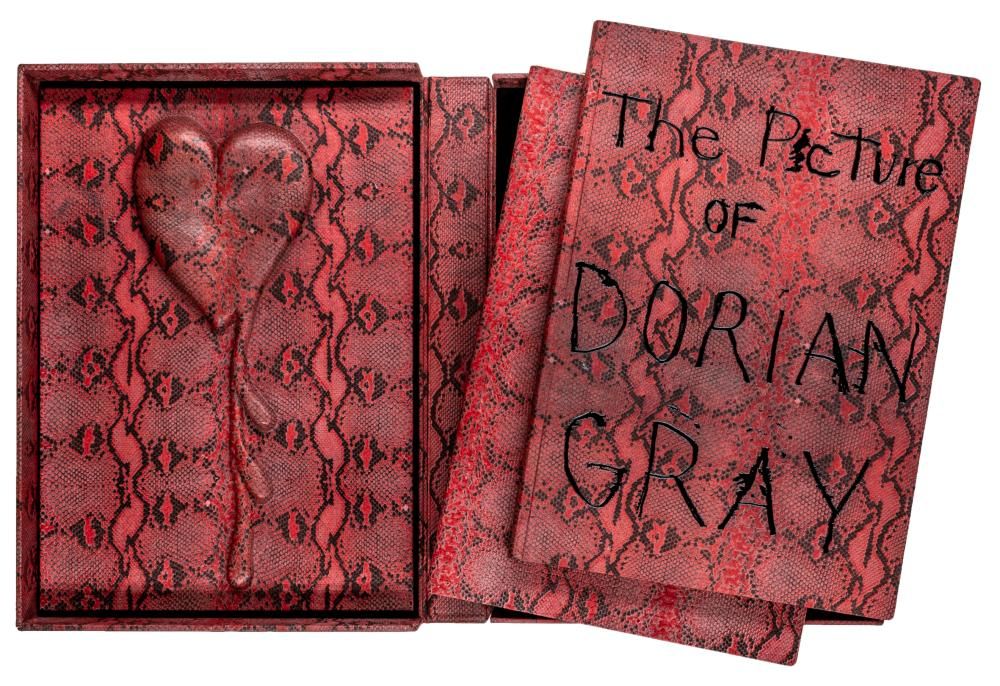
1968réf. 65690London, Petersburg Press, 1968. Gr.-Fol. Mit (inkl. Titel) 13 farb. Orig.-Lithographien u. einer Suite mit 6 sign. farb. Orig.-Lithographien u. 4 sign. Orig.-Radierungen. 26 nn. Bll., OLdr. (Buch), OLdr.-Mappe (Suite) u. ein Multiple (lederbezogene Reliefplatte mit dem blutenden Herz), zus. in OLdr.-Kassette (alles in rot-schwarzem Schlangenledermuster; von Rudolf Rieser).
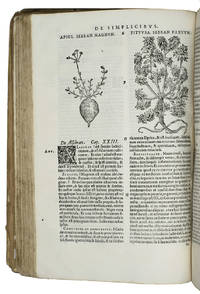
1581réf. ABC_50905Venice: Lucantonio Giunta 1581. Near-contemporary vellum black morocco title label lettered in gold on the spine. Folio 23 x 34 cm. With 39 woodcut illustrations in the text. 2 parts in 1 volume. Second illustrated edition the first with the commentary of Costaeus of the collected works of the Arabic physician Masawaih al-Mardini also known as Mesue the younger d. 1015 in Latin with commentaries by Mondino de Liuzzi ca. 1275-1326 Christoph de Honestis or Cristoforo degli Onesti ca. 1320-1392 Jacobus Sylvius or Jacques Dubois 1478-1555 Giovanni Minardi 1462-1536 and Johannes Costaeus or Giovanni Costeo 1528-1603. The present work includes the "Canones universalis" dealing with treatment regimens; the second part "De simplicibus" about the properties of various pharmaceutical drugs; and the Grabadin "the most popular compendium of drugs in medieval Europe and . used everywhere in their preparation" Garrison. "The esteem in which these works were held is shown by the fact that a Latin translation of both was one of the first medical works to be printed Venice 1471" ibid.With the bookplate of the American botanist Edward Sandford Burgess 1855-1928 on the front paste-down. Also with the bookplate of the Horticultural Society of New York on the first free endpaper identifying this volume as part of the bequest of the American attorney and plant collector Kenneth Kent MacKenzie 1877-1934. Binding stained rubbed and chipped at the extremities. Interior shows occasional brown stains modern endpapers a little browned and brittle but overall in good condition.l Adams Y10; BM STC Italian p. 739; Durling 3131; EDIT 16 CNCE 27626; USTC 842298. Lucantonio Giunta, hardcover
1581réf. ABC_46255Venice: Lucantonio Giunta 1581. Near-contemporary vellum black morocco spine label with title in gold. Folio 23 x 34 cm. With 39 woodcut illustrations in the text. 2 parts in 1 volume. Second illustrated edition the first with the commentary of Costaeus of the collected works of the Arabic physician Mesue the younger also known as Masawaih al-Mardini in Latin with commentaries by Mondino de Liuzzi Christoph de Honestis Jacobus Sylvius Giovanni Mardi and Johannes Costaeus. It includes the "Canones universalis" dealing with treatment regimens; the second part "De simplicibus" about the properties of various pharmaceutical drugs; and the Grabadin "the most popular compendium of drugs in medieval Europe and . used everywhere in their preparation" Garrison. "The esteem in which these works were held is shown by the fact that a Latin translation of both was one of the first medical works to be printed Venice 1471" ibid.With the bookplate of the American botanist Edward Sandford Burgess 1855-1928 on the front paste-down. Also with the bookplate of the Horticultural Society of New York on the first free endpaper identifying this volume as part of the bequest of the American attorney and plant collector Kenneth Kent MacKenzie 1877-1934. Binding stained rubbed and chipped at the extremities. Interior shows occasional brown stains modern endpapers a little browned and brittle but overall in good condition.l Adams Y10; BM STC Italian p. 739; Durling 3131; EDIT 16 CNCE 27626. Lucantonio Giunta, hardcover
1522réf. 18572AB1522. Lyon Myt 1522 23 : 17 cm. 10 leaves 452 of 453 pages. Modern half vellum binding. The Canon of Medicine is an encyclopedia of medicine in five books compiled by Persian physician-philosopher Avicenna Ibn Sina and completed in 1025. Perhaps one of the most famous and influential early books that continued to influence later creations. It presents an overview of the contemporary medical knowledge of the Islamic world which had been influenced by earlier traditions including Greco-Roman medicine particularly Galen Persian medicine Chinese medicine and Indian medicine. The Canon of Medicine remaind a medical authority for centuries. It set the standards for medicine in Mediaval Europe and the Islamic world and was used as a standard medical textbook through the 18th century in Europe. It is an important text in Unani medicine a form of traditional medicine practiced in India. - Title printed in red an black within an elaborate woodcut architectural frame with portraits of Hippocrates Galen and Avicena as mediaval doctors. - Title-page with two small wholes missing some parts of illustration on the reverse side missing a few letters. Parts of the leaves with contemporary annotations also partly some underlinings last two leaves of index with small whole missing a few letters; missing page 451. - "Avicenna's Canon is the most famous medical textbook ever written and it has remained as a medical bible for a longer period than any other work" Osler 1922. This copy is compared with the digitalized copy at the Bayrische Staatsbibliothek in Munich. The leaves 395 and 396 are missbound they are bound in after leaf 404 leaf 451 is missing and is added in copy from the copy of the Bayrische Staatsbibliothek. This copy has many contemporary annotations from one hand many depicting medical recipies which makes this copy interesting for reasearch. More extensive description upon request. hardcover
1701réf. 6399London: T. Ilive 1701. Early English editions. Bound together with: The Most Pleasant and Delightful History of Reynard the Fox. The Second Part. Containing Much Matter of Pleasure and Content. Written For the Delight of young Men Pleasure of the Aged and Profit of all. To which is added many Excellent Morals. London: Printed by A.M. and R.R. for Edward Brewster 1681. And: The Shifts of Reynardine The Son of Reynard the Fox Or a Pleasant History of His Life and Death. Full of Variety &c. And may fitly be applied to the Late Times. Now Published for the Reformation of Mens Manners. London: Printed by T.J. for Edward Brewster and Thomas Passenger 1684. Three parts in one small quarto volume 7 5/16 x 5 9/16 inches; 186 x 141 mm. 156 2 table of contents 2 publisher's advertisements; 111 1 publisher's advertisements; 8 160 pp. Mostly black letter with titles and side notes in roman letter. Sixty-two woodcuts in the first part printed from thirty-nine blocks and fifteen woodcuts in the second part five repeated all repeats from the first part. Most cuts signed "E.B." Edward Brewster. Woodcut on C1 recto Part I printed upside down. Some browning occasional light damp staining and soiling. Part I with tiny puncture marks in the lower blank margin through gathering I just touching one letter in the imprint on the title-page six small holes in I3 and one tiny hole in I4 causing loss of a couple of letters. Part III with paper flaw in the upper blank corner of A3 and A4 tiny tear 1/4 inch in the lower blank margin of F4 and paper flaw in the lower blank corner of I2 none affecting text. Contemporary sprinkled sheep. Covers ruled and decoratively tooled in blind spine decoratively tooled in gilt in compartments with two red morocco gilt lettering labels. Some expert restoration to joints and corners. Armorial bookplate of Gloucester on front free endpaper. Bookplate of Hugh Cecil Lowther 5th Earl of Lonsdale 1857-1944 on front pastedown his sale 12 July 1937 lot 445. An excellent copy. Housed in a felt-lined quarter brown morocco clamshell case spine with five raised bands decoratively tooled and lettered in gilt in compartments. Reynard the Fox "hero of several medieval European cycles of versified animal tales that satirize contemporary human society. Though Reynard is sly amoral cowardly and self-seeking he is still a sympathetic hero whose cunning is a necessity for survival. He symbolizes the triumph of craft over brute strength usually personified by Isengrim the greedy and dull-witted wolf. . The main literary tradition of Reynard the Fox descends from the extant French 'branches' of the Roman de Renart about 30 in number nearly 40000 lines of verse. The facetious portrayal of rustic life the camel as a papal legate speaking broken French the animals riding on horses and recounting elaborate dreams all suggest the atmosphere of 13th-century France" Merriam-Webster's Encyclopedia of Literature. There is some variation in chapter number within the early editions: From "Caxton's first edition 1481 to Thomas Gaultier's only edition 1550 the story is divided into 43 chapters" while the anonymous edition 1560-1585 has 58 chapters Varty. By the 17th century when the text is titled The Most Delectable History of Reynard the Fox it appears with only 25 chapters and maintains its image cycle. Early 17th century editions also maintained this "picture cycle" through Edward Brewster's 1662 edition but at this point the Wynkyn de Worde blocks were extremely worn and new set was created Varty. Forty images were used for his second edition 1671 and all contain his initials EB. "He published further illustrated editions in 1676 1681 1694 and 1701. in 1672 he grafted new life onto the old story with A Continuation Or Second Part of the Most Pleasant and Delightful History of Reynard the Fox" Varty for which he eventually created an additional 15 illustrations. In 1684 he would produce an additional sequel following the adventures of Reynard's son Reynardine. Brunet IV cols. 1228-1229. Lowndes p. 2076. Varty Appendix Three: "A Short-Title List of All Extant Illustrated Histories of Reynard the Fox from Wynkyn de Worde c. 1495 to A. Soulby c. 1800 which are kept in United Kingdom libraries based on H. Menke Bibliotheca Reinardiana" 24 18 and 21. Wing S3512 Part II and S3436 Part III. T. Ilive unknown
1701réf. 6399London: T. Ilive 1701. Early English editions. Bound together with: The Most Pleasant and Delightful History of Reynard the Fox. The Second Part. Containing Much Matter of Pleasure and Content. Written For the Delight of young Men Pleasure of the Aged and Profit of all. To which is added many Excellent Morals. London: Printed by A.M. and R.R. for Edward Brewster 1681. And: The Shifts of Reynardine The Son of Reynard the Fox Or a Pleasant History of His Life and Death. Full of Variety &c. And may fitly be applied to the Late Times. Now Published for the Reformation of Mens Manners. London: Printed by T.J. for Edward Brewster and Thomas Passenger 1684. Three parts in one small quarto volume 7 5/16 x 5 9/16 inches; 186 x 141 mm. 156 2 table of contents 2 publisher's advertisements; 111 1 publisher's advertisements; 8 160 pp. Mostly black letter with titles and side notes in roman letter. Sixty-two woodcuts in the first part printed from thirty-nine blocks and fifteen woodcuts in the second part five repeated all repeats from the first part. Most cuts signed "E.B." Edward Brewster. Woodcut on C1 recto Part I printed upside down. Some browning occasional light damp staining and soiling. Part I with tiny puncture marks in the lower blank margin through gathering I just touching one letter in the imprint on the title-page six small holes in I3 and one tiny hole in I4 causing loss of a couple of letters. Part III with paper flaw in the upper blank corner of A3 and A4 tiny tear 1/4 inch in the lower blank margin of F4 and paper flaw in the lower blank corner of I2 none affecting text. Contemporary sprinkled sheep. Covers ruled and decoratively tooled in blind spine decoratively tooled in gilt in compartments with two red morocco gilt lettering labels. Some expert restoration to joints and corners. Armorial bookplate of Gloucester on front free endpaper. Bookplate of Hugh Cecil Lowther 5th Earl of Lonsdale 1857-1944 on front pastedown his sale 12 July 1937 lot 445. An excellent copy. Housed in a felt-lined quarter brown morocco clamshell case spine with five raised bands decoratively tooled and lettered in gilt in compartments. Reynard the Fox "hero of several medieval European cycles of versified animal tales that satirize contemporary human society. Though Reynard is sly amoral cowardly and self-seeking he is still a sympathetic hero whose cunning is a necessity for survival. He symbolizes the triumph of craft over brute strength usually personified by Isengrim the greedy and dull-witted wolf. . The main literary tradition of Reynard the Fox descends from the extant French 'branches' of the Roman de Renart about 30 in number nearly 40000 lines of verse. The facetious portrayal of rustic life the camel as a papal legate speaking broken French the animals riding on horses and recounting elaborate dreams all suggest the atmosphere of 13th-century France" Merriam-Webster's Encyclopedia of Literature. There is some variation in chapter number within the early editions: From "Caxton's first edition 1481 to Thomas Gaultier's only edition 1550 the story is divided into 43 chapters" while the anonymous edition 1560-1585 has 58 chapters Varty. By the 17th century when the text is titled The Most Delectable History of Reynard the Fox it appears with only 25 chapters and maintains its image cycle. Early 17th century editions also maintained this "picture cycle" through Edward Brewster's 1662 edition but at this point the Wynkyn de Worde blocks were extremely worn and new set was created Varty. Forty images were used for his second edition 1671 and all contain his initials EB. "He published further illustrated editions in 1676 1681 1694 and 1701. in 1672 he grafted new life onto the old story with A Continuation Or Second Part of the Most Pleasant and Delightful History of Reynard the Fox" Varty for which he eventually created an additional 15 illustrations. In 1684 he would produce an additional sequel following the adventures of Reynard's son Reynardine. Brunet IV cols. 1228-1229. Lowndes p. 2076. Varty Appendix Three: "A Short-Title List of All Extant Illustrated Histories of Reynard the Fox from Wynkyn de Worde c. 1495 to A. Soulby c. 1800 which are kept in United Kingdom libraries based on H. Menke Bibliotheca Reinardiana" 24 18 and 21. Wing S3512 Part II and S3436 Part III. T. Ilive unknown books
1920réf. 156585Paris: N.p. 1920. Collected archives of 40 vintage photographs of notorious vaudeville performers Rosie and Jenny Dolly known professionally as The Dolly Sisters taken throughout the 1910s and 1920s. Consisting of ten small archives of photographs assiduously assembled over a period of time with multiple photographers' stamps and signatures on the versos and rectos respectively. The collection represents a veritable who's who of portrait photographers of the early twentieth century including Walery Ruben Sobol Apeda Studio The Campbell Studio Frank Foulsham and A.C. Banfield Ira D. Schwarz and James Abbe. Many have been SIGNED directly by the photographers in manuscript pencil on the rectos in addition to the photographer's stamp on the verso. Five photographs note the name of Paris Plaisirs an early French music and dance magazine on the bottom right corners of the rectos. Especially notable in the collection is a photograph credited to Walery that has been INSCRIBED by the sisters on the bottom right corner of the recto: "To Charlotte with good wishes / Dolly Sisters." The collection spans the 1910s and 1920s the height of the sisters' popularity with photographs of the pair in the studio onstage and at home although the balance show the sisters performing sporting a variety of outlandish bedazzled costumes. One striking photograph taken to promote the 1916 play "His Bridal Night" shows the sisters with long dark hair about four years before they got the bobbed haircuts for which they became known. The collection also includes several photographs of the sisters at home together evidently taken around the holidays sitting in front of the Christmas tree applying makeup at a large vanity mirror and relaxing with their pets. Born in Hungary in 1892 twin sisters Jancsi and Roszika Deutsche moved to America with their family in the early 1900s. Urged on by their mother a former dancer the twins began their performing careers in Boston in 1906 at the age of 13 a performance that purportedly earned them the sobriquet "The Dollies" for their delicate features and perfectly matched proportions. The nickname stuck and the pair would rise through the vaudeville and Broadway ranks as teenagers eventually Americanizing their names to Jenny and Rosie. By 1911 the twins were star attractions in the Ziegfeld Follies aided more by their vampish good looks lively personalities and glamorous personas than any uncommon theatrical talent. The sisters would go on to make a fortune touring famed European dance halls and appeared in a few early silent films but quickly realized that engaging the interests of wealthy lovestruck benefactors was a far easier and more rewarding way to earn a living. Rosie and Jenny kept an awe-inspiring string of wealthy patrons in their back pockets including Daily Express owner Max Beaverbrook Diamond Jim Brady William Randolph Hearst and The Prince of Wales. In 1922 the sisters signed a six-week contract to appear at the Hotel Royal in Deauville where their nightly scores at the casino tallied in the millions launching an insatiable appetite for gambling. Their excursions to the casinos at Cannes and Deauville were legendary largely funded by department store magnate Harry Selfridge. As the Jazz Age progressed into the Great Depression the sisters faced a slow decline in popularity losing both lovers and husbands while their business ventures began to fail. In 1933 Jenny's face and body was mutilated in a car accident after which she sold her vast jewel collection and burned through her fortunes in an attempt to repair her appearance through costly medical operations ultimately committing suicide out of despair in 1941. Two years later Rosie made $52500 by selling the rights to a film adaptation of their lives starring Betty Grable and June Haver but the film was a failure and Rosie would attempt suicide in 1962 before dying in 1970 of heart failure. An extraordinary collection documenting the rise of two of the biggest stars of the early twentieth century perhaps the earliest celebrities to be "famous only for being famous" seen through the eyes of some of the most important portrait photographers of the period. Photographs ranging in size from 4.25 x 6 inches to 12 x 17 inches. Generally Near Fine with occasional faint age toning and brief wear at the corners. N.p. unknown
1920réf. 156585Paris: N.p. 1920. Collected archives of 40 vintage photographs of notorious vaudeville performers Rosie and Jenny Dolly known professionally as The Dolly Sisters taken throughout the 1910s and 1920s. Consisting of ten small archives of photographs assiduously assembled over a period of time with multiple photographers' stamps and signatures on the versos and rectos respectively. The collection represents a veritable who's who of portrait photographers of the early twentieth century including Walery Ruben Sobol Apeda Studio The Campbell Studio Frank Foulsham and A.C. Banfield Ira D. Schwarz and James Abbe. Many have been SIGNED directly by the photographers in manuscript pencil on the rectos in addition to the photographer's stamp on the verso. Five photographs note the name of Paris Plaisirs an early French music and dance magazine on the bottom right corners of the rectos. Especially notable in the collection is a photograph credited to Walery that has been INSCRIBED by the sisters on the bottom right corner of the recto: "To Charlotte with good wishes / Dolly Sisters." The collection spans the 1910s and 1920s the height of the sisters' popularity with photographs of the pair in the studio onstage and at home although the balance show the sisters performing sporting a variety of outlandish bedazzled costumes. One striking photograph taken to promote the 1916 play "His Bridal Night" shows the sisters with long dark hair about four years before they got the bobbed haircuts for which they became known. The collection also includes several photographs of the sisters at home together evidently taken around the holidays sitting in front of the Christmas tree applying makeup at a large vanity mirror and relaxing with their pets. Born in Hungary in 1892 twin sisters Jancsi and Roszika Deutsche moved to America with their family in the early 1900s. Urged on by their mother a former dancer the twins began their performing careers in Boston in 1906 at the age of 13 a performance that purportedly earned them the sobriquet "The Dollies" for their delicate features and perfectly matched proportions. The nickname stuck and the pair would rise through the vaudeville and Broadway ranks as teenagers eventually Americanizing their names to Jenny and Rosie. By 1911 the twins were star attractions in the Ziegfeld Follies aided more by their vampish good looks lively personalities and glamorous personas than any uncommon theatrical talent. The sisters would go on to make a fortune touring famed European dance halls and appeared in a few early silent films but quickly realized that engaging the interests of wealthy lovestruck benefactors was a far easier and more rewarding way to earn a living. Rosie and Jenny kept an awe-inspiring string of wealthy patrons in their back pockets including Daily Express owner Max Beaverbrook Diamond Jim Brady William Randolph Hearst and The Prince of Wales. In 1922 the sisters signed a six-week contract to appear at the Hotel Royal in Deauville where their nightly scores at the casino tallied in the millions launching an insatiable appetite for gambling. Their excursions to the casinos at Cannes and Deauville were legendary largely funded by department store magnate Harry Selfridge. As the Jazz Age progressed into the Great Depression the sisters faced a slow decline in popularity losing both lovers and husbands while their business ventures began to fail. In 1933 Jenny's face and body was mutilated in a car accident after which she sold her vast jewel collection and burned through her fortunes in an attempt to repair her appearance through costly medical operations ultimately committing suicide out of despair in 1941. Two years later Rosie made $52500 by selling the rights to a film adaptation of their lives starring Betty Grable and June Haver but the film was a failure and Rosie would attempt suicide in 1962 before dying in 1970 of heart failure. An extraordinary collection documenting the rise of two of the biggest stars of the early twentieth century perhaps the earliest celebrities to be "famous only for being famous" seen through the eyes of some of the most important portrait photographers of the period. Photographs ranging in size from 4.25 x 6 inches to 12 x 17 inches. Generally Near Fine with occasional faint age toning and brief wear at the corners. N.p. unknown books
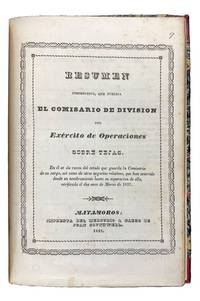
1837réf. 41693Matamoros Mexico: Imprenta del Mercurio a Cargo de Juan Southwell 1837. 4to. 7 3/4 x 5 1/2 inches. 3 4-36 4. 40 pp. Engraved title-page with decorative border Resumen Instructivo Estado Table 1 by Manuel Mendiola Estado 2 by Luis Jose de la Peza and Vicente Daza. Both estados are accounting tables giving the "ingreso" income and the "egreso" expenditure of the operation. The title carries the date of 3.11.1837 while the text sections are dated 3.14.1837. With woodcut printer's device of an eagle and fleurons. Text in Spanish. Bound to style in 19th-century quarter red straight-grained morocco over 19th-century marble paper boards Provenance: Hubert Hudson Texas State Senator for Brownsville 1957-1963 A rare report detailing the failed Mexican mission to rein in the Republic of Texas following the Texan Revolution. "In the fall of 1836 the Mexican government attempted with complete lack of success another expedition into Texas." Streeter "Face-saving explanation for Mexico's failure against the despised Texans in 1836-7." Howes This official pamphlet details the failed Mexican expedition into the Republic of Texas over the period of October 21 1836 to March 14 1837. Barreiro an army commissioner in charge of the operation concludes that the "ridiculo" Texan rebels were far less dangerous than the hostile desert terrain. "No es el numero del exercito de Tejas el temible. Bien despreciable y ridiculo es ese peloton de aventureros que piensan que es como andar en cacerias de fieras haberselas con veteranos valientes y aguerridos: es el clima son los desiertos horrorosos son los rios invadeables son los pantanos." It is not the number of the Texas army that is fearsome. Very despicable and ridiculous is that platoon of adventurers who think that it is like going on wild beast hunts dealing with brave and seasoned veterans: it is the climate it is the horrible deserts it is the uncrossable rivers the swamps. Texas had declared its independence on March 2 1836 a culmination of the Texan Revolution which had begun on October 2 1835. The United States did not diplomatically recognize the Republic of Texas until March of 1837 near the publication date of this pamphlet. Texas would remain an independent nation for a decade until it was annexed by the USA on December 29 1845. Howes B 170. Palau 24651. Streeter sale I 357. Streeter Texas 918. Imprenta del Mercurio a Cargo de Juan Southwell unknown
1837réf. 41693Matamoros Mexico: Imprenta del Mercurio a Cargo de Juan Southwell 1837. 4to. 7 3/4 x 5 1/2 inches. 3 4-36 4. 40 pp. Engraved title-page with decorative border Resumen Instructivo Estado Table 1 by Manuel Mendiola Estado 2 by Luis Jose de la Peza and Vicente Daza. Both estados are accounting tables giving the "ingreso" income and the "egreso" expenditure of the operation. The title carries the date of 3.11.1837 while the text sections are dated 3.14.1837. With woodcut printer's device of an eagle and fleurons. Text in Spanish. Bound to style in 19th-century quarter red straight-grained morocco over 19th-century marble paper boards Provenance: Hubert Hudson Texas State Senator for Brownsville 1957-1963 A rare report detailing the failed Mexican mission to rein in the Republic of Texas following the Texan Revolution. "In the fall of 1836 the Mexican government attempted with complete lack of success another expedition into Texas." Streeter "Face-saving explanation for Mexico's failure against the despised Texans in 1836-7." Howes This official pamphlet details the failed Mexican expedition into the Republic of Texas over the period of October 21 1836 to March 14 1837. Barreiro an army commissioner in charge of the operation concludes that the "ridiculo" Texan rebels were far less dangerous than the hostile desert terrain. "No es el numero del exercito de Tejas el temible. Bien despreciable y ridiculo es ese peloton de aventureros que piensan que es como andar en cacerias de fieras haberselas con veteranos valientes y aguerridos: es el clima son los desiertos horrorosos son los rios invadeables son los pantanos." It is not the number of the Texas army that is fearsome. Very despicable and ridiculous is that platoon of adventurers who think that it is like going on wild beast hunts dealing with brave and seasoned veterans: it is the climate it is the horrible deserts it is the uncrossable rivers the swamps. Texas had declared its independence on March 2 1836 a culmination of the Texan Revolution which had begun on October 2 1835. The United States did not diplomatically recognize the Republic of Texas until March of 1837 near the publication date of this pamphlet. Texas would remain an independent nation for a decade until it was annexed by the USA on December 29 1845. Howes B 170. Palau 24651. Streeter sale I 357. Streeter Texas 918. Imprenta del Mercurio a Cargo de Juan Southwell unknown books
1696réf. 5532Frankfurt: Heirs of Matthäus Merian 1696. SECOND EDITION THUS. Fifth edition overall. This edition is based on Merian's own 1649 edition which was the first to include these revised images and a number of the supplementary texts. Hardcover. Fine. Bound in original tanned sheepskin light surface wear corners bumped lower edge of rear board abraded faithfully and almost imperceptibly rebacked the new spine richly tooled in gold and with a red morocco label. Internally an attractive copy with minor soiling and discoloration to margins of the title page scattered mild soiling in the text mainly marginal a few small rust spots and light blemishes a discreet contemporary repair to one blank margin a small tear in the margin no loss of leaf G1 a clean tear barely entering the image no loss on leaf M1; Memento Mori plate lightly soiled. There is a curious feature in this copy: there is light offsetting -from the text of different book- on one side of the 3 sheets that made up gatherings H S and Cc probably the result of those sheets having been laid upon sheets of the other book while still damp. With the collector's stamp of Johann Carl Conrad Oelrichs 1722-1798 on the title verso. A series of engravings with accompanying text by Matthäus Merian the Elder depicting the Grossbasler Totentanz the 60-meter long Dance of Death mural painted circa 1439 which adorned the inner face of the cemetery wall adjoining the Dominican convent and Predigerkirche in Basel. It was along with the Danse Macabre murals painted in the arcades of the Paris Cimetière des Innocents one of the two earliest painted Dance of Death fresco cycles. The Basel frescoes were lost in 1805 when the wall was destroyed. Only 19 fragments survive. The murals depicted a communal dance between cadavers and people from all strata of society from pope to peasant including members of various trades and professions from physician to fool. The list of those who join -unwillingly- their macabre dance masters in this dance to the grave are in order of appearance: pope emperor empress king queen cardinal bishop duke duchess count abbot knight lawyer councilman church canon physician nobleman noblewoman merchant abbess lame man hermit young man usurer maiden minstrel herald mayor executioner fool peddler blind man Jew heathens a man and a woman cook peasant painter and a mother holding her child. The dance is preceded by the images of a preacher delivering a sermon and a group of skeletons emerging from a charnel house playing instruments this image was probably added over the actual ossuary in the cloister during the restoration of 1616. "The figures of Death were depicted in all kinds of contortions suggesting movement and presumably intended to evoke an association between the represented action and the variety of dance being performed particularly round dances Reigen popular at that time. This is all the more probable because the introductory part of the dance of death which did not survive quite likely depicted figures of Death making music."Dreier Der Totentanz p. 47 "Beneath the pictures was a band containing addresses by Death and replies by the individual representatives of the estates each of four lines in Basel or eight lines in Paris. These verses were written in the local idiom generally in iambic rhyming couplets or alternating rhyme. In the verses the encounter between Death and the human representative was cast as a dialogue in which Death reminded human beings that in the face of mortality everything worldly was transitory and vain. Following Erwin Koller's outstanding philological investigations. it may be assumed that the blockbook produced in Basel around 1460 now preserved in Heidelberg University Library under the shelfmark cpg 438 is a contemporary virtually identical transcription of the original Basel text."Dreier p. 48 Merian made his engravings based on his drawings of the Basel frescoes in 1616. He then either gave or sold his engravings to his nephew Johann Jakob Merian. The first two editions appeared in 1621 one of them printed by Johann Schröter the other by Matthäus Mieg who re-published the book in 1625. The artist himself reworked the plates in 1649 adding atmospheric elements and background details and printed them with a greatly expanded text. This 1696 edition by Merian's heirs reprints the images and text of that edition. For the 1649 expanded edition Merian added a 10-page history of the Basel mural the now-iconic Memento Mori engraving an hourglass with a skull a burning candle and wilting flowers the Adam and Eve engraving and the dual-portrait engraving which when viewed right side up shows a bearded man and when turned upside down show a death's head. Merian also added as announced on the title 42 pages of "Admonitions concerning Human Mortality the Fleeting Nature of This Present Life and the Vanity of All Earthly Things; concerning the Burial and Resurrection of the Dead; concerning the Last Judgment; concerning Hell and the Damnation of the Godless; and concerning Eternal Life.". Heirs of Matthäus Merian hardcover
1696réf. 5532Frankfurt: Heirs of Matthäus Merian 1696. SECOND EDITION THUS. Fifth edition overall. This edition is based on Merian's own 1649 edition which was the first to include these revised images and a number of the supplementary texts. Hardcover. Fine. Bound in original tanned sheepskin light surface wear corners bumped lower edge of rear board abraded faithfully and almost imperceptibly rebacked the new spine richly tooled in gold and with a red morocco label. Internally an attractive copy with minor soiling and discoloration to margins of the title page scattered mild soiling in the text mainly marginal a few small rust spots and light blemishes a discreet contemporary repair to one blank margin a small tear in the margin no loss of leaf G1 a clean tear barely entering the image no loss on leaf M1; Memento Mori plate lightly soiled. There is a curious feature in this copy: there is light offsetting -from the text of different book- on one side of the 3 sheets that made up gatherings H S and Cc probably the result of those sheets having been laid upon sheets of the other book while still damp. With the collector's stamp of Johann Carl Conrad Oelrichs 1722-1798 on the title verso. A series of engravings with accompanying text by Matthäus Merian the Elder depicting the Grossbasler Totentanz the 60-meter long Dance of Death mural painted circa 1439 which adorned the inner face of the cemetery wall adjoining the Dominican convent and Predigerkirche in Basel. It was along with the Danse Macabre murals painted in the arcades of the Paris Cimetière des Innocents one of the two earliest painted Dance of Death fresco cycles. The Basel frescoes were lost in 1805 when the wall was destroyed. Only 19 fragments survive. The murals depicted a communal dance between cadavers and people from all strata of society from pope to peasant including members of various trades and professions from physician to fool. The list of those who join -unwillingly- their macabre dance masters in this dance to the grave are in order of appearance: pope emperor empress king queen cardinal bishop duke duchess count abbot knight lawyer councilman church canon physician nobleman noblewoman merchant abbess lame man hermit young man usurer maiden minstrel herald mayor executioner fool peddler blind man Jew heathens a man and a woman cook peasant painter and a mother holding her child. The dance is preceded by the images of a preacher delivering a sermon and a group of skeletons emerging from a charnel house playing instruments this image was probably added over the actual ossuary in the cloister during the restoration of 1616. "The figures of Death were depicted in all kinds of contortions suggesting movement and presumably intended to evoke an association between the represented action and the variety of dance being performed particularly round dances Reigen popular at that time. This is all the more probable because the introductory part of the dance of death which did not survive quite likely depicted figures of Death making music."Dreier Der Totentanz p. 47 "Beneath the pictures was a band containing addresses by Death and replies by the individual representatives of the estates each of four lines in Basel or eight lines in Paris. These verses were written in the local idiom generally in iambic rhyming couplets or alternating rhyme. In the verses the encounter between Death and the human representative was cast as a dialogue in which Death reminded human beings that in the face of mortality everything worldly was transitory and vain. Following Erwin Koller's outstanding philological investigations. it may be assumed that the blockbook produced in Basel around 1460 now preserved in Heidelberg University Library under the shelfmark cpg 438 is a contemporary virtually identical transcription of the original Basel text."Dreier p. 48 Merian made his engravings based on his drawings of the Basel frescoes in 1616. He then either gave or sold his engravings to his nephew Johann Jakob Merian. The first two editions appeared in 1621 one of them printed by Johann Schröter the other by Matthäus Mieg who re-published the book in 1625. The artist himself reworked the plates in 1649 adding atmospheric elements and background details and printed them with a greatly expanded text. This 1696 edition by Merian's heirs reprints the images and text of that edition. For the 1649 expanded edition Merian added a 10-page history of the Basel mural the now-iconic Memento Mori engraving an hourglass with a skull a burning candle and wilting flowers the Adam and Eve engraving and the dual-portrait engraving which when viewed right side up shows a bearded man and when turned upside down show a death's head. Merian also added as announced on the title 42 pages of "Admonitions concerning Human Mortality the Fleeting Nature of This Present Life and the Vanity of All Earthly Things; concerning the Burial and Resurrection of the Dead; concerning the Last Judgment; concerning Hell and the Damnation of the Godless; and concerning Eternal Life.". Heirs of Matthäus Merian hardcover books
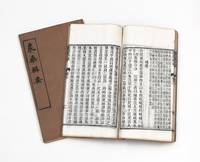
réf. 1023998; 89 folding leaves. Two vols. 8vo orig. printed wrappers orig. stitching a little loose. China: Zhong jiang que shu 中江榷署 1895. An important edition of the “earliest officially commissioned agricultural work to have survived to the present day.” The book is “essentially a practical handbook full of information on crops both old and new down-to-earth realistic and accurate” Francesca Bray Agriculture Science and Civilisation in China Vol. 6 Part II pp. 49 & 72. Nongsang jiyao was “issued in 1273 by the Office of the Grand Supervisor of Agriculture. It was compiled by a committee of Chinese officials who drew heavily on earlier manuals.to which they added a small amount of new data based on recent experience. For the most part the crops and techniques discussed were appropriate for agriculture in North China not the as-yet-unconquered south. Intended as an official manual for distribution to the peasant communes she to increase productivity the Nung-sang chi-yao Nongsang jiyao enjoyed considerable success going through several Yuan and Ming editions” Thomas T. Allsen Culture and Conquest in Mongol Eurasia pp. 118-19. The book was included in Yongle dadian 永樂大典 Great Compendium of the Reign of Eternal Happiness the voluminous encyclopedia produced at the Ming court in the early 15th century. The book might even have influenced Rashīd al-Dīn’s 1247-1318 important agricultural manual written in Tabrīz in Iran in the late 13th century. “This work is organized in seven untitled chapters chuan and ten sections men with the following headings:” “Ch. I. 1. Words of wisdom 2. Plowing and reclaiming Ch. II 3. Scattering seed cereal crops Ch. III 4. Mulberries Ch. IV 5. Silkworms Ch. V 6. Vegetables 7. Fruit Ch. VI 8. Bamboo and trees 9. Medicinal herbs Ch. VII 10. Domesticated animals including fish” Allsen p. 119. Section 3 in addition contains oil and fiber crops and Section 10 also covers poultry raising and apiculture. “The quotations are attributed and arranged in chronological order; not only is Nung Sang Chi Yao thus an important source for the text of many earlier works but also it allows us to see various agricultural phenomena in a historical perspective. The original material in Nung Sang Chi Yao deals with new crops whose cultivation the government wished to encourage for example ramie from South China and cotton from Central Asia water melons and sugar-cane.” One important goal of the book was to spread sericulture in North China. The Mongol Yuan state needed silk to pay for tea imports from the Chinese south. The book “accordingly describes all the most advanced sericultural techniques.while.advocating the cultivation of alternative fibre crops like cotton or ramie which could substitute for silk within the Yuan empire. The government was largely successful in its campaign: not only did Northern Chinese silk production rise but ramie and especially cotton soon acquired an important economic role in the North” Bray pp. 71-72. The Office of the Grand Supervisor of Agriculture which commissioned and issued the book had been founded in 1270. Through several regional branches “the office worked with local communes she nominally fifty peasant families to improve agricultural techniques introduce new seeds and raise productivity” Allsen p. 115. Our edition comes with the text Can shi yao lüe è ¶äº‹è¦ç•¥ Abridged Essentials of the Matters of Silkworms in the appendix. This text was written by Zhang Xingfu 張行孚 who was a provincial graduate and scholar in the Qing period. Our edition was published in 1895 Guangxu yiwei in Jianxi cunshe congke 漸西æ‘èˆå¢åˆ» Collectanea of the Village Dwelling West of the Jian River. This book series was published by Yuan Chang è¢æ˜¶ 1846-1900 a reformist official who was for several years intendant of the Circuit of Southern Anhui during which time he paid great attention to agriculture. Yuan “encouraged agriculture by teaching the farmers better methods; and conserved their land by erecting a dike fourteen li in length along the Yangtze. To this enterprise which employed some 67500 workmen he personally contributed more than 5000 taels” A. K. Ch’iu in Eminent Chinese of the Ch’ing Period Vol. 2 p. 946. The reprinting of the book makes sense in light of Yuan’s concerns. The basis for the reprint was the movable type juzhen èšç edition produced in connection with the Siku quanshu 四庫全書 Complete Books of the Four Repositories in the 1770s. The editors of the Siku quanshu in turn had recovered the text from Yongle dadian of which a copy was available in the imperial library. Very fine copy preserved in a hantao. unknown
réf. 1023998; 89 folding leaves. Two vols. 8vo orig. printed wrappers orig. stitching a little loose. China: Zhong jiang que shu 中江榷署 1895. An important edition of the “earliest officially commissioned agricultural work to have survived to the present day.” The book is “essentially a practical handbook full of information on crops both old and new down-to-earth realistic and accurate” Francesca Bray Agriculture Science and Civilisation in China Vol. 6 Part II pp. 49 & 72. Nongsang jiyao was “issued in 1273 by the Office of the Grand Supervisor of Agriculture. It was compiled by a committee of Chinese officials who drew heavily on earlier manuals.to which they added a small amount of new data based on recent experience. For the most part the crops and techniques discussed were appropriate for agriculture in North China not the as-yet-unconquered south. Intended as an official manual for distribution to the peasant communes she to increase productivity the Nung-sang chi-yao Nongsang jiyao enjoyed considerable success going through several Yuan and Ming editions” Thomas T. Allsen Culture and Conquest in Mongol Eurasia pp. 118-19. The book was included in Yongle dadian 永樂大典 Great Compendium of the Reign of Eternal Happiness the voluminous encyclopedia produced at the Ming court in the early 15th century. The book might even have influenced Rashīd al-Dīn’s 1247-1318 important agricultural manual written in Tabrīz in Iran in the late 13th century. “This work is organized in seven untitled chapters chuan and ten sections men with the following headings:” “Ch. I. 1. Words of wisdom 2. Plowing and reclaiming Ch. II 3. Scattering seed cereal crops Ch. III 4. Mulberries Ch. IV 5. Silkworms Ch. V 6. Vegetables 7. Fruit Ch. VI 8. Bamboo and trees 9. Medicinal herbs Ch. VII 10. Domesticated animals including fish” Allsen p. 119. Section 3 in addition contains oil and fiber crops and Section 10 also covers poultry raising and apiculture. “The quotations are attributed and arranged in chronological order; not only is Nung Sang Chi Yao thus an important source for the text of many earlier works but also it allows us to see various agricultural phenomena in a historical perspective. The original material in Nung Sang Chi Yao deals with new crops whose cultivation the government wished to encourage for example ramie from South China and cotton from Central Asia water melons and sugar-cane.” One important goal of the book was to spread sericulture in North China. The Mongol Yuan state needed silk to pay for tea imports from the Chinese south. The book “accordingly describes all the most advanced sericultural techniques.while.advocating the cultivation of alternative fibre crops like cotton or ramie which could substitute for silk within the Yuan empire. The government was largely successful in its campaign: not only did Northern Chinese silk production rise but ramie and especially cotton soon acquired an important economic role in the North” Bray pp. 71-72. The Office of the Grand Supervisor of Agriculture which commissioned and issued the book had been founded in 1270. Through several regional branches “the office worked with local communes she nominally fifty peasant families to improve agricultural techniques introduce new seeds and raise productivity” Allsen p. 115. Our edition comes with the text Can shi yao lüe è ¶äº‹è¦ç•¥ Abridged Essentials of the Matters of Silkworms in the appendix. This text was written by Zhang Xingfu 張行孚 who was a provincial graduate and scholar in the Qing period. Our edition was published in 1895 Guangxu yiwei in Jianxi cunshe congke 漸西æ‘èˆå¢åˆ» Collectanea of the Village Dwelling West of the Jian River. This book series was published by Yuan Chang è¢æ˜¶ 1846-1900 a reformist official who was for several years intendant of the Circuit of Southern Anhui during which time he paid great attention to agriculture. Yuan “encouraged agriculture by teaching the farmers better methods; and conserved their land by erecting a dike fourteen li in length along the Yangtze. To this enterprise which employed some 67500 workmen he personally contributed more than 5000 taels” A. K. Ch’iu in Eminent Chinese of the Ch’ing Period Vol. 2 p. 946. The reprinting of the book makes sense in light of Yuan’s concerns. The basis for the reprint was the movable type juzhen èšç edition produced in connection with the Siku quanshu 四庫全書 Complete Books of the Four Repositories in the 1770s. The editors of the Siku quanshu in turn had recovered the text from Yongle dadian of which a copy was available in the imperial library. Very fine copy preserved in a hantao. unknown books
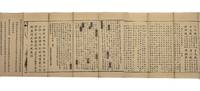
réf. 11380Woodblock-printed. 27 joined sheets numbered except 3 & 27 62.5 folding leaves red edges. Tall narrow 8vo bound between wooden boards. Hà Nội: Kì vũ tự 祈雨寺 1889 date of publisher's colophon; copy perhaps printed in 1922. A beautiful and rare example of Vietnamese printing in the accordion "sutra-binding" or orihon format. We find no Vietnamese edition of this sutra in WorldCat and only the later 1906 edition is listed in the Vietnamese Han-Nom Literature Database surviving in two copies at the Institute of Hán-Nôm Studies AC.403 & 498. The Sutra of Infinite Meanings together with the Lotus Sutra and the Sutra on the Meditation of Samantabhadra Ch. Guan pu xian jing 觀普賢經 are traditionally held to constitute the Threefold Lotus Sutra wherein the brief Sutra of Infinite Meanings served as the introduction or "opening sutra" to one of the most philosophically profound and culturally influential texts in East Asian Buddhism. Although the Sutra of Infinite Meanings is considered today by many scholars to be an apocryphal text the canonical bibliography of Sengyou åƒ§ç¥ 445-518 holds that it was translated by DharmajÄtayaśas sometime before 481. The identification of this sutra with a text by the same title mentioned in the first chapter of the Lotus Sutra was established by Liu Qiu 劉虬 438-95 in his 485 Preface to the sutra an identification that quickly became widely accepted in Buddhist East Asia. Like the Lotus Sutra the Sutra of Infinite Meanings emphasizes the transformative power of the Buddha's word itself which even in the abridged form of a single verse or a single line eternally delivers the hearer from the world of suffering. The belief in this teaching of the Threefold Lotus Sutra motivated centuries of Buddhist printing in East Asia. To briefly quote from the sutra's third chapter "Ten Virtues": "If living beings are able to hear this sutra though they hear only one recitation one verse or just one line and are thereby able to comprehend and master hundreds and thousands ten thousands millions of meanings then although they have earthly desires it will be as though they were free of earthly desires and they will go in and out of the realm of birth and death without thoughts of fear or dread. Toward living beings they will acquire minds of pity and tenderness and they will confront all phenomena with brave and stalwart thoughts"-trans. Burton Watson The Lotus Sutra and Its Opening and Closing Sutras 2009 p. 23. Our copy opens with the Preface of Äá»™ng Thượng Thanh Nguyên å³’ä¸Šæ¸…æº dated Gia Long 嘉隆 15 1816 followed by the dates of two reprints: Minh Mạng 明命 18 1837 and Äồng Khánh åŒæ…¶ 3 1888 the latter being carried out by the monks Thanh Äoan 清端 and Thanh Nghĩa 清義 on behalf of their master Từ Tính 慈性. The printed colophon written by the artisans Nguyễn Văn Việt 阮文越 and Nguyễn Văn Giáp 阮文甲 of Thanh Lưu xã é’蓼社 an important center for Buddhist publishing in the Hà Nội region is dated Äồng Khánh åŒæ…¶ 4 1889 and gives an exhaustive list of donors and the amounts of their donations. The colophon also specifies that Thanh Äoan and Thanh Nghĩa come from the Kì vũ tự 祈雨寺 monastery in Hà Nội province æ²³å…§çœ Hoài Äức prefecture 懷德府 Từ Liêm district 慈廉縣 Hạ Trì canton 下池總 Thượng Cát commune 上葛社 and that the completed woodblocks were to be kept in this monastery. A handwritten colophon by the monk Thanh Khoan 清寬 and others from the Nam Äịnh province dates the printing and binding of this particular copy to the Nhâm Tuất 壬戌 year 1922 2951 years after the birth of the Buddha. Pristine copy. ⧠Yuenan Hannan wenxian ziliaoku 越å—漢喃文ç»è³‡æ–™åº« Academia Sinica. unknown
réf. 11380Woodblock-printed. 27 joined sheets numbered except 3 & 27 62.5 folding leaves red edges. Tall narrow 8vo bound between wooden boards. Hà Nội: Kì vũ tự 祈雨寺 1889 date of publisher's colophon; copy perhaps printed in 1922. A beautiful and rare example of Vietnamese printing in the accordion "sutra-binding" or orihon format. We find no Vietnamese edition of this sutra in WorldCat and only the later 1906 edition is listed in the Vietnamese Han-Nom Literature Database surviving in two copies at the Institute of Hán-Nôm Studies AC.403 & 498. The Sutra of Infinite Meanings together with the Lotus Sutra and the Sutra on the Meditation of Samantabhadra Ch. Guan pu xian jing 觀普賢經 are traditionally held to constitute the Threefold Lotus Sutra wherein the brief Sutra of Infinite Meanings served as the introduction or "opening sutra" to one of the most philosophically profound and culturally influential texts in East Asian Buddhism. Although the Sutra of Infinite Meanings is considered today by many scholars to be an apocryphal text the canonical bibliography of Sengyou åƒ§ç¥ 445-518 holds that it was translated by DharmajÄtayaśas sometime before 481. The identification of this sutra with a text by the same title mentioned in the first chapter of the Lotus Sutra was established by Liu Qiu 劉虬 438-95 in his 485 Preface to the sutra an identification that quickly became widely accepted in Buddhist East Asia. Like the Lotus Sutra the Sutra of Infinite Meanings emphasizes the transformative power of the Buddha's word itself which even in the abridged form of a single verse or a single line eternally delivers the hearer from the world of suffering. The belief in this teaching of the Threefold Lotus Sutra motivated centuries of Buddhist printing in East Asia. To briefly quote from the sutra's third chapter "Ten Virtues": "If living beings are able to hear this sutra though they hear only one recitation one verse or just one line and are thereby able to comprehend and master hundreds and thousands ten thousands millions of meanings then although they have earthly desires it will be as though they were free of earthly desires and they will go in and out of the realm of birth and death without thoughts of fear or dread. Toward living beings they will acquire minds of pity and tenderness and they will confront all phenomena with brave and stalwart thoughts"-trans. Burton Watson The Lotus Sutra and Its Opening and Closing Sutras 2009 p. 23. Our copy opens with the Preface of Äá»™ng Thượng Thanh Nguyên å³’ä¸Šæ¸…æº dated Gia Long 嘉隆 15 1816 followed by the dates of two reprints: Minh Mạng 明命 18 1837 and Äồng Khánh åŒæ…¶ 3 1888 the latter being carried out by the monks Thanh Äoan 清端 and Thanh Nghĩa 清義 on behalf of their master Từ Tính 慈性. The printed colophon written by the artisans Nguyễn Văn Việt 阮文越 and Nguyễn Văn Giáp 阮文甲 of Thanh Lưu xã é’蓼社 an important center for Buddhist publishing in the Hà Nội region is dated Äồng Khánh åŒæ…¶ 4 1889 and gives an exhaustive list of donors and the amounts of their donations. The colophon also specifies that Thanh Äoan and Thanh Nghĩa come from the Kì vũ tự 祈雨寺 monastery in Hà Nội province æ²³å…§çœ Hoài Äức prefecture 懷德府 Từ Liêm district 慈廉縣 Hạ Trì canton 下池總 Thượng Cát commune 上葛社 and that the completed woodblocks were to be kept in this monastery. A handwritten colophon by the monk Thanh Khoan 清寬 and others from the Nam Äịnh province dates the printing and binding of this particular copy to the Nhâm Tuất 壬戌 year 1922 2951 years after the birth of the Buddha. Pristine copy. ⧠Yuenan Hannan wenxian ziliaoku 越å—漢喃文ç»è³‡æ–™åº« Academia Sinica. unknown books
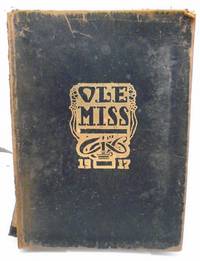
réf. 1721Features the first appearance of William Faulkner's name in print. On page 163 "William Falkner" appears near his illustration. unknown