261 043 résultats
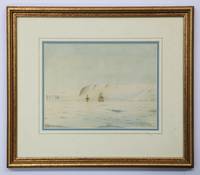
1843réf. 1450501843. Watercolour. 6 x 8.15/16in. 17.2 x 22.7cm. Titled on the original detached label: Captain John Edward Davis R.N. 1815-1877; Cape Lockyer discovered by H.M. Ships Erebus and Terror January 7th 1843 Lot Essay Davis was Second Master on Commander Crozier's Terror and a number of his drawings probably the first ever of the Antarctic continent were used by Ross to illustrate his official account of the voyage published in two volumes in London in 1847. James Clark Ross had reached the northern magnetic Pole in 1831 and was charged by the Government following the recommendation of the British Association for the Advancement of Science and the Royal Society to lead an expedition to investigate terrestrial magnetism in the southern latitudes. The expedition was the first British exploration of the southern latitudes since Cook's skirting of the Antarctic circle in 1773-4 and the sealer Weddell's furthest south of 7415'S in 1823. Bellinghausen had probably been the first to sight the Antarctic continent in January 1820 and Dumont D'Urville then discovered Adelie Land and Claire Coast. Their work towards the discovery of an Antarctic landmass was consolidated by James Clark Ross who penetrated the pack ice in January 1841 sailing into the clear water of the unknown Ross Sea and sighting snow-covered land on 11 January thereby becoming the first to discover a sea route to the continent. McCormick on the Erebus saw and named an active volcano Mt. Erebus and Ross was the first to see and chart the South Polar Barrier which he named Victoria Barrier and which was later named the Ross Ice Barrier. He made two further navigations of the Ross Sea and Wedell Sea before returning to England in 1843. 'Jan. 7. 1843.As we advanced to the southward two high rugged bluff capes at a great distance appeared bearing W.S.W. true; the nearest of them I named at the request of Captain Crozier after his friend Captain Nicholas Lockyer R.N.C.B. Capt. Sir J.C. Ross A Voyage of Discovery and Research in the southern and Antarctic Regions during the years 1839-43 London 1847 II p.346. For Davis's own account see his A Letter from the Antarctic London 1901 illustrated with own sketches. For further works by Davis on the voyage see Christie's 10 April 1997 lot 95 and 17 September 1998 lot 178. 1843 unknown
réf. 23041HARDBACK NO DUSTJACKET STATED 1ST EDITION 1957 LITE RUB WEAR & Oblong MATTED in black PAPER SIGNED BY WALT DISNEY 5 1/2 X 3 1/2 in . Creasing Tears to some Portions not Affecting Signature of Disney or other ARTWORK Signature Guaranteed Authentic Verso of Paper is White TAPE which Adheres it to MATTING on BACKside & Mends some Tears SOLD AS-IS Overall VERY NICE This is a GREAT MATTED PIECE Oblong MATTED in black PAPER SIGNED BY WALT DISNEY 5 1/2 X 3 1/2 in . WALT DISNEY SIGNS THE PAPER with Mickey artwork drawn by Disney Artist AT BOTTOMCreasing Tears to some Portions not Affecting Signature of Disney or other ARTWORK Signature Guaranteed Authentic Verso of Paper is White TAPE which Adheres it to MATTING on BACKside & Mends some Tears SOLD AS-IS Overall VERY NICE SIGNED Matted Piece of PAPER BY WALT DISNEY The Drawing of Mickey & Best Wishes Mickey Mouse are by DISNEY ARTIST. Signed by Author. First Edition. Unbound. Disney Editions NY hardcover
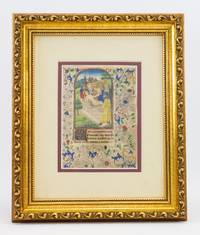
réf. ST19540bSouthern Netherlands Bruges third quarter of 15th century. Matted leaf: 150 x 150 mm. 5 7/8 x 4 3/8". Frame: 307 x 258 mm. 12 x 10 1/4". Single column with four lines below the miniature and the obverse with 17 lines in a batarde hand. Attractively matted and framed the leaf slightly shifted in the mat revealing top and side edges but in no danger of damage. Rubrics in red four one-line initials and three three-line initials all but one in burnished gold on blue and red ground with white tracery the initial beneath the miniature painted pink on a burnished gold ground and filled with painted ivy vines AN ARCH-TOPPED LARGE MINIATURE DEPICTING THE ENTOMBMENT the body of Christ surrounded by seven other people depicted in an outdoor setting with the turrets of a walled city in the background the miniature in a double frame of gold and pink surrounded by A FULL BORDER composed of hairline vines acanthus colorful flowers and gilt bezants and inhabited by a small bird. Minor soiling and a faint thumb print to borders but IN VERY FINE CONDITION THE MINIATURE BEAUTIFULLY PRESERVED. This is a beautifully rendered and deeply touching scene depicting the entombment of the crucified Christ and the pathos experienced by those at his side. Holding the sheet on which the body is lowered into the sarcophagus are on the far left the richly clothed Joseph of Arimathea and on the far right Nicodemus who dons an especially lovely yellow garment with delicate embroidery. Between the two men in the foreground but behind the body are the Virgin Mary who presses the hand of her deceased son to her lips; John the Evangelist whose body is turned toward the Virgin in a gesture of support but whose gaze is focused on the Savior; and Mary Magdalene who holds a small ointment jar. Two other women with halos stand closely behind them consoling one another. The artist has done a masterful job at creating a composition that captures the emotional gravity of the scene: Christ's body gently cradled in a white sheet is on full display with blood still trickling from the wounds on his head and side. Despite there being seven people crowded around him our attention is drawn to the action between Christ and the Virgin who gently grasps his hand with motherly affection and bids him a final farewell. Flickers of different emotions appear on the faces of his followers including pity sorrow stoicism and disbelief--echoing perhaps the viewer's own range of feelings upon viewing this image. The level of detail excellence of composition care seen in the molded bodies and faces and the convincing setting suggest that the artist was quite practiced and that the original manuscript from which the leaf comes was of very high quality. unknown
réf. ST19540bSouthern Netherlands Bruges third quarter of 15th century. Matted leaf: 150 x 150 mm. 5 7/8 x 4 3/8". Frame: 307 x 258 mm. 12 x 10 1/4". Single column with four lines below the miniature and the obverse with 17 lines in a batarde hand. Attractively matted and framed the leaf slightly shifted in the mat revealing top and side edges but in no danger of damage. Rubrics in red four one-line initials and three three-line initials all but one in burnished gold on blue and red ground with white tracery the initial beneath the miniature painted pink on a burnished gold ground and filled with painted ivy vines AN ARCH-TOPPED LARGE MINIATURE DEPICTING THE ENTOMBMENT the body of Christ surrounded by seven other people depicted in an outdoor setting with the turrets of a walled city in the background the miniature in a double frame of gold and pink surrounded by A FULL BORDER composed of hairline vines acanthus colorful flowers and gilt bezants and inhabited by a small bird. Minor soiling and a faint thumb print to borders but IN VERY FINE CONDITION THE MINIATURE BEAUTIFULLY PRESERVED. This is a beautifully rendered and deeply touching scene depicting the entombment of the crucified Christ and the pathos experienced by those at his side. Holding the sheet on which the body is lowered into the sarcophagus are on the far left the richly clothed Joseph of Arimathea and on the far right Nicodemus who dons an especially lovely yellow garment with delicate embroidery. Between the two men in the foreground but behind the body are the Virgin Mary who presses the hand of her deceased son to her lips; John the Evangelist whose body is turned toward the Virgin in a gesture of support but whose gaze is focused on the Savior; and Mary Magdalene who holds a small ointment jar. Two other women with halos stand closely behind them consoling one another. The artist has done a masterful job at creating a composition that captures the emotional gravity of the scene: Christ's body gently cradled in a white sheet is on full display with blood still trickling from the wounds on his head and side. Despite there being seven people crowded around him our attention is drawn to the action between Christ and the Virgin who gently grasps his hand with motherly affection and bids him a final farewell. Flickers of different emotions appear on the faces of his followers including pity sorrow stoicism and disbelief--echoing perhaps the viewer's own range of feelings upon viewing this image. The level of detail excellence of composition care seen in the molded bodies and faces and the convincing setting suggest that the artist was quite practiced and that the original manuscript from which the leaf comes was of very high quality. unknown books
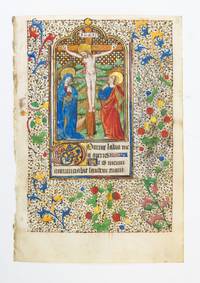
réf. ST17060ZFrance probably Besançon 3rd quarter of 15th century. 239 x 165 mm. 9 3/8 x 6 1/2". Single column 15 lines in an elegant gothic book hand. Rubrics in dark pink line-enders in dark pink and blue highlighted with a gilt bezant several one-line initials and one two-line initial in burnished gold on dark pink and blue ground with white tracery one three-line initial in pink with white tracery filled with trefoils painted red or blue all on a gold ground verso with panel border of delicate hairline vines terminating in gilt bezants and ivy and with acanthus and flowers recto with A HALF-PAGE MINIATURE OF THE CRUCIFIXION in an arch-topped gilt frame Christ in the center of the composition with the mocking inscription "I N R I" "Iesus Nazarenus Rex Iudaeorum" on a banner above him the Virgin standing on the left and St. John on the right the landscape behind them filled with hills and trees under a tessellated sky SURROUNDED BY A FULL BORDER consisting of hairline vines terminating in gold bezants and ivy colorful acanthus strawberries and flowers the text and image further framed by a "U"-shaped bar of gold pink and blue extending the full height of the miniature. ◆Virgin's robe a little mottled and chipped minor chipping elsewhere borders with slight smudging to some of the hairline vines small marginal stain but in all in excellent condition with wide margins with the colors very bright and the miniature well preserved. Opening the Hours of the Cross a shorter text that is sometimes found in addition to the Hours of the Virgin this touching miniature of the Crucifixion is richly painted and features a particularly emotional depiction of Christ his head slightly bowed with an expression of pain. Blood flows freely from his wounds partly merging with the orange in the sky and partly forming rivulets at the base of the cross. This exsanguination stands in contrast to the more typically restrained indications in other Crucifixion scenes and serves to emphasize the cruel suffering of the execution. His mother stands to the left in a blue cloak hands knitted together and with a look of weary resignation on her face; to the right stands St. John whose lips are slightly parted as he looks directly at the crucified Christ as if searching his face for signs of life. Our artist has made an unusual choice for the background with the lower two thirds devoted to a naturalistic landscape with many hills and trees and the sky entirely tessellated with squares of red blue and gold. While the Virgin and St. John are both firmly situated within the earthy realm the body of Christ occupies both spaces perhaps emphasizing his dual nature as both human and divine. Stylistically this leaf can be localized to the Franche-Comté region in eastern France and is closely related if not directly attributable to an atelier specializing in Books of Hours made for the Use of Besançon and most likely situated in that city see Avril and Reynaud p. 197. The similarities are especially apparent in the figures' faces which are slightly puffy in appearance and have distinct slit-like eyes. As noted by Avril and Reynaud the unnamed master of this atelier was deeply indebted to the Master of Morgan 293 a talented Burgundian illuminator active in the second quarter of the 15th century whose name derives from a particularly lovely Book of Hours made for the Use of Besançon. In fact there are certain consonant details between this miniature and the Crucifixion in the Morgan manuscript: Christ's position and physicality are nearly identical as is the pattern of blood as it moves down the cross and both artists create a division in the landscape with the Morgan artist using gold rather than tessellation for his sky. Whoever the artist responsible for the present miniature the work here is clearly accomplished both quietly powerful and an excellent representation of a distinct regional style. unknown
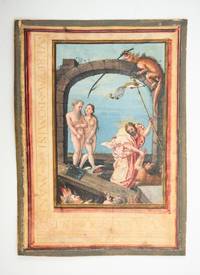
1540réf. ST20622Germany ca. 1540. 183 x 133 mm. 7 1/8 x 5 1/4". WITH A FULL-PAGE MINIATURE DEPICTING THE HARROWING OF HELL featuring a naked Adam and Eve on the left and on the right Christ bending down to rescue John the Baptist the figures framed by a stone archway supporting a hairy creature who aims the point of a spear directly at Adam and Eve the miniature in a thin brown frame with gilt lines surrounded on two sides by the words "VERBUM DOMINI MANET IN ETERNUM" in gilt all framed in gray and red washes with double rules of black and gilt. Light soiling to frame a little flaking to the gray border and a couple of small scuffs and smudges elsewhere verso with spotting but the miniature vibrant and well preserved with only very trivial imperfections. A close copy of an early 16th century engraving by Albrecht Dürer this powerful miniature depicting the Harrowing of Hell is an intriguing artifact that ties together manuscript art print culture and the Reformation. The image depicts an apocryphal tale in the Gospel of Nicodemus in which Christ following his death but before his Resurrection descends into Limbo in order to save righteous souls who had passed away before him particularly figures from the Old Testament. Christ appears here in pale pink robes carrying a long staff with a cross and banner adorning the top. Having just brought down the gates of Hell he stoops to rescue John the Baptist here dressed in furs from its depths. A naked Adam and Eve covering their loins stand at the left of the composition--Adam now a gray-bearded old man as a reflection of sin and mortality but Eve still as she was at the Expulsion in keeping with the period's inclination to retain the classically idealized youthful feminine form. Above them is a stone arch upon which a dog-like demon perches stealthily aiming a spear directly at the oblivious couple. Another demon snaps its jaws at the feet of Christ and we can see a lick of flames below the broken gate as more captive souls clamor to escape. The painting is skillfully done showing the artist's facility with anatomy proportion and foreshortening. The bodies of Adam and Eve are particularly excellent with lovely skin tones and convincing molding. The composition is clearly based on an engraving by Dürer published in 1513 as part of a major series of 16 images known as the "Engraved Passion." In translating a black & white print into a full-color painting the artist here dispensed with a few details seen in Dürer's work such as the shadowy figure behind Adam and Eve and the stigmata on Christ's hand; however the overall composition deviates little from the original suggesting that the artist may have been working from an actual engraving. Although this leaf contains just a few words in the form of a border inscription--"Verbum Domini manet eternum" "the Word of the Lord endures forever"--they are monumentally important. This line from Isaiah 40:8 and 1 Peter 1:25 became the motto of the Lutheran Reformation appearing on art clothing coins and even armor of the 16th century. The Schmalkaldic League an influential group of allied Lutheran principalities in the Holy Roman Empire at the time also adopted it as their motto. Given the dominance of print materials during the Reformation period our hand-painted miniature--possibly produced as a frontispiece--must have been a very special commission. It is also an object that is prime for further study touching on aspects of book production religious art and the transmission of images and ideas in the early modern period. unknown
1540réf. ST20622Germany ca. 1540. 183 x 133 mm. 7 1/8 x 5 1/4". WITH A FULL-PAGE MINIATURE DEPICTING THE HARROWING OF HELL featuring a naked Adam and Eve on the left and on the right Christ bending down to rescue John the Baptist the figures framed by a stone archway supporting a hairy creature who aims the point of a spear directly at Adam and Eve the miniature in a thin brown frame with gilt lines surrounded on two sides by the words "VERBUM DOMINI MANET IN ETERNUM" in gilt all framed in gray and red washes with double rules of black and gilt. Light soiling to frame a little flaking to the gray border and a couple of small scuffs and smudges elsewhere verso with spotting but the miniature vibrant and well preserved with only very trivial imperfections. A close copy of an early 16th century engraving by Albrecht Dürer this powerful miniature depicting the Harrowing of Hell is an intriguing artifact that ties together manuscript art print culture and the Reformation. The image depicts an apocryphal tale in the Gospel of Nicodemus in which Christ following his death but before his Resurrection descends into Limbo in order to save righteous souls who had passed away before him particularly figures from the Old Testament. Christ appears here in pale pink robes carrying a long staff with a cross and banner adorning the top. Having just brought down the gates of Hell he stoops to rescue John the Baptist here dressed in furs from its depths. A naked Adam and Eve covering their loins stand at the left of the composition--Adam now a gray-bearded old man as a reflection of sin and mortality but Eve still as she was at the Expulsion in keeping with the period's inclination to retain the classically idealized youthful feminine form. Above them is a stone arch upon which a dog-like demon perches stealthily aiming a spear directly at the oblivious couple. Another demon snaps its jaws at the feet of Christ and we can see a lick of flames below the broken gate as more captive souls clamor to escape. The painting is skillfully done showing the artist's facility with anatomy proportion and foreshortening. The bodies of Adam and Eve are particularly excellent with lovely skin tones and convincing molding. The composition is clearly based on an engraving by Dürer published in 1513 as part of a major series of 16 images known as the "Engraved Passion." In translating a black & white print into a full-color painting the artist here dispensed with a few details seen in Dürer's work such as the shadowy figure behind Adam and Eve and the stigmata on Christ's hand; however the overall composition deviates little from the original suggesting that the artist may have been working from an actual engraving. Although this leaf contains just a few words in the form of a border inscription--"Verbum Domini manet eternum" "the Word of the Lord endures forever"--they are monumentally important. This line from Isaiah 40:8 and 1 Peter 1:25 became the motto of the Lutheran Reformation appearing on art clothing coins and even armor of the 16th century. The Schmalkaldic League an influential group of allied Lutheran principalities in the Holy Roman Empire at the time also adopted it as their motto. Given the dominance of print materials during the Reformation period our hand-painted miniature--possibly produced as a frontispiece--must have been a very special commission. It is also an object that is prime for further study touching on aspects of book production religious art and the transmission of images and ideas in the early modern period. unknown books
réf. ST17060ZFrance probably Besançon 3rd quarter of 15th century. 239 x 165 mm. 9 3/8 x 6 1/2". Single column 15 lines in an elegant gothic book hand. Rubrics in dark pink line-enders in dark pink and blue highlighted with a gilt bezant several one-line initials and one two-line initial in burnished gold on dark pink and blue ground with white tracery one three-line initial in pink with white tracery filled with trefoils painted red or blue all on a gold ground verso with panel border of delicate hairline vines terminating in gilt bezants and ivy and with acanthus and flowers recto with A HALF-PAGE MINIATURE OF THE CRUCIFIXION in an arch-topped gilt frame Christ in the center of the composition with the mocking inscription "I N R I" "Iesus Nazarenus Rex Iudaeorum" on a banner above him the Virgin standing on the left and St. John on the right the landscape behind them filled with hills and trees under a tessellated sky SURROUNDED BY A FULL BORDER consisting of hairline vines terminating in gold bezants and ivy colorful acanthus strawberries and flowers the text and image further framed by a "U"-shaped bar of gold pink and blue extending the full height of the miniature. ◆Virgin's robe a little mottled and chipped minor chipping elsewhere borders with slight smudging to some of the hairline vines small marginal stain but in all in excellent condition with wide margins with the colors very bright and the miniature well preserved. Opening the Hours of the Cross a shorter text that is sometimes found in addition to the Hours of the Virgin this touching miniature of the Crucifixion is richly painted and features a particularly emotional depiction of Christ his head slightly bowed with an expression of pain. Blood flows freely from his wounds partly merging with the orange in the sky and partly forming rivulets at the base of the cross. This exsanguination stands in contrast to the more typically restrained indications in other Crucifixion scenes and serves to emphasize the cruel suffering of the execution. His mother stands to the left in a blue cloak hands knitted together and with a look of weary resignation on her face; to the right stands St. John whose lips are slightly parted as he looks directly at the crucified Christ as if searching his face for signs of life. Our artist has made an unusual choice for the background with the lower two thirds devoted to a naturalistic landscape with many hills and trees and the sky entirely tessellated with squares of red blue and gold. While the Virgin and St. John are both firmly situated within the earthy realm the body of Christ occupies both spaces perhaps emphasizing his dual nature as both human and divine. Stylistically this leaf can be localized to the Franche-Comté region in eastern France and is closely related if not directly attributable to an atelier specializing in Books of Hours made for the Use of Besançon and most likely situated in that city see Avril and Reynaud p. 197. The similarities are especially apparent in the figures' faces which are slightly puffy in appearance and have distinct slit-like eyes. As noted by Avril and Reynaud the unnamed master of this atelier was deeply indebted to the Master of Morgan 293 a talented Burgundian illuminator active in the second quarter of the 15th century whose name derives from a particularly lovely Book of Hours made for the Use of Besançon. In fact there are certain consonant details between this miniature and the Crucifixion in the Morgan manuscript: Christ's position and physicality are nearly identical as is the pattern of blood as it moves down the cross and both artists create a division in the landscape with the Morgan artist using gold rather than tessellation for his sky. Whoever the artist responsible for the present miniature the work here is clearly accomplished both quietly powerful and an excellent representation of a distinct regional style. unknown books
2006réf. __4861660203Routledge 2006. Hardcover. New. 1st fac edition. 5400 pages. 14.96x13.78x11.02 inches. Routledge hardcover
réf. 140947151San Francisco CA: The Arion Press 1982. Limited Edition. Near Fine. Limited edition. From an edition of 165 this is one of 15 hors de commerce copies signed by Jim Dine on the title page and Andrew Hoyem at the colophon. Bound in publisher's quarter-inch laminated oak boards stained with a lightning-bolt over white pigskin with spine lettered in blind; prospectus laid-in. Near Fine with tanning and light rubbing to spine light offsetting from plates. A striking production that marked the beginning of Dine's numerous books with this fine press publisher. The Arion Press unknown
réf. 140947151San Francisco CA: The Arion Press 1982. Limited Edition. Near Fine. Limited edition. From an edition of 165 this is one of 15 hors de commerce copies signed by Jim Dine on the title page and Andrew Hoyem at the colophon. Bound in publisher's quarter-inch laminated oak boards stained with a lightning-bolt over white pigskin with spine lettered in blind; prospectus laid-in. Near Fine with tanning and light rubbing to spine light offsetting from plates. A striking production that marked the beginning of Dine's numerous books with this fine press publisher. The Arion Press unknown books
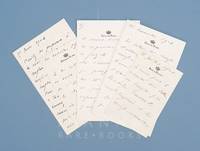
1901réf. 100107AG1901. Laeken / Brussels Château de Laeken Palace of Laeken 1901 - 1906. 16 pages of MLS Manuscript Letters signed on 10 leaves of Leopold's official stationery "Château de Laeken" and "Palais de Bruxelles". The leaves with different sizes 135 cm x 9 cm and 18 cm x 115 cm. Excellent condition. Unsigned. Tremendously rare to find original letters by Leopold II on the open market in which the Colonial Free State and the protection against inquisitive visitors is discussed in such clear and instructive fashion. Leopold's correspondence with Adolphe de Cuvelier shows how he is very much trying to still protect and influence the narrative of his Colonial Slavery Outpost even in the final years of his life. Adolphe de Cuvelier 1860-1931 Secretary General of the Ministry of Foreign Affairs of the Congo Free State President of the Syndicate for Studies and Enterprises in Congo. He was given the title of knight in 1893 and baron in 1908 each transferable at first birth. Wikipedia _______________________________ Leopold II French: Léopold Louis Philippe Marie Victor; 9 April 1835 17 December 1909 was the second King of the Belgians from 1865 to 1909 and through his own efforts the owner and absolute ruler of the Congo Free State from 1885 to 1908. Born in Brussels as the second but eldest surviving son of Leopold I and Louise of Orléans he succeeded his father to the Belgian throne in 1865 and reigned for exactly 44 years until his deaththe longest reign of any Belgian monarch. He died without surviving legitimate sons. The current Belgian king descends from his nephew and successor Albert I. Leopold was the founder and sole owner of the Congo Free State a private project undertaken on his own behalf as a personal union with Belgium. He used Henry Morton Stanley to help him lay claim to the Congo the present-day Democratic Republic of the Congo. At the Berlin Conference of 18841885 the colonial nations of Europe authorized his claim and committed the Congo Free State to him. Leopold ran the Congo using the mercenary Force Publique for his personal gain. He extracted a fortune from the territory initially by the collection of ivory and after a rise in the price of natural rubber in the 1890s by forced labour from the native population to harvest and process rubber. Leopold's administration of the Congo Free State was characterised by atrocities and systematic brutality including torture murder and the amputation of the hands of men women and children when the quota of rubber was not met. In 1890 George Washington Williams used the term "crimes against humanity" to describe the practices of Leopold II of Belgium's administration of the Congo Free State. Colonial accounts typically emphasized Leopold's modernizing changes in the Congo and not the mass death he facilitated. These and other facts were established at the time by eyewitness testimony on-site inspection by an international commission of inquiry and the 1904 Casement Report. Modern estimates range from 1 million to 15 million Congolese deaths with a consensus growing around 10 million. Some historians argue against these figures citing the lack of reliable censuses the enormous mortality caused by smallpox and African trypanosomiasis and the fact that there were only 175 administrative agents in charge of rubber exploitation. In 1908 the reports of deaths and abuse and pressure from the Congo Reform Association and other international groups induced the Belgian government to take over the administration of the Congo from Leopold as a new territory Belgian Congo. Wikipedia unknown
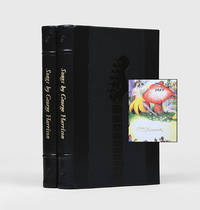
réf. 70298UK: Genesis Publications 1987 1992. Rock SIGNED LIMITED EDITION with RARE RECORD. 2 volumes folio 28 x 20 x 12cm. With additional text by Ringo Starr Elton John Harry Nilsson and Jeff Lynne. Quarto with colour plates and illustrations by Keith West. Photographs by Gered Mankowitz Brian Roylance Richard Young John Carter Terry O'Neill and Astrid Kirchherr. Original black half-morocco boards gilt edges with limited edition 7-inch vinyl record 'Songs' and CD recording 'Songs 2' the whole contained in custom-made clamshell boxes with a card tray. Each limited to 2500 copies being matching nos. 558 both books signed by the former Beatle and the illustrator the first title additionally signed by Beatles drummer Pete Best not called for with a Polaroid of the signing session. Also present is a Christmas card from Genesis Publications signed by founder Brian Roylance plus early flyer of forthcoming publications including an Elton John book and a Duane Eddy set which never went into production. Boxes lightly handled contents fine. The 'Songs' contained within are illustrated by talented New Zealand botanical artist Keith West who impressed Harrison with his wealth of fantastical imagery. The music included here was exclusive to this edition.A very early pop title from Genesis who have published well in excess of 80 music books; preceded only by I Me Mine 1980 Fifty Years Adrift 1984 and Twenty Years Ago Today 1987. Songs contains the more elusive record the majority were CDs; very few records were even made for Songs 2 as vinyl was virtually phased out by then. UK: Genesis Publications, 1987, 1992 unknown
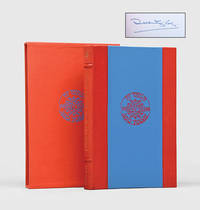
réf. 170909Guildford New York London Toronto Sydney Auckland: Genesis Publications Limited & Bantam Press 1987. One of several associates to earn the moniker "the Fifth Beatle" First edition signed limited issue number 38 of 100 copies signed by Taylor. The journalist writer publicist and record producer Derek Taylor was the press officer for the Beatles in 1964 and then from 1968-70. During his four years away from the UK he also worked as the publicist for California-based bands such as the Byrds the Beach Boys and the Mamas and the Papas. Octavo. Photographic illustrations throughout. Original red three-quarter morocco spine lettered in gilt and blue buckram boards titles to front cover in red all edges gilt. Housed in publisher's red slipcase with titles to front in blue. Fine in fine slipcase. hardcover
réf. 170355Guildford: Genesis Press 1987-92. First editions first impressions both number 1959 of 2500 copies each signed by the former Beatle and the illustrator. The CD inserted into Volume I contains the following tracks: Sat Singing recorded March 1980; Lay His Head recorded April 1980; For You Blue recorded live in Washington DC December 1974; and Flying Hour recorded March 1978. The Volume II CD includes Life Itself; Hottest Gong in Town; Tears of the World; and Hari's on Tour Express recorded live in Washington DC December 1974. 2 vols quarto. Illustrated throughout by Keith West together with photographs by Gered Mankowitz Brian Roylance Richard Young John Carter Terry O'Neill and Astrid Kirchherr. Original black half morocco boards gilt edges lettering to spines gilt with limited edition CDs titled Songs each contained in the original clamshell box with card tray lettering to labels on front covers and spines gilt. Boxes lightly rubbed books fine. hardcover
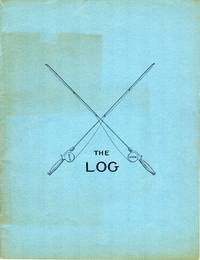
1941réf. 29370n.p. n.d.: privately printed 1941. Only edition 4to pp. 8 20; photographic frontispiece; original blue printed wrappers with crossed fishing-poles; saddle-stitch binding; slight shadow on front cover else near fine. Inscribed "For Chief Boatswain's Mate W.A. Bartos USN from Franklin D. Roosevelt." "Having had a desire for some time to get away from Washington for a few days of restful diversion including some hoped for fishing in southern waters the President had previously instructed Captain Callaghan his Naval Aide to have the Potomac available at Port Everglades Florida for a projected cruise to the Bahamas." A working vacation affording the President fine fishing opportunities along the coast of Florida and the Bahamas. The President on the first day alone caught a tuna a skipjack and a mackerel. Bartos to whom the book is inscribed was an enlisted sailor attached to the President's party. Also attached to the President's party were the Attorney General Robert H. Jackson; Harold Ickes the Secretary of the Interior; and a young William J. McNamara. Included with the pamphlet are two 10" x 7½" photographs of Bartos sporting his rod and reel. [privately printed unknown
1941réf. 29370n.p. n.d.: privately printed 1941. Only edition 4to pp. 8 20; photographic frontispiece; original blue printed wrappers with crossed fishing-poles; saddle-stitch binding; slight shadow on front cover else near fine. Inscribed "For Chief Boatswain's Mate W.A. Bartos USN from Franklin D. Roosevelt." "Having had a desire for some time to get away from Washington for a few days of restful diversion including some hoped for fishing in southern waters the President had previously instructed Captain Callaghan his Naval Aide to have the Potomac available at Port Everglades Florida for a projected cruise to the Bahamas." A working vacation affording the President fine fishing opportunities along the coast of Florida and the Bahamas. The President on the first day alone caught a tuna a skipjack and a mackerel. Bartos to whom the book is inscribed was an enlisted sailor attached to the President's party. Also attached to the President's party were the Attorney General Robert H. Jackson; Harold Ickes the Secretary of the Interior; and a young William J. McNamara. Included with the pamphlet are two 10" x 7½" photographs of Bartos sporting his rod and reel. [privately printed unknown books
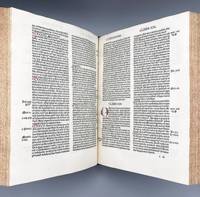
1495réf. 11825Paris: Ulrich Gering and Berthold Rembolt 1495. Late 17th- or early 18th-century mottled calf worn hinges cracked slightly wormed crown repaired spine and label gilt edges sprinkled red. The Moralia brings Christian mysticism asceticism dogma and allegory to bear on the story of Job's suffering. Pope Gregory deeply engages Scripture in his massive commentary which bridged the ancient and medieval worlds and remained a preeminent guide to moral theology through the Enlightenment. For this edition THE PRINTERS ADDED TWO NEW INDICES FOR YOUNG SCHOLARS and busy clerics. The first index provides access to all Bible verses referenced or quoted in the text - some fifteen hundred entries. THE SECOND INDEX TREATS THE NATURAL WORLD in three hundred entries - animals metals herbs stars human body parts precious gems rivers etc. Two copies in U.S. libraries. In good condition a few pale scattered stains and minor worming loss of six sorts on the title verso a handful of contemporary annotations manuscript title inscription Ex biblioteca Sanctae Crucis Viridariensis 1669. ¶Seow Job 1-21: Interpretation and Commentary 193; Manitius Geschichte der lateinischen Literatur des Mittelalters I: 971; ISTC ig00431000; Goff G-431. Ulrich Gering and Berthold Rembolt unknown
1993réf. 2080502106501880Meiji Map Publishing 1993. Soft Cover. Fine. Number of books: 40 Meiji Map Publishing paperback
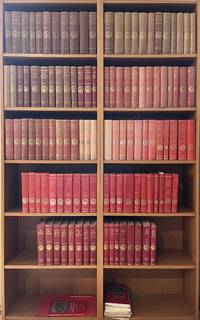
1907réf. 81312chscToronto: The Champlain Society 1907. Book. Very Good. Hardcover. 8vo - over 7¾ - 9¾" tall. 111 volumes a complete series except for several of the most recent titles published 1907-2015. The first two volumes show some wear at the top of the spine but otherwise these are all certainly at least very good with most near fine or better and all collating complete including the portfolio in the seven-volume Champlain series. Some surface scratching to the rear cover cloth of the David Thompson volume Varied toning and handling and fading to spines; some toning to edges. Clean tight and otherwise unmarked. Very neat -- a sound and handsome set. The earliest volumes until the early 1940s show the bookplate of Edwin Stanton Fickes American engineer industrialist and collector of Canadiana. In the 1920s Fickes built a large home at Annapolis Royal in Nova Scotia. After his death the accumulated Champlain Society volumes were acquired by Canadian medical scientist Charles H. Best whose bookplate is set to the front free endpaper in each volume. The Champlain Society Hardcover
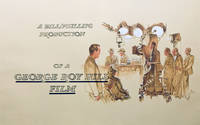
réf. 2316951973. Pen and ink watercolor and pencil heightened with white on cream paper. 27 x 42 inches. Framed. Fine. Pen and ink watercolor and pencil heightened with white on cream paper. 27 x 42 inches. The original illustration for the second of four title cards used in the opening credits of the classic 1973 motion picture "The Sting" Provenance: Estate of George Roy Hill unknown
réf. 2316951973. Pen and ink watercolor and pencil heightened with white on cream paper. 27 x 42 inches. Framed. Fine. Pen and ink watercolor and pencil heightened with white on cream paper. 27 x 42 inches. The original illustration for the second of four title cards used in the opening credits of the classic 1973 motion picture "The Sting" Provenance: Estate of George Roy Hill unknown books
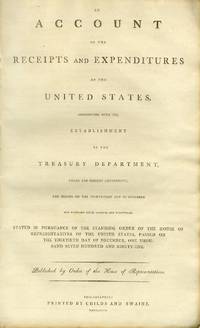
1790réf. 32820355Three volumes. Folio. Generally in very good condition details below. Three rare Treasury reports as follows: 1. An Account of the Receipts and Expenditures of the United States commencing with the establishment of the Treasury Department . . . ending on the thirty-first Day of December One Thousand Seven Hundred and Ninety-one. Philadelphia: Childs and Swaine 1793. Folio 61 pp. folding table. Removed. Very good. FIRST EDITION. This is a highly detailed report of the federal government's receipts and expenditures during the crucial first two years of the new government 1790-91. Locations: AAS Library Company Brown Harvard Yale and Princeton. Evans 26341. 2. The Treasurer of the United States' Accounts of Payments and Receipts of Public Monies from 1st October 1790 to 30th June 1791. Philadelphia: Childs and Swaine 1791. Folio. Original front wrapper. First few leaves stained. 52 pp. FIRST EDITION. Samuel Meredith was first Treasurer of the United States. This is a detailed report of the expenditures and receipts of the federal government in 1790-1. Evans 23923. 3. The Treasurer of the United States' Accounts of Payments and Receipts of Public Monies from 1st of January to the 30th of September 1792. Philadelphia: Childs and Swaine 1793. Folio. Removed. Untrimmed. 67 pp. Very good. FIRST EDITION. This is a detailed report of the expenditures and receipts of the federal government in 1792. Evans 24939. Childs and Swaine
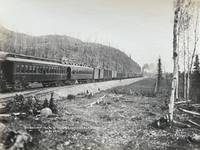
1619réf. 59078Anchorage & Seward A.T.: Alaska Engineering Commission AEC Phinney S. Hunt ca. 1916-1917. 4to. 86 silver print photographs sized 6.25 x 8.25 in. nearly all w/ photographer’s imprint w/in negative at lower fore-edge as well as caption negative number and AEC some w/ occasional pencil annotations on verso all preserved in mylar sleeves occasional creasing at corners a couple w/ slight loss at corners in the small blank margin. Recent 3-ring clamshell binder an excellent set of photos with all retaining bright strong contrast. This outstanding photo archive provides not only some of the earliest photographs of Anchorage Alaska Territory but also this immense railroad project first authorized by the US Congress in 1912. The few existing privately-run railroads operating in Alaska at the time including the Alaska Northern Railway and the Tanana Valley Railroad primarily fulfilled the needs of the mining companies carrying resources to sea ports and very little allowance was made for passenger traffic and it was impossible to travel by rail from Ship’s Creek at the Cook Inlet north to Fairbanks. Through an April 1915 executive order President Wilson directed that the newly created Alaska Engineering Commission construct a railroad along the surveyed “Western Route” from Seward or Portage Bay along the Turnagain & Knik Arms of Cook Inlet North through the Suitna Valley and then follow the Nenana River until it joined the Tanana with the intent it would connect eventually to Fairbanks. Employing discarded surplus railroad equipment from the Panama Canal Railroad project and under the direction of engineer Mears who had worked on both the Panama Canal and Great Northern Railroads the tiny tent city of Ship’s Creek swelled to 5500 people within two years and was officially labeled by the Post Office as “Anchorage.” Photos included here reveal the barren original landscape of Ship’s Creek with one of the photos showing the steam launches “Alaska” & “Seagull” who carried cargo and passengers from ships offshore. In addition there are views of the construction of the immense AEC Railway machine shop by Sept. 1916 as well as the newly completed first Railroad Depot in Anchorage with the progression of buildings erected beyond. These early views of the fast developing project portray the Commissary Hospital Bunkhouses finished machine shop interiors of the powder house for blasting along with a view of the AEC’s photo studio and the completed electrical power house. Early street views of the nascent city are quite scarce and one of particular interest shows Fourth Ave. looking East with newly built stores and homes built along both sides of the roadway stretching into the distance. Brutal working conditions continually interfered with the pace of the project with one of the images showing the AEC’s “Electric Thawing Machine” on a sled whie others depict piles of snow work camps in snow and even sternwheeler and docks trapped in an ice flow in March 1917. A couple of the photographs feature the sternwheeler SS Omineca underway which had been originally constructed in 1909 for the Grand Trunk Railway running the Skeena River from 1909-1912 and powered by the original SS Caledonia’s engines. By the end of 1916 60 miles of track had been laid 100 miles were graded and right-of-way cleared for 230 miles with photos in this archive showing AEC Construction camps at various mile markers blasting activity and track laying. At the same time they rehabilitated the bankrupt Alaska Northern Railroad tracks and by Oct. 24 1917 the first AEC Railway train reached the Chickaloon coal mines 74 miles North of Anchorage. The railroad would actually not be finished until 1923 when the Tanana River Bridge was completed and last 57 miles of track to Fairbank converted to standard gauge. Photos also show the Anchorage Baseball Field which featured games for the Cook Inlet Baseball League composed at the time of Matanuska Anchorage and Turnagain Arm teams. There’s also a very fine series of the Decoration Day parade held May 30 1917 depicting many of the main streets and businesses in the background. In addition several photographs show the ocean docks completed which allowed ships to directly dock at Anchorage rather than lightering passengers and cargo to shore prior to 1917. Hunt 1866-1917 originally worked as a California optician before trekking to Valdez Alaska as a gold rush prospector but quickly established himself as a photographer opening his studio and documenting Valdez and development of the region. He would bring his wife and children to Alaska by 1907. He later secured work as one of the AEC’s official photographers shooting some of the early survey work by 1914 and through the project until suffering a heart attack Oct. 14 1917 in Seward AK. Hunt’s son A.O. Hunt also worked as an assistant photographer for the AEC. A few of these images appear as negatives in the Alaska State Library Historical Collections with a couple shown in their Digital Archives and some appear in the Alaska Engineering Commission archive at the U of W Collect. No. PH0495 but the bulk of that collection features photographs by James McPherson H.G. Kaiser and A.J. Johnson who were the other official photographers on the project; See: Phinney S. Hunt Photographs of Alaska 1902-1909 Photographs in and around Valdez and Sitka Alaska University of Washington Special Collections; Phinney S. Hunt Obituary Alaska Railroad Record Vol. I No. 49 Oct. 16 1917 p. 389. Alaska Engineering Commission, AEC, Phinney S. Hunt, unknown
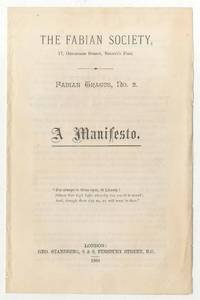
1884réf. 500462London: The Fabian Society / Geo. Standring 1884. Softcover. Near Fine. First edition. One quarto sheet folded to make four pages. Removed from a larger volume with stab holes and a bit of nicking along the spine else near fine. Issued unsigned the Nobel laureate's first separate publication issued as "Fabian Tracts No.2" when he was 28 years old; Shaw was elected a member of The Fabian Society the British socialist organization still in operation today on September 5 1884. While many early tracts from The Fabian Society may be found this pamphlet is rare. ABPC locates only two copies at auction both in 1976. Laurence A1. The Fabian Society / Geo. Standring unknown