The Wayzgoose Press; Janaczewska, NoelleBiblio.com

388 942 résultats
réf. 134535Katoomba NSW: The Wayzgoose Press 2006. Eleven gate-folded pages bound concertina-style illustrated with coloured linocuts by Mike Hudson; demy folio; within floral patterned purple cloth box with printed paper title label inlaid on the lid purple ribbon tie and yellow cloth sides; The Wayzgoose Press Katoomba NSW 2006. Edition limited to 30 numbered copies 25 are for sale signed by the author and publishers Mike Hudson and Jadwiga Jarvis; this being copy number 17 of 21 thus bound. With the original prospectus slightly marked loosely inserted. Conceived designed and illustrated with multi-coloured linocuts by Mike Hudson and hand set in a variety of types by Jadwiga Jarvis. The linocuts were extra coloured by hand making each copy in the edition unique. The pages unfold to a total length of 5 metres. Loosely inserted is a printed instruction sheet: Some helpful hints on how best to read/view Dorothy Lamour's life as a phrase book. The book is a typographic rendition of Janaczewska's play of the same title in which the screen actress 'finds herself in a poem instead of a movie' Introduction. Jadwiga Jarvis The Wayzgoose Affair page 175 explained the format: 'In order to maintain the spirit of a performance we gave the book a theatrical setting: the hotel room which appears on every one of the 11 gate-fold pages was Dorothy's stage. Onto this stage various scenarios obliquely suggested by the text were introduced . . . a chessboard a maze a giant pineapple a clapperboard and an overweight Ronald McDonald. The introduction and colophon pages featured the same room/stage but on these the set was empty and shown as if unlit alluding to the characteristic hiatus of a theatrical presentation before curtain-up and after the final curtain'. The Wayzgoose Press unknown
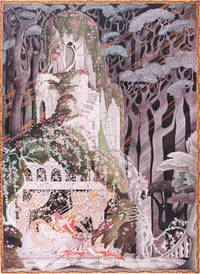
1925réf. 33084London: Hodder & Stoughton 1925. FIRST EDITION AND THE BEST OF THE LIMITED EDITIONS. One of only 600 copies hand-numbered and SIGNED BY KAY NIELSEN. This copy also with the laid-in announcement from Leicester Galleries regarding the availability for purchase of the original watercolours produced to illustrate this book. With 12 tipped-in color plates 10 black & white illustrations decorated title-page decorated initials and red decorative endleaves all by Kay Nielsen. 4to publisher’s best original binding of beautiful ivory cloth the upper cover lettered in gilt and pictorially decorated with Nielsen's all-over designs in gold and turquoise-blue the spine exquisitly decorated and lettered in gilt and with the artist's name gilt within a field of blue t.e.g. 276 pp. plates. A very handsome copy with only very light evidence of age the text-block plates and binding all in very pleasing condition. A TRULY HANDSOME COPY OF THE VERY RARE LIMITED FIRST EDITION IN BEST BINDING OF THE PREFERRED ENGLISH ISSUE SIGNED BY NIELSEN. Along with the title story a full twenty-two of Grimm's Tales are beautifully illustrated throughout with Kay Nielsen’s wonderfully evocative paintings. Copies this fine and beautiful are very rare. The white cloth the gilt work and decorative work to the covers the text-block and plates are in remarkably pristine condition. This is the last book Kay Nielsen would illustrate for Hodder and Stoughton. It was a book begun many years prior and worked on throughout Nielsen's early career. Nielsen had started work on his paintings to illustrate Grimm's stories in 1912 but the work was halted due to the occurrence of The Great War. After the 1918 Hodder and Stoughton resumed the publishing work on Nielsen’s illustrated books. In 1924 it was finally decided to complete Nielsen's Grimm project. The book was offered only to the luxury market and was not issued in a trade edition in England. Hodder & Stoughton hardcover
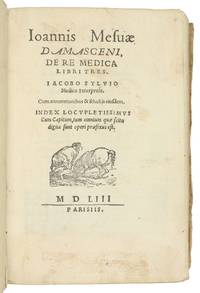
1553réf. L7NA2E7L5WJBParis = Venice: Girolamo Scotto 1553. Contemporary vellum traces of ties. 8vo. With Scottos woodcut device on the title page showing what are probably two of the wild mares of King Abderus being devoured by the mares of King Diomedes of Thrace devouring either Abderos or Diomedes himself and about 22 woodcut decorated nearly all pictorial initials 7 series plus a few repeats. Rare Venetian edition with a false Paris imprint of Mesues three seminal pharmacological works including his great pharmacological handbook the principal model for the European pharmacopoeias translated into Latin by Jacques Dubois/Jacobus Sylvius 1478-1555 who taught anatomy at Paris his students including Vesalius and Gesner. Dubois first published it in a Paris folio edition in 1542. As far as we know the present edition has not previously been recognised as a false imprint but Girolamo Scotto in Venice used the woodcut device on the title-page in 1543 Bernstein Music printing p. 88 & fig. 3.16: much more artistic than most publishers devices so perhaps made to illustrate an unidentified book and the woodcut pictorial initial on r8r also appears in Lippomano Espositioni volgare Venice Girolamo Scotto 1554 A4r where some of the types match as well. Moreover the 2 initials in the largest series A on l2v and H on e2v show respectively: another Scotto device anchor with S O S and the motto in tenebris fulget: see Scottos 1554 Lippomano 1555 Aquinas and his heirs 1585 Monte Madrigali and the coat of arms of the Medici Grand Dukes of Tuscany dexter impaled with a tree atop six mounts sinister.De Vos calls Mesues present works a conduit for the Arabic contributions to that epistemology and its subsequent development and impact describing them as the most dominant source of pharmaceutical writings and by far the most influential in the subsequent development of European pharmacy with Duboiss new Latin translation of particular note pp. 668 670 673. Though these Mesue works had been printed already in 1471 Duboiss translation became the standard De Vos counting 17 editions in less than a century. The preliminaries include the title-page Duboiss 7-page dedicatory epistle addressed to Etienne de Poncher 1446-1529 Bishop of Bayonne and chancellor of the University of Paris and an 8-page contents covering all three works. The three Mesue works follow: Methodus medicamenta purgantia simplicissima deligendi & castigandi theorematis quatuor absolutus = Canones universales ll. 1r-33v 13 chapters; De singulis medicamentis purgantibus deligendis & castigandis = De simplicibus ll. 34r-82v 30 chapters; and De antidotis = Antidotarium or Grabadin ll. 82v-239r 12 sections; followed by definitions of the technical words ll. 239v-248r and a 9-page table of contents for all three works. Duboiss version of the first work differs considerably from earlier editions where it bore the title Canones universales. It describes general techniques in the preparation of medicines and was originally closely associated with the simples in the following work but it was given a much broader application. The De simplicibus originally gave information on 49 simples mostly purgatives here expanded to 53. Although it includes many known since classical antiquity more than a fourth are additions made by the mediaeval Arabic physicians. The bulk of the book is devoted to the Antidotarium also called Garbadin after the Arabic for dispensary. It is by far the most detailed and extensive mediaeval book of pharmacological recipes far surpassing the 12th-century Antidotarium Nicolai which had been the standard work in Europe. Not only does it include 432 recipes for compound medications compared with Nicolais 85 it arranges them by the kind of medicine rather than alphabetically and unlike Nicolai it gives detailed instructions for their preparation. It largely superseded Nicolai in Europe in the late 1300s and early 1400s. Although Mesue and his present works have fallen into undeserved obscurity in the general public they went through more editions than Ibn Sina Avicenna Galen or Discorides.If the attribution to Joannis Mesuae Damasceni is correct the author must be Yahya = Yuhanna ibn Masawaih al-Mardini ca. 925-1015 known in the West as Mesue the younger. He is said to have been a Syrian Jacobite/Nestorian Christian physician from Mardin in upper Mesopotamia now on the Turkish-Syrian border who worked in Damascas may have headed the Baghdad hospital served as personal physician to caliphs in Cairo and wrote in Arabic. His present principal works are now known however from Latin translations the earliest from 1281 and De Vos even suggests they may have been compiled in Bologna after 1260 adapting several unidentified Arabic medical works of the 10th and 11th centuries to 13th-century European needs. She notes that Dubois published a new Latin translation in 1542 and emphasises its importance but she does not discuss his sources he was well-versed in Greek and Hebrew but apparently not in Arabic. In any case the writings attributed to Mesue the younger clearly derive from the mediaeval Islamic world and contain many innovations that provided the basis for the theory and practice of pharmacology for centuries and perfectly met the demands of the developing medical marketplace of mediaeval Europe. The early Paris folio editions of Duboiss translation would have been out of reach of most students and country or small town physicians or apothecaries so Lyon printers introduced 8vo editions in 1548. The present 8vo edition appears to be the first outside Lyon and Scotto may have thought a false Paris imprint would make it seem more authentic than the Lyon competitors.With faint brown stains some marginal worming near the end of the text and the corner of Aa3 lost not affecting the text.l Durling 3145; ICCU NAPE 006561 8 copies; USTC 151259 2 copies; WorldCat 9 copies in 7 entries; cf. Brockelmann GAL I 232; Hirsch I 171f; not in Adams; BM STC French; EDIT 16; Wellcome; for Mesue and the present works: Paula De Vos The Prince of Medicine: Yuhanna ibn Masawayh and the foundations of the Western pharmaceutical tradition in: Isis 104 2013 pp. 667-712; Prioreschi History of medicine IV Byzantine and Islamic pp. 290-291. [Girolamo Scotto], hardcover
1957Initialled (K.R.P.) and briefly inscribed atop front free endpaper by Popper to Harry Kidd in year of publication, when Kidd was Secretary of the London School of Economics where Popper taught. xiv, 166 pages. Index. "Puts paid to all attempts at futurology by pointing out that the future depends on new knowledge which by definition we do not have today." - Samuel Brittan, The Week. "Exposes 'historicism' with such force and precision, and makes so clear its incompatability with any kind of scientific empiricism, that there is no further excuse for confusing these two." - Isaiah Berlin. Popper was "One of the most influential thinkers of the 20th century." - The Daily Telegraph. Quarter-inch incidental mark to page 20, otherwise contents clean and unmarked. Minor cant to spine. Modest loss to dust jacket at corners. A quality signed copy of this momentous work. Book
1939231, [1] pages. 9.2" x 6.3". Waton (1871-1959) was a Jewish philosopher keenly interested in the works of Marx and Spinoza. In the Foreword, dated 1939, he states "I convinced myself that human society is irresistibly and inevitably moving towards state capitalism and fascism. Further reflection also convinced me that this social transformation would inevitably bring upon the Jews great suffering. How could the Jews face this world situation? This question occupied my mind for the last twelve years. At last I reached the conclusion which I embodied in a program for the Jews. When the Jews declared war against Nazi Germany and fascism (in 1933), I saw that as a suicidal policy. Thus passed more than five years of ever-increasing suffering for the Jews. When the situation became so grave that the Jews themselves began to realize the gravity of the situation, the Spinoza Institute of America asked me to formulate my program." On page 199 he adds "We have to face the fact that the Leader of the German people has no doubt in his mind that the Jewish problem is the centre of all problems, not merely in Germany, but in the world. It is useless to dismiss this as an illusion, because if it is, it demands explanation. But it is no illusion." Brilliant gilt lettering upon front board. Light external wear. Binding tight. Faint patches of soiling to boards. Occasional light pencil marginalia and underlining until page 21. Moderate age-toning to contents. It is left to readers to ponder the impact Waton's program could have had upon twentieth-century history. Book
1654Folio (320 x 215mm). (16) ll, including frontispiece, 618 pp, (14) ll. Engraved frontispiece, title in red and black with large engraved vignette, numerous engraved illustrations including large-format ones, and numerous woodcut illustrations, headpieces and initials, with final blank. Contemporary vellum, manuscript title on spine. Somewhat browned and with a small defect in the engraved title-page, but still in good condition, binding slightly bowed.
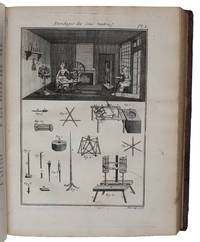
1771réf. 56289Neuchatel, L'Imprimerie de la Société Typographique), 1771-83. 4to. Bound in 19 contemp. uniform full mottled calf. Raised bands. Gilt spines. Title-and tomelabels with gilt lettering. Spine-ends on nearly all volumes strenghtened. Stamp on title-pages. Each volume around 650 pp. With 508 fine engraved plates.
1771réf. 56289Neuchatel L'Imprimerie de la Société Typographique 1771-83. 4to. Bound in 19 contemp. uniform full mottled calf. Raised bands. Gilt spines. Title-and tomelabels with gilt lettering. Spine-ends on nearly all volumes strenghtened. Stamp on title-pages. Each volume around 650 pp. With 508 fine engraved plates. Second edition and the first 4to-edition was published in 19 volumes plus an additional volume by Jean Elie Bertrand where vol. 20 is an additional volume published much later 1799 - not present here - dealing with the art of printing. This importent collection of books on crafts was published by between 1761 and 1788. The full series comprises 113 parts cahiers in 27 folio volumes along with three supplements and "provide detailed accounts of a wide range of handcraft and manufacturing processes carried out in France at that time. The volumes are well-illustrated with precise engravings by Jean Elie Bertrand 1737-1779 a noted typographer from Neuchâtel where the printing was done. Many of them provide the background for shorter articles in Diderot's Encyclopedia which was appearing at much the same time. The project had its origin in request from Colbert in 1675 to the Academy Royal des Sciences for detailed accounts of various mechanic arts to be prepared and for new machines to be reported upon. This led to the formation of the Bignon Commission under Abbé Bignon. René-Antoine Ferchault de Réaumur 1683-1757 became editor soon after he joined the Academy. He inherited number of drawings the earliest prepared in 1693 and an illustrated manuscript on printing type and book binding which had been prepared in 1704. It was left to Réaumur's successor Duhamel du Monceau to bring about the publication of the series probably as the result of the competition from the Encyclopedia." Wikipedia.Brunet II618 ff. - Graesse II 367. hardcover
1996réf. ZB445765London: The Economist Newspaper Ltd. 1996. volumes 340 to 377 an uninterrupted run of complete volumes mostly in orignal pictorial softcovers ex library good. - If you are reading this this item is actually physically in our stock and ready for shipment once ordered. We are not bookjackers. Buyer is responsible for any additional duties taxes or fees required by recipient's country. Photos available upon request. London: The Economist Newspaper, Ltd. paperback
1926réf. ZB386783Paris 1926-69. volumes 1-32; partly bound ex library price is for the lot;. - If you are reading this this item is actually physically in our stock and ready for shipment once ordered. We are not bookjackers. Buyer is responsible for any additional duties taxes or fees required by recipient's country. Photos available upon request. Paris unknown
1903réf. 22087London Frederick Ware & Co Ltd. Printed in Great Britain 1903 1903 Hard Cover. No Jacket. Signed by Author. Hardback NODJ 1903 PRESENTATION COPY EARLY Edition 1 Volume F-/VG AS-IS NODJ Bound in the publisher's pictorial boards inner and outer hinges fine head of spine lightly rubbed generally a VG copy Salmon Cover Sunning Extremites & Spine with Paper inset onlay Label on front in Triangle Shape of color illustration of Mouse Reading Paper sitting on Spool thread Slight Lean to Book Tiny Chips Extremites Spine Interior Nice tight Clean light Wear light Wrinkling85 pgs with Title author & Publishers Name on Front in White White lettering of Title on Spine. Signed by Author. F. Hard Cover. London Frederick Ware & Co, Ltd. Printed in Great Britain, 1903 hardcover
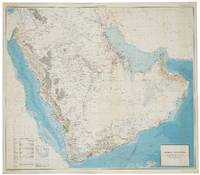
réf. 56801Washington D.C.: Department of the Interior United States Geological Survey and the Kingdom of Saudi Arabia Ministry of Finance 1963. Second edition English issue. Large chromolithohraphed map 122 x 139 cm of the Arabian peninsula shown with topographic relief and marked with water pipelines oases oil fields oil pipelines ports and harbours oil wells natural gas fields quarries and mines. Key lower left. The map includes the territories of modern day Kuwait Qatar Bahrain United Arab Emirates Oman and Yemen and was the work of a team lead by the distinguished geologist Glen F. Brown whose pioneering work on surface geology with its emphasis on water resources minerals and oil pertains to this day. Minor light spotting lower right generally in excellent condition. Issued simultaneously in an English and Arabic versions. Originally conceived in 1953 this second edition shows significant additional topographical detail and noticeably showing the growth in oil fields and accompanying infrastructure. Brown 1911-2001 began his career conducting coal investigations in South China and the Philippines and ground water investigations in Mississippi and Colorado the latter mostly concerned with supplying water to military installations. In response to a request from Ibn Sa'ud for assistance from the United States Geological Survey USGS Brown was selected in 1944 to investigate water supplies in the Saudi Arabian desert. Brown "arrived in Saudi Arabia early in 1945 and joined a mission sponsored by the US Foreign Economic Administration to study possibilities for agricultural development in central Arabia. As part of the mission he carried out a detailed investigation of the geologic formations in the Al Kharj district and identified substantial ground-water resources in buried aquifers. His report on the results of that investigation was very enthusiastically received by Saudi officials. Brown returned to Saudi Arabia at the request of Ibn Saud to conduct reconnaissance geologic mapping mineral evaluation and water-resource studies in the western and central parts of the kingdom. The mapping was carried forward from 1950 to 1958 by Brown with USGS and Saudi associates and extended to the entire Arabian Peninsula in cooperation with the Arabian American Oil Company Aramco as well as to organizations and companies of other countries in the peninsula. This resulted in a remarkable series of bilingual geologic and geographic maps of Saudi Arabia at a scale of 1:500000 and a geologic and geographic map of the entire Arabian Peninsula at a scale of 1:2000000 all of which were published by the USGS. These maps together with reports on the geology mineral deposits and water resources prepared by Brown and his associates providing the basis for Saudi Arabia to undertake a major national resource exploration and development program" obituary Geological Society of America. The map includes the territories of modern day Kuwait Qatar Bahrain United Arab Emirates Oman and Yemen. Although the hunt for oil gas and minerals ultimately drove geological survey work across the region in its early years it was the need for continual water sources which was the catalyst for Saudi Arabia's resource exploration. In 1944 King 'Abd al-'Aziz approached the United States for a technical expert who could assist with the identification and plotting of the kingdom's natural resources particularly its groundwater reserves. Glen F. Brown who undertook the task and is responsible for this map was one of the pioneers of a partnership between the United States Geological Survey USGS and the government of Saudi Arabia. This collaboration was one of international importance spanning the next five decades and influencing the development of the kingdom significantly. By 1954 the Saudi Ministry of Finance United States Geological Survey USGS and Aramco were working together to produce the first full series of geographic and geologic maps of the country. The first of their type in the Peninsula were published between the late 1950s and early 1960s in both Arabic and English copies. The information these maps contained formed the basis of subsequent Saudi national development plans. To this day all modern maps of the kingdom trace their roots back to these publications. Washington D.C.: Department of the Interior, United States Geological Survey and the Kingdom of Saudi Arabia Ministry of Finance unknown
1866réf. 211806New York: The Tribune Association 1866. First Edition; First Printing. Hardcover. Very Good in decorative quarter leather boards. Ex-library. Owner personalization on FEP. Bookplate on both pastedowns. The Tribune Association hardcover
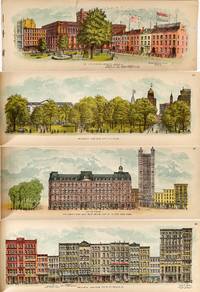
1899réf. 1827New York: The Mail and Express 1899. First Edition. Very Good. Oblong folio 6 1/8 x 16 7/8 inches 155 x 428 mm 74 chromolithographs pages printed on both sides 2 pp. publisher's statement 1 p. advertisement and 3 pp. index; stapled on short side. Paper wrappers and some advertisement pages missing but all images are present and intact with just small margin tears on the first two pages not affecting the images. Plates are evenly printed with clearly defined lines and vivid colors. Statement page detached and with some tears chips and stains. Paper evenly toned. The original blue paper envelope is included. NYPL catalog ID B-number: b12714370 RLIN/OCLC: 29278445. A scarce and important block-by-block record of what both sides of Broadway looked like at the turn of the 20th Century from Steamship Row to Bowling Green to 59th Street. The series of beautiful chromolithographs documents the most important thoroughfare of the city block by block on facing pages corresponding to the West Side and East Side of Broadway. Issued by The Mail & Express Company which was the publisher of the Evening Mail a New York City daily newspaper this publication was a precursor of photographic books which became popular in the next decades. The Mail and Express unknown
1935réf. 6911935 - reliure - Sanjian Shuwu 三閒書屋 - Yinyu ji 引玉集 (« Recueil pour attirer le jade ») 木刻五十九幅 - Deuxième tirage, avril 1935 - In-8 (19,5 × 15,5 cm) reliure cartonnée de l'éditeur, dos noir, pièce de titre contrecollée sur le premier plat - 68 pages - 59 reproductions de gravures sur bois soviétiques imprimées au procédé collotype (珂羅版) d'après les tirages originaux fournis par les artistes - Comprend un texte de Chen Jie (陳節), traduction abrégée d'un essai de A. D. Chegodaev consacré à la gravure soviétique contemporaine - Tirage limité à 215 exemplaires, dont 15 exemplaires hors commerce - Diffusion assurée par la librairie Uchiyama (內山書店), Shanghai - Ouvrage en chinois - Avec des œuvres de Dmitri Isidorovich Mitrokhin, A. Kravchenko, N. Piskarev, Vladimir Andreevich Favorsky, P. Pavlinov, A. Goncharov, M. Pikov, Sergei Mikhalovich Mocharov, L. Khizhinsky, Nikolai Vasilievich Alekseev et Sergei Mikhailovich Pozharsky - A PROPOS : Rare anthologie consacrée à la gravure soviétique moderne, publiée à Shanghai par 三閒書屋 et diffusée par la librairie Uchiyama (內山書店). L'ouvrage réunit cinquante-neuf reproductions en collotype de gravures sur bois réalisées par plusieurs figures majeures de l'école russe et soviétique de la gravure des années 1920-1930, parmi lesquelles Vladimir Favorsky, Dmitri Mitrokhin, Alexei Kravchenko et Pavel Pavlinov. Accompagné d'une traduction abrégée par Chen Jie d'un essai de l'historien de l'art soviétique A. D. Chegodaev, ainsi que d'une préface, d'un catalogue des planches et d'une postface, le volume fut conçu comme une introduction à l'estampe contemporaine soviétique pour le public chinois. Témoignage remarquable des échanges artistiques sino-soviétiques dans le Shanghai républicain des années 1930, il s'inscrit dans le contexte du mouvement de la Nouvelle Gravure (新興木刻運動), alors en plein essor sous l'influence des milieux intellectuels de gauche et des réseaux culturels gravitant autour de la librairie Uchiyama et de la figure de Lu Xun. Les reproductions furent réunies à partir de documents et publications soviétiques découverts au début des années 1930, notamment par l'intermédiaire de la revue Graphika. /// ENGLISH: Sanjian Shuwu (三閒書屋) - Yinyu ji (引玉集, “Collection to Draw Forth Jade”): Fifty-Nine Woodcuts (木刻五十九幅) - Second printing, April 1935 - Octavo (19.5 × 15.5 cm), publisher's boards with black spine and mounted title label on upper cover - 68 pages - 59 collotype (珂羅版) reproductions of Soviet woodcuts printed from original impressions supplied by the artists - Includes a text by Chen Jie (陳節), an abridged translation of an essay by A. D. Chegodaev on contemporary Soviet printmaking - Limited edition of 215 copies, including 15 non-commercial presentation copies - Distributed by Uchiyama Bookstore (內山書店), Shanghai - Text in Chinese - Featuring works by Dmitri Isidorovich Mitrokhin, Alexei Kravchenko, Nikolai Piskarev, Vladimir Andreevich Favorsky, Pavel Pavlinov, Aleksandr Goncharov, Mikhail Pikov, Sergei Mikhailovich Mocharov, Leonid Khizhinsky, Nikolai Vasilievich Alekseev and Sergei Mikhailovich Pozharsky. ABOUT: Rare anthology devoted to modern Soviet wood engraving and printmaking, published in Shanghai by Sanjian Shuwu and distributed through Uchiyama Bookstore (內山書店). The volume gathers fifty-nine collotype reproductions of woodcuts by several leading figures of the Russian and Soviet printmaking revival of the 1920s and 1930s, including Vladimir Favorsky, Dmitri Mitrokhin, Alexei Kravchenko and Pavel Pavlinov. Accompanied by Chen Jie's abridged translation of an essay by Soviet art historian A. D. Chegodaev, as well as a preface, plate catalogue and postface, the work was conceived as an introduction to contemporary Soviet printmaking for Chinese readers. A remarkable testimony to Sino-Soviet artistic exchanges in Republican-era Shanghai, it belongs to the context of the New Woodcut Movement (新興木刻運動), then flourishing under the influence of left-wing intellectual circles and cultural networks associated with Uchiyama Bookstore and the figure of Lu Xun. The reproductions were assembled from Soviet books, periodicals and documentary sources discovered in the early 1930s, notably through the journal Graphika. /// 中文:三閒書屋出版 — 《引玉集:木刻五十九幅》 — 1935年4月再版 — 32開(19.5 × 15.5厘米)精裝本,黑色書脊,封面貼書名籤 — 68頁 — 收錄蘇聯木刻作品59幅,以珂羅版工藝依據藝術家提供之原拓本複製印製 — 附陳節摘譯 A. D. Chegodaev(契戈達耶夫)論蘇聯現代版畫藝術之文章 — 限印215部,其中15部為非賣贈送本 — 上海內山書店代售 — 中文版 — 收錄 Dmitri Isidorovich Mitrokhin、Alexei Kravchenko、Nikolai Piskarev、Vladimir Andreevich Favorsky、Pavel Pavlinov、Aleksandr Goncharov、Mikhail Pikov、Sergei Mikhailovich Mocharov、Leonid Khizhinsky、Nikolai Vasilievich Alekseev 及 Sergei Mikhailovich Pozharsky 等藝術家作品。關於本書:本書為三閒書屋於上海出版、由內山書店代售之珍稀蘇聯現代木刻版畫選集。全書收錄59幅以珂羅版精印之蘇聯木刻作品,作者均為1920至1930年代俄羅斯及蘇聯版畫復興運動的重要藝術家,其中包括弗拉基米爾·法沃爾斯基(Vladimir Favorsky)、德米特里·米特羅欣(Dmitri Mitrokhin)、阿列克謝·克拉夫琴科(Alexei Kravchenko)及帕維爾·帕夫利諾夫(Pavel Pavlinov)等人。書中除收錄陳節摘譯之蘇聯藝術史家 A. D. Chegodaev 論文外,尚附序言、圖版目錄及後記,旨在向中國讀者介紹蘇聯當代版畫藝術。本書不僅是研究俄蘇版畫的重要文獻,亦是1930年代上海中蘇藝術交流的珍貴見證。其出版背景與中國新興木刻運動(新興木刻運動)密切相關,反映了左翼知識界、內山書店文化網絡以及魯迅所倡導之版畫思想的深遠影響。書中圖版主要彙集自1930年代初傳入中國之蘇聯書籍、期刊及藝術資料,其中包括《Graphika》等重要出版物。
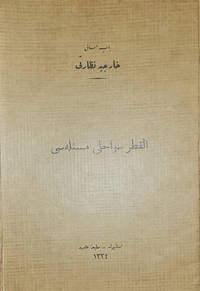
1918réf. 000233An official report containing the formal agreements of the Ottoman state and its official position on the Qatari coastal issue as well as the settlement of this matter with Britain. The report was prepared by the Ottoman ambassadors Fakhr al-Din Rum Beyoğlu and Muhammad Nabi in 1917. It consists of 16 pages in Ottoman Turkish and French and was printed in a limited edition. Al Amira The Imperial Press paperback
1980réf. 2091202133212040Nigensha 1980. Soft Cover. Fine. Volume: 1 Nigensha paperback
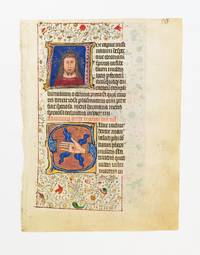
1465réf. ST17243aBruges ca. 1465. 193 x 145 mm. 7 5/8 x 5 3/4". Single column 21 lines in a gothic book hand. Rubrics in red WITH THREE LARGE HISTORIATED INITIALS: ONE WITH A PORTRAIT OF CHRIST WEARING THE CROWN OF THORNS AND TWO WITH DISEMBODIED HANDS SHOWING THE STIGMATA each initial in pink or blue with white tracery filled with dark pink or blue with thin gilt lines and dots hands with wavy blue rays radiating from behind the appendage all within a thin gilt frame both sides with a three-quarter border consisting of hairline vines gold bezants and a few colorful flowers. ◆Margins with a little light soiling BUT IN FINE CONDITION THE PAINT OF THE INITIALS ESPECIALLY RICH AND WELL PRESERVED. From a manuscript probably produced in Bruges for the English market this leaf contains arresting initials that direct the viewer's attention to the wounds endured by Christ during the Passion. According to Roger Wieck Passion Cycle images enjoyed a particular vogue in 15th century Dutch Flemish and English Books of Hours including those that were exported to England. In the present example the strikingly unusual imagery includes a portrait of Christ wearing the Crown of Thorns his gaze fixed directly at the viewer and in separate initials his left and right hands appear disembodied and displaying the stigmata. A sister leaf to the present item features three additional initials showing the wounds of the left and right foot as well as the spear injury to Christ's side depicted as an oval piece of flesh with a laceration across the center. The parent manuscript containing the present leaf sold at Christie's on 15 November 2006 lot 16 the description for which gives us additional information about the book's contents and provenance: it was made for the Use of Sarum included a calendar with the English saint Thomas Becket and Popes Gregory and Silvester with their names crossed out indicating that it was in England through at least the time of the Reformation and contained an early ownership inscription of a woman named Bridget Lowe with a Middle English inscription on the pastedown. Christie's also attributed the parent manuscript to the workshop of William Vrelant with miniatures possibly by his chief assistant the Master of the "Vraie Cronique Descoce." They note that this work is "of higher quality than many of the works that satisfied the English demand for Netherlandish illumination" and that it "demonstrates why Vrelant appealed to the great bibliophiles of the Burgundian Netherlands." Vrelant was the leading purveyor of books of private devotion in Bruges during the third quarter of the 15th century and his prominent position among Flemish illuminators of the time is indicated by the considerable number of manuscripts illustrated in his manner by other miniaturists both in Bruges and in nearby cities in Flanders. Similar examples to the present leaf can be found in intact Books of Hours at the Philadelphia Free Library MS Widener 3 and the Huntington HM 1086--both of which were produced in Flanders or the Netherlands around the same time as the present work--but the present leaf surpasses both of these examples in terms of excellence of the artistic hand and level of detail depicted. unknown
1460réf. ST12839Paris ca. 1460. 153 x 110 mm. 6 x 4 3/8". Single column 14 lines of text in a fine gothic book hand. One-line initial in burnished gold on a pink and blue ground with white tracery a two-line initial and a three-line initial in pink with white tracery on a ground of burnished gold the center filled with twining blue vines bearing pink and scarlet flowers verso with a rinceau panel border featuring twining hairline stems bearing burnished gold ivy leaves and fruit blue and gold acanthus leaves and flowers recto WITH AN ARCH-TOPPED MINIATURE OF THE HOLY TRINITY SURROUNDED BY THE HEAVENLY HOST this and the accompanying text enclosed by a pink blue and burnished gold bar border on one side and a brushed gold bar border with pink lotus flowers on two sides the whole surrounded by A FULL RINCEAU BORDER DENSE WITH ACANTHUS LEAVES FOLIAGE FRUIT FLOWERS AND TINY GOLD BERRIES on hairline stems. ◆A little paint flaked from the book held by the Trinity a couple of small spots in the margin otherwise in fine condition--clean and smooth with comfortable margins and bright gold. The Trinity is shown here seated on a canopied throne with God the Son his hand raised in blessing to the left of the Father. The latter in a towering crown holds a gold orb and the Father and Son together support a large book opened between them. The dove of the Holy Spirit hovers above the book radiating golden beams. The Trinity is flanked on both sides by cherubim and seraphim in rich red and soft yellow. It is the rendering of this angelic ambiance that elevates the level of aesthetic achievement here: both red and yellow celestial beings are given a ghostly appearance as if appearing out of a filmy yellow or a densely red fog. The artistic qualities as a whole suggest that this leaf comes from a manuscript commissioned by a person of significant means. unknown
1465réf. ST17243aBruges ca. 1465. 193 x 145 mm. 7 5/8 x 5 3/4". Single column 21 lines in a gothic book hand. Rubrics in red WITH THREE LARGE HISTORIATED INITIALS: ONE WITH A PORTRAIT OF CHRIST WEARING THE CROWN OF THORNS AND TWO WITH DISEMBODIED HANDS SHOWING THE STIGMATA each initial in pink or blue with white tracery filled with dark pink or blue with thin gilt lines and dots hands with wavy blue rays radiating from behind the appendage all within a thin gilt frame both sides with a three-quarter border consisting of hairline vines gold bezants and a few colorful flowers. ◆Margins with a little light soiling BUT IN FINE CONDITION THE PAINT OF THE INITIALS ESPECIALLY RICH AND WELL PRESERVED. From a manuscript probably produced in Bruges for the English market this leaf contains arresting initials that direct the viewer's attention to the wounds endured by Christ during the Passion. According to Roger Wieck Passion Cycle images enjoyed a particular vogue in 15th century Dutch Flemish and English Books of Hours including those that were exported to England. In the present example the strikingly unusual imagery includes a portrait of Christ wearing the Crown of Thorns his gaze fixed directly at the viewer and in separate initials his left and right hands appear disembodied and displaying the stigmata. A sister leaf to the present item features three additional initials showing the wounds of the left and right foot as well as the spear injury to Christ's side depicted as an oval piece of flesh with a laceration across the center. The parent manuscript containing the present leaf sold at Christie's on 15 November 2006 lot 16 the description for which gives us additional information about the book's contents and provenance: it was made for the Use of Sarum included a calendar with the English saint Thomas Becket and Popes Gregory and Silvester with their names crossed out indicating that it was in England through at least the time of the Reformation and contained an early ownership inscription of a woman named Bridget Lowe with a Middle English inscription on the pastedown. Christie's also attributed the parent manuscript to the workshop of William Vrelant with miniatures possibly by his chief assistant the Master of the "Vraie Cronique Descoce." They note that this work is "of higher quality than many of the works that satisfied the English demand for Netherlandish illumination" and that it "demonstrates why Vrelant appealed to the great bibliophiles of the Burgundian Netherlands." Vrelant was the leading purveyor of books of private devotion in Bruges during the third quarter of the 15th century and his prominent position among Flemish illuminators of the time is indicated by the considerable number of manuscripts illustrated in his manner by other miniaturists both in Bruges and in nearby cities in Flanders. Similar examples to the present leaf can be found in intact Books of Hours at the Philadelphia Free Library MS Widener 3 and the Huntington HM 1086--both of which were produced in Flanders or the Netherlands around the same time as the present work--but the present leaf surpasses both of these examples in terms of excellence of the artistic hand and level of detail depicted. unknown books
1460réf. ST12839Paris ca. 1460. 153 x 110 mm. 6 x 4 3/8". Single column 14 lines of text in a fine gothic book hand. One-line initial in burnished gold on a pink and blue ground with white tracery a two-line initial and a three-line initial in pink with white tracery on a ground of burnished gold the center filled with twining blue vines bearing pink and scarlet flowers verso with a rinceau panel border featuring twining hairline stems bearing burnished gold ivy leaves and fruit blue and gold acanthus leaves and flowers recto WITH AN ARCH-TOPPED MINIATURE OF THE HOLY TRINITY SURROUNDED BY THE HEAVENLY HOST this and the accompanying text enclosed by a pink blue and burnished gold bar border on one side and a brushed gold bar border with pink lotus flowers on two sides the whole surrounded by A FULL RINCEAU BORDER DENSE WITH ACANTHUS LEAVES FOLIAGE FRUIT FLOWERS AND TINY GOLD BERRIES on hairline stems. ◆A little paint flaked from the book held by the Trinity a couple of small spots in the margin otherwise in fine condition--clean and smooth with comfortable margins and bright gold. The Trinity is shown here seated on a canopied throne with God the Son his hand raised in blessing to the left of the Father. The latter in a towering crown holds a gold orb and the Father and Son together support a large book opened between them. The dove of the Holy Spirit hovers above the book radiating golden beams. The Trinity is flanked on both sides by cherubim and seraphim in rich red and soft yellow. It is the rendering of this angelic ambiance that elevates the level of aesthetic achievement here: both red and yellow celestial beings are given a ghostly appearance as if appearing out of a filmy yellow or a densely red fog. The artistic qualities as a whole suggest that this leaf comes from a manuscript commissioned by a person of significant means. unknown books
1800réf. CJW1405London: T. Bensley for T. Macklin final volume Bensley for T. Cadell & W. Davies 1800. First Printing of this Edition. 484 x 390 mm. 19 x 15 1/4". Seven volumes. Once splendid contemporary black straight-grain morocco gilt covers framed by Greek key roll palmette roll and multiple gilt rules double raised bands spine compartments densely gilt with rows of alternating star and circlet tools gilt titling turn-ins with gilt chain roll purple endpapers all edges gilt some inexpert but not obvious repairs to joints and backstrips. With more than 100 allegorical headpieces and tailpieces and some 70 SPLENDID LARGE-FOLIO SIZE COPPER PLATES after Fuseli Reynolds West and others. Herbert 1442 and 1651. ◆Extremities rather rubbed boards a bit scuffed but the decorative contemporaneous bindings solid and not without appeal. Plates somewhat foxed mostly to margins mild to moderate offsetting from plates occasional mild offsetting in the text bed but still a fresh wide-margined copy. The most prodigious form of scripture in English ever published the Macklin Bible features very large and bold type fine Whatman paper and a series of engravings by some of the most celebrated artists of the period. Like the Boydell "Shakespeare Gallery" also printed by Bensley our Macklin Bible is a vast picture book with illustrations that are grand both in size and emotional impact. According to DNB Macklin 1752/3-1800 announced his intention to produce a lavishly illustrated luxuriously produced folio Bible in 1789 and he spent the next 11 years and £30000 making his dream a reality. His efforts paid off: "the subscription list for 703 copies at £46 1s. apiece was headed by the king the queen and the prince of Wales." Sadly Macklin died just five days after the last engraving was finished and did not live to see his masterpiece become one of the most acclaimed English Bibles. As DNB observes "The Macklin Bible endures as the most ambitious edition produced in Britain often pirated but never rivalled." Copies of the Macklin Bible were often put into ornate bindings as was the present set; despite the depradations of time the workmanship of a superior London binder remains apparent. T. Bensley for T. Macklin [final volume Bensley for T. Cadell & W. Davies] unknown
1800réf. CJW1405London: T. Bensley for T. Macklin final volume Bensley for T. Cadell & W. Davies 1800. First Printing of this Edition. 484 x 390 mm. 19 x 15 1/4". Seven volumes. Once splendid contemporary black straight-grain morocco gilt covers framed by Greek key roll palmette roll and multiple gilt rules double raised bands spine compartments densely gilt with rows of alternating star and circlet tools gilt titling turn-ins with gilt chain roll purple endpapers all edges gilt some inexpert but not obvious repairs to joints and backstrips. With more than 100 allegorical headpieces and tailpieces and some 70 SPLENDID LARGE-FOLIO SIZE COPPER PLATES after Fuseli Reynolds West and others. Herbert 1442 and 1651. ◆Extremities rather rubbed boards a bit scuffed but the decorative contemporaneous bindings solid and not without appeal. Plates somewhat foxed mostly to margins mild to moderate offsetting from plates occasional mild offsetting in the text bed but still a fresh wide-margined copy. The most prodigious form of scripture in English ever published the Macklin Bible features very large and bold type fine Whatman paper and a series of engravings by some of the most celebrated artists of the period. Like the Boydell "Shakespeare Gallery" also printed by Bensley our Macklin Bible is a vast picture book with illustrations that are grand both in size and emotional impact. According to DNB Macklin 1752/3-1800 announced his intention to produce a lavishly illustrated luxuriously produced folio Bible in 1789 and he spent the next 11 years and £30000 making his dream a reality. His efforts paid off: "the subscription list for 703 copies at £46 1s. apiece was headed by the king the queen and the prince of Wales." Sadly Macklin died just five days after the last engraving was finished and did not live to see his masterpiece become one of the most acclaimed English Bibles. As DNB observes "The Macklin Bible endures as the most ambitious edition produced in Britain often pirated but never rivalled." Copies of the Macklin Bible were often put into ornate bindings as was the present set; despite the depradations of time the workmanship of a superior London binder remains apparent. T. Bensley for T. Macklin [final volume Bensley for T. Cadell & W. Davies] unknown books
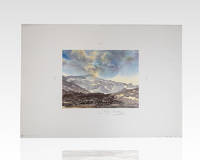
réf. 152694London 1992-2002. A remarkable collection of signed lithographs after the watercolours of King Charles III produced during his years as Prince of Wales together with related printer’s material and catalogues. A devoted amateur watercolourist Charles allowed limited-edition lithographs of his paintings to be published from 1990 to raise funds for his charities the prints struck by the master lithographer Stanley Jones at the Curwen Studio in London. The collection comprises three lithographs. Wensleydale an out-of-series copy from the edition of 295 initialled and dated by Charles in pencil at the lower right “C 92” with the pencilled title at the foot 45 by 59.5 cm retaining its original portfolio. Ben Avon near Braemar a pre-publication printer’s proof apparently separate from the edition of twenty-five artist’s proofs signed by Charles in pencil at the foot beside his pencilled approval “Appd” and further annotated “Best proof 20/6/02” at the lower left with the printer’s centring marks to the margins 53.5 by 79.8 cm. And Highgrove a pre-publication printer’s proof signed by Charles in pencil at the head with the printer’s colour bars and centring markers to the margins 46.5 by 70.5 cm. Together with two printer’s transparencies and two printed catalogues one for the Prince’s exhibition at the Accademia Raffaello in Urbino in 1990 and the other a Belgravia Gallery sale catalogue with price list. In generally very good condition with a few marginal spots and blemishes. An exceptional group documenting the artistic life of the British monarch and unusual in preserving working proofs bearing the artist’s own hand-written approval. King Charles III who acceded to the throne in 2022 has been a dedicated watercolourist since the 1970s and is among the most accomplished amateur artists ever to occupy the British throne. Painting chiefly in watercolour and by preference out of doors he has recorded the landscapes he loves best above all the hills of Scotland around Balmoral and Deeside and the gardens of his Gloucestershire home at Highgrove. From 1990 a series of signed lithographs after his paintings was published to benefit his charitable foundation and the sale of reproductions of his watercolours has since raised many millions of pounds for good causes making him one of the best-selling living artists in Britain. Sir Hugh Casson the architect and former president of the Royal Academy who was among the Prince’s artistic mentors praised his work as that of an accomplished amateur whose watercolour sketches deserved a wider audience. Pre-publication proofs bearing the artist’s own pencilled approval as here are of particular interest as evidence of Charles’s close personal involvement in the making of the prints. unknown
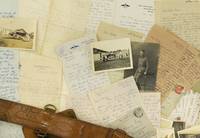
réf. 121325Powell enlisted in Melbourne in August 1914 service number 187 and was deployed to Gallipoli with the 2nd Field Ambulance A.I.F. After the evacuation he was promoted to corporal and then sergeant while with the 1st Divisional Headquarters seeing action on the Western Front before training as a pilot and being commissioned as an officer with the Royal Flying Corps in March 1917. Deployed once again to France with No. 84 Squadron R.F.C. in late September 1917 he was reported missing near Menin Menen Belgium on 31 October likely shot down by a German fighter. The archive comprises: 1 Approximately 75 autograph letters sent by Powell to his mother Clara and twin sister Mary in East Prahran Melbourne running to some 235 octavo or quarto pages. They date from soon after his enlistment to shortly before his death. Six were written on the Gallipoli Peninsula with others from Egypt the Western Front and the United Kingdom mainly during pilot training. While many of the letters are routine and others are guarded at numerous occasions Powell allows himself to reflect candidly on his experience of the war see examples below. 2 Approximately 90 closely-written postcards also addressed to Clara and Mary mainly from Egypt while on active service. The postcards are often written in numbered series most of which are complete. 3 Approximately 15 Field Service postcards signed by Powell several with Gallipoli postmarks. 4 Approximately 45 vintage gelatin silver photographs most relating to Powell's war service. The most interesting are 17 small snapshots approximately 45 × 65 mm most likely taken by Powell himself his letters suggest he was a keen amateur photographer showing gullies and ridges at Gallipoli 2; Australian servicemen and encampments in the Middle East with captions on the versos identifying several 7; R.F.C. aircraft apparently Farman reconnaissance biplanes in the snow at Netheravon Airfield 3 all captioned; and five others taken during pilot training in Britain. There are also five larger images approximately 80 × 110 mm showing military aircraft two possibly also showing Powell and two showing an airship. There are ten portrait photographs of Powell five in uniform one in a small cut glass and mother-of-pearl frame probably purchased in Egypt as well as three in which he is shown with a young woman likely Mary apparently taken shortly after he enlisted. A further nine photographs show friends and relatives some identified. 5 Approximately 60 pieces of ephemera and personal documents relating to Powell's service mainly mess bills receipts and other financial documents but also Christmas cards cinema programmes and city maps. A few relate to his life before the war including a reference from an employer. There are also several interesting documents relating to First World War aviation including the 'Royal Flying Corps Communiqué No. 58' 22 October 1916 giving details of R.F.C. actions in France bombing aerial photography casualties hostile aircraft flying conditions etc. for the preceding week. 6 Approximately 30 letters addressed to Powell mostly from his aunt Emma. Many of the letters are dated 1917 suggesting they may have been among his effects when he died. One particularly engaging three-page letter from a fellow R.F.C. officer Nugget and addressing Powell also as Nugget a few words censored gives a very detailed account of a dog-fight with German aircraft over the Western Front. Dated 16 September 1917 shortly before Powell's deployment to France it also includes much practical advice on flying in combat. 7 29 postcards addressed to Powell from two young French women Jeanne and Renée whom he may have met in Marseille in early 1916: '. je suis inquiète de ne plus reçevoir de vos nouvelles. Ne m'oubliez pas. I love you' etc. There is also a small photograph of Jeanne clipped from a postcard-format photograph. These items may have been forwarded to his sister as part of their running joke about him bringing home a foreign bride. 8 Some 40 official documents and family correspondence subsequent to Powell's death including the official telegram announcing his disappearance. 9 Approximately 60 envelopes and other items of postal stationery most retaining the postmarks and stamps if used. The postmarks include numerous field post offices including Gallipoli Egypt Greece and the Western Front. 10 A Sam Browne belt and leather notebook case purchased with the archive and with Powell's name in black ink on the inside surface. 11 A group of 7 postcards from Mary's fiancé Harold while on service in Egypt and the Western Front. 12 Eighteen reproductions of other photographs relating to Powell's war service showing Egypt Gallipoli and apparently an airfield in Britain. Several show Powell alongside other Australian soldiers. A few highlights of the collection include: A letter to his mother from Gallipoli on 20 May 1915: 'The infantry have done marvellous work here as you will read in the press. It needs seeing the cliffs & then you could appreciate it. It was wonderful. Poor Lou Matthews died yesterday I believe shot though the head but Arthur Clayfield was all right yesterday at any rate. Keith McIlwraith . died the first day bullet in head. I am not in love with this war game & in fact I think that after 3 more wars I will retire from the game & let someone else get all the glory &c out of it'. In another letter to his mother from Gallipoli on 16 June 1915 Powell asks her to tell his sister that the dances in fashion in the trenches are the 'Shrapnel slide' the 'Shell shivers' and the 'Howitzer hug' and 'I may tell you baseball was a good training inasmuch as the sliding into a hole is concerned'. A lengthy letter from the Western Front to 'Ma chere Mere' is dated '8 Mai 1916': he has been granted furlough to England and asks for £20 to be cabled to his account. 'Our 2/- per day wont allow for any saving-up as although we are fighting for their country the Northern French people put the weight in to the Australians just the same as the Egyptians did'. Later he writes 'We are in the fighting line again but it is nothing to Gallipoli - take it from me Gallipoli from Apl 25th to about 20th August was some go & after seeing that through I reckon a chap will die of old age. Well I am glad that I came with the 1st Division as we have some choice names for the chaps arriving now & they get rather a rough time when they start to talk to fellows about Gallipoli & were never there in their lives. It is rather annoying but the ones who were not on the Penin. at all or who were there for about 5 minutes that is after August do all the talking'. A fortnight later on 21 May 1916 he tells his mother about a thank-you letter he receives for his 'acknowledging letter to the billy which I received while at Lemnos after Gallipoli. The funny part about those billies was the way they were pasted round with a kangaroo on the map of Gallipoli & on it - "WHAT WE HAVE WE'LL HOLD". We got them just after being withdrawn from what we had won from them. It seemed like a bit of a rub from "JACKO" the Turks'. In a letter from the Central Flying School Upavon on 21 April 1917 Powell reflects that 'as usual the poor old Australians are doing more than their share. The Huns recently claimed to have cut off 750 of them you can guess it was the poor old 1st Div. going on ahead & not being supported on the flanks at Lagnicourt. It is only history repeating itself the same as Gallipoli the English troops letting them down & then some people over here pretend to think them "not nice" because when they get a little leave from France or hospital they play up a little. I wonder how they would get on without the Australians New Zealanders & Canadians - anyway I know to whom they give the hardest fighting & whom they welcome with open arms to the R.F.C. - nuf sed'. Over 520 items. unknown