388 950 résultats
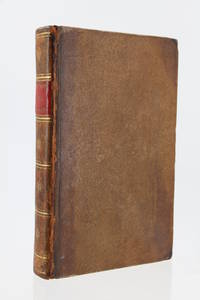
1814réf. 78167Paris: De l'Imprimerie de P. Didot l'aîné 1814. Fine. De l'Imprimerie de P. Didot l'aîné Paris 1814 12.50 x 20.50 cm relié De l'Imprimerie de P. Didot l'Aîné Paris 1814 125 x 205 cm bound in calf First edition of Stendhal's very first book published under the pseudonym of Louis-Alexandre-César Bombet. Contemporary binding in half brown calf spine decorated with gilt fillets and tooling as well as a red morocco title piece. Very rare according to Clouzot De l'Imprimerie de P. Didot l'aîné unknown
1991réf. ZB3938081991-2002. volumes 1-20. 1991-2002. partly bound library markings textually clean & tight price is for the set. - If you are reading this this item is actually physically in our stock and ready for shipment once ordered. We are not bookjackers. Buyer is responsible for any additional duties taxes or fees required by recipient's country. Photos available upon request. unknown
A very fine copy of the rare English edition. Established in 1903, the Wiener Werkstätte (Vienna's workshops) was a production community of visual artists in Vienna. With 174 plates, partly in color. Compiled by Mathilde Flögl. Texts by Franz Cizek, Peter Behrens, Josef Hoffmann, A.S. Levetus and Egon Fridell. The cover designed by Vally Wieselthier and Gudrun Baudisch. - Schweiger, Wiener Werkstätte S. 124-125.
1961réf. AMO-4505London : George Allen & Unwin ltd. Boston : Houghton Mifflin Company. 3 vol. 8vo 9.0" x 6.0" inches (23 x 15,5 cm) 423pp, folding map ; 352pp, folding map ; 416pp, folding map. First edition. Later printings (12/9/8). The Fellowship of the Ring. First edition first published in July 1954. Twelfth impression 1962. The Two Towers. First edition first published 1954. Ninth impression 1962. The Return of the King. First edition first published, October 1955. Eight impression 1961. Printed in Great Britain in 11 on 12 point Imprint type by Jarrold & Sons Ltd, Norwich. Each volume with a folding map at the end printed in red and black, top edges stained red. Exquisite full dark blue morocco fine leather binding, gilt ruled covers with the gilt "Ring & Eye" design stamped on the both covers, spine with decorated 5 raised bands ans two red gilt lettered morocco labels in the second and fourth compartments, with intertwined "J.R.R.T." initials in the bottom compartment. The amazing quality of the binding in in the style of Sangorski & Sutcliffe in fine condition. Extremely rare and absolutely spectacular.
1978réf. 2091502135710696Yoshikawakobunkan 1978. Soft Cover. Fine. The book is in fine condition. Yoshikawakobunkan paperback
1983réf. ZB394248Pergamon Press 1983-1995. volumes 4-9 11-20. 1983-1995. partly bound library markings textually clean & tight price is for the set. - If you are reading this this item is actually physically in our stock and ready for shipment once ordered. We are not bookjackers. Buyer is responsible for any additional duties taxes or fees required by recipient's country. Photos available upon request. Pergamon Press unknown
1841Very Good Arabic Original autograph document/letter sealed by Ahmad I of Tunisia. 54x42 cm. 1 p. 6 long lines. The letter includes full of poetic praise. It must be sent after successful diplomatic intercourse with Naples. Ferdinand II (Ferdinando Carlo) was King of the Two Sicilies from 1830 until his early death in 1859. It starts with 'Thank God alone', and goes on 'From poor Ahmad Pasha to Lord Almighty Field Marshal Amîr [ruler]. Sealed by the seal of Ahmad Basha Beg including an impressive qasidah in Arabic. Ahmed I (ibn Mustafa), born 2 December 1805 in Tunis died May 1855 at La Goulette, was the tenth Husainid Bey of Tunis, ruling from 1837 until his death. He was responsible for the abolition of slavery in Tunisia in 1846. He succeeded his father Mustafa Bey on 10 October 1837. He had grand ambitions - to expand his army and create a modern navy; to build a new royal residence, a mint and modern institutions of education but neither he nor his brother-in-law the young Mustapha Khaznadar who served as his finance minister, had a clear idea of what such initiatives would cost. As a result, many of his projects became expensive failures which damaged the financial health of the country. Soon after his accession, Ahmad Bey received the traditional Firman from the Sublime Porte which formally invested him with authority to rule from the Ottoman Empire and furnished him with the insignia of office. The Ottoman envoy, Osman Bey, arrived in la Goulette on 15 May 1838 onboard a frigate. The following day, Osman Bey made his official entry into Tunis on horseback, preceded by all the ministers of the beylical cabinet who went before him until he was two leagues from the city. Before he were carried the sword of honor and the caftan to be presented to the Bey. He was escorted by spahis and followed by a large contingent of regular troops an Arab cavalry. Three days after his official entry into the city, the envoy presented himself at the Bardo Palace to formally invest Ahmad Bey with his insignia of office and present gifts. Named as a Divisional General in the Ottoman army in May 1838, he was later promoted by the Sultan to the rank of Marshal on 14 August 1840. This was the first time that a Bey of Tunis had held a rank higher than Divisional General. The purpose of these honors was to emphasize the supremacy of the Ottoman Empire over the Regency of Tunis. Under a treaty with France signed in 1830 by Hussein Bey, a piece of land in Carthage had been ceded to allow the erection of a monument to Louis IX of France who had died there during the Eighth Crusade. On 25 August 1840, the first stone was laid in the cathedral of Carthage. Ahmad Bey also permitted the Christian community of Tunis, consisting mainly of European merchants, to enlarge their small church near the Bab el Bhar. In June and July 1846 the Duke of Montpensier, son of King Louis Philippe of France visited Tunis and Carthage. He was received with great solemnity by Ahmad Bey. According to the Tunisian historian Mohamed Bayram V, Bey's reforms were focused on state structures, the army, and education. He established a modern structure of government and gave his high officials the title of 'minister'. His senior ministers were his Grand Vizier Mustafa Sahib at-Taba'a, Mustapha Khaznadar, Minister of Finance and of the Interior, Mustafa Agha as Minister of War, Mahmoud Khodja as Minister of the Navy and Giuseppe Raffo as Foreign Minister. At certain times Mahmoud Ben Ayed also served as Trade Minister, Kuchuk Muhammad in the honorific post of Minister in charge of the security home of Ahmad Bey's reforms wasted money, such as the large frigate built at La Goulette that could not make it through the channel to the sea. of Tunis and Mohamed Lasram IV as Minister of the Pen. The historian Ibn Abi Dhiaf was the Bey's private secretary. Among Ahmad Bey's successes may be counted as the abolition of slavery in January 1846. To this may be added the formation of the military academy at...
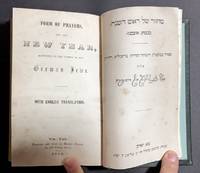
1854réf. 40798New York: Henry Frank 1854. Hardback. 1st edition. Period-style gilt tooled Morocco leather. 12mo various pagination aprox 475 pages total . Singerman 1284 listing only 1 copy anywhere Goldman 40. One of the four first Ashkenazi machzor volumes printed in America all published in 1854 by Henry Frank. Based upon the celebrated Wolf Heidenheim edition Henry Chaim Frank of New York published in 1854 2 prayer-books for the Days of Awe: This volume for the New Year as well as a volume for Yom Kipur. This enabled the newly rising community of German American Jews to conduct services according to their own custom as opposed to that of the Sephardic rite. Frank went on in later years to issue other volumes for other Holidays and reflecting the customs of the Polish Jews as well. OCLC: 45963598. OCLC lists only 2 copies of this volume anywhere Columbia and Yale. A set New Year and Yom Kipur with repairs sold at auction for over $17000 with commissions in 2012. No copies of either volume have appeared at major auction since then. Faint blindstamps on title pages. Exquisite tooled binding an absolutely stunning copy. SBK KH-9-9-KK. New York: Henry Frank unknown
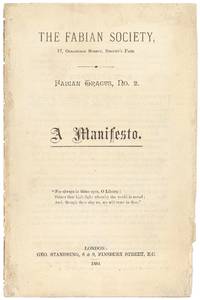
1884réf. 589907London: The Fabian Society / Geo. Standring 1884. Softcover. Very Good. First edition. One quarto sheet folded to make four pages. Removed from a larger volume with stab holes and several nicks along the spine chips and a few small creased tears along the edges modest soiling very good. Issued unsigned the Nobel laureate's first separate publication issued as "Fabian Tracts No.2" when he was 28 years old; Shaw was elected a member of The Fabian Society the British socialist organization still in operation today on September 5 1884. While many early tracts from The Fabian Society may be found this pamphlet is rare. ABPC locates only two copies at auction both in 1976. Laurence A1. The Fabian Society / Geo. Standring unknown
1884réf. 589907London: The Fabian Society / Geo. Standring 1884. Softcover. Very Good. First edition. One quarto sheet folded to make four pages. Removed from a larger volume with stab holes and several nicks along the spine chips and a few small creased tears along the edges modest soiling very good. Issued unsigned the Nobel laureate's first separate publication issued as "Fabian Tracts No.2" when he was 28 years old; Shaw was elected a member of The Fabian Society the British socialist organization still in operation today on September 5 1884. While many early tracts from The Fabian Society may be found this pamphlet is rare. ABPC locates only two copies at auction both in 1976. Laurence A1. The Fabian Society / Geo. Standring unknown books
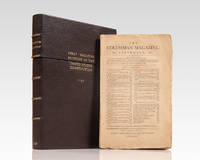
1787réf. 153385Philadelphia: Seddon Spotswood Cist and Trenchard 1787. Rare first periodical printing of the United States Constitution likely published within a week of its issuance as a broadside. Octavo disbound with a later string binding. The Constitution first appeared as a broadside followed quickly by its first newspaper appearance in The Pennsylvania Packet; later that same week it appeared in two magazines The Columbian Magazine and The American Museum and it remains unclear which of the two came first. The Columbian Magazine printed the Constitution in Philadelphia in 1787 on pages 659 to 665 under the title “The new plan for a Federal Government proposed by the Convention” together with the letter of George Washington transmitting the document from the Constitutional Convention to the Congress. In good condition with toning wear and chipping to the edges several leaves unopened including the Constitution leaves scattered soiling and foxing the meteorological table chipped at the left margin with some loss of text and the upper portion of the final leaf chipped away with loss not affecting the Constitution. Housed in a modern brown morocco pull-off case with chemise. Evans 20280. Mott A History of American Magazines I pp. 94-99. With the meteorological table and one of two plates lacking the View of the Natural Bridge in the State of Virginia. A rare and fragile survival of one of the earliest printings of the founding document of the United States. The Columbian Magazine published in Philadelphia from 1786 was among the earliest and most ambitious American monthly magazines mixing essays literature history and engraved plates. Its 1787 number carries one of the first printings of the United States Constitution which the Constitutional Convention had signed on September 17 of that year accompanied by George Washington’s letter transmitting the document from the Convention to the Congress. In the weeks after the signing the Constitution was rushed into print as a broadside in newspapers and in the new monthly magazines carrying the text to a public that would spend the following year debating and ratifying it and making these earliest appearances landmarks in the founding of the United States. Seddon, Spotswood, Cist, and Trenchard unknown
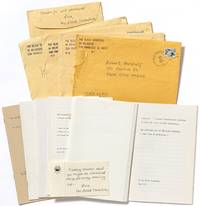
réf. 539637San Diego California: Community Congress Press 1973. Softcover. Fine. First edition. Complete in six volumes. Octavos. Stapled printed and unprinted wrappers. One issue with splash mark on the cover and another with small stain on the rear wrap but overall fine with bright white wrappers typically found toned. Laid into the first volume is a Autograph Note Signed by Acker as The Black Tarantula along with a small drawing of a spider: "Fielding Dawson said you might be interested being put on my mailing list - Love The Black Tarantula." Accompanied by five original mailing envelopes stamped with The Black Tarantula return address and addressed in Acker's hand to Robert Bertholf the influential poetry professor and former curator of The Poetry Collection at Buffalo. The first of Acker's three six-volume novels preceded only by her poetry collection Politics written in parts and issued separately in very limited numbers and consequently very difficult to find complete and in original form. A wonderful copy in remarkable condition with an handwritten note by Acker and the rarely found original mailing envelopes. Community Congress Press) unknown
réf. 539637San Diego California: Community Congress Press 1973. Softcover. Fine. First edition. Complete in six volumes. Octavos. Stapled printed and unprinted wrappers. One issue with splash mark on the cover and another with small stain on the rear wrap but overall fine with bright white wrappers typically found toned. Laid into the first volume is a Autograph Note Signed by Acker as The Black Tarantula along with a small drawing of a spider: "Fielding Dawson said you might be interested being put on my mailing list - Love The Black Tarantula." Accompanied by five original mailing envelopes stamped with The Black Tarantula return address and addressed in Acker's hand to Robert Bertholf the influential poetry professor and former curator of The Poetry Collection at Buffalo. The first of Acker's three six-volume novels preceded only by her poetry collection Politics written in parts and issued separately in very limited numbers and consequently very difficult to find complete and in original form. A wonderful copy in remarkable condition with an handwritten note by Acker and the rarely found original mailing envelopes. Community Congress Press) unknown books
1504réf. 55895Venice: Simone da Lovere de Luere 1504. Editio princeps. Modern limp vellem. Very good. Small folio in 6s: 35 1 blank leaves. Collation: a-f6. Latin text in two columns; Gothic font; 66 lines per page; printed marginalia; woodcut initial at opening of text. With index at f5v and register with SL Simone da Lovere monogram. Modern vellum to style with exposed thongs. Leaf a1r with glue shadows in places; insignificant worming not affecting legibility; a few leaves with slight creasing and some marginal damp staining else a very good generally clean and wide-margined copy complete with the final blank. Very scarce editio princeps. First printed edition of this treatise by the Dominican friar bishop philosopher and natural scientist Albert of Launingen ca. 1200-1280. A Doctor Universalis of the Roman Catholic Church and the teacher of Thomas Aquinas Albert's literary production spans at least forty years. "He was undoutedly the dominant figure of his time the most prolific writer of the century the most influential teacher an experienced traveler a keen observer of nature; the one learned man of the 'Golden Age' to be called 'the Great' he was cited by name even before his death -- a most unusual occurrence in medieval authorship" Enc. Phil. The present twelve-part treatise comprises a summa of medieval psychology physiology and epistemology. Albert addresses various forms of sensation knowledge wisdom and prophecy all of which are linked to the human understanding of the divine essence and God's knowledge of Himself. In Albert's usage the term "apprehensione" refers to a concept of consciousness in which nothing regarding the object of study is affirmed or denied; rather the mind merely perceives it. Like Albert's works in science and natural philosophy generally De Apprehensione derives from Aristotle's organization of the areas of study: psychology including dream interpretation physics astronomy and astrology geography zoology botany mineralogy along with more general discussion of life-processes and the universe. Incipit: Clarissimi Alberti Magni de appehensione liber incipit De apprehensione. Colophon: Explicit liber Clarissimi Alberti Magni de Apprehensione sub dialogo discipulum se nominas: querit suam magistram philosophias / Venetijs impressus per Simonem de Luere in contrata sancti Cassiani. 13. Septembris. 1504. Feliciter. Provenance and watermark: Two old stamps of the Monastery Heiligenkreuz in Lower Austria; Hartung & Karl Auction 18 1976 Lot no. 75. The watermark indicates paper produced in southern Germany likely Eichstätt. References: Edit 16 CNCE 16123; Encyclopedia of Philosophy New York 1967 vol. 1 pp. 64-65. Cf. Panzer Annales Typographici 1501-1536 vol. 11 388 ed. 1507. Not in Adams nor in BM STC Italy. A very scarce work USTC locates only 19 copies. Simone da Lovere (de Luere) unknown
1504réf. 55895Venice: Simone da Lovere de Luere 1504. Editio princeps. Modern limp vellem. Very good. Small folio in 6s: 35 1 blank leaves. Collation: a-f6. Latin text in two columns; Gothic font; 66 lines per page; printed marginalia; woodcut initial at opening of text. With index at f5v and register with SL Simone da Lovere monogram. Modern vellum to style with exposed thongs. Leaf a1r with glue shadows in places; insignificant worming not affecting legibility; a few leaves with slight creasing and some marginal damp staining else a very good generally clean and wide-margined copy complete with the final blank. Very scarce editio princeps. First printed edition of this treatise by the Dominican friar bishop philosopher and natural scientist Albert of Launingen ca. 1200-1280. A Doctor Universalis of the Roman Catholic Church and the teacher of Thomas Aquinas Albert's literary production spans at least forty years. "He was undoutedly the dominant figure of his time the most prolific writer of the century the most influential teacher an experienced traveler a keen observer of nature; the one learned man of the 'Golden Age' to be called 'the Great' he was cited by name even before his death -- a most unusual occurrence in medieval authorship" Enc. Phil. The present twelve-part treatise comprises a summa of medieval psychology physiology and epistemology. Albert addresses various forms of sensation knowledge wisdom and prophecy all of which are linked to the human understanding of the divine essence and God's knowledge of Himself. In Albert's usage the term "apprehensione" refers to a concept of consciousness in which nothing regarding the object of study is affirmed or denied; rather the mind merely perceives it. Like Albert's works in science and natural philosophy generally De Apprehensione derives from Aristotle's organization of the areas of study: psychology including dream interpretation physics astronomy and astrology geography zoology botany mineralogy along with more general discussion of life-processes and the universe. Incipit: Clarissimi Alberti Magni de appehensione liber incipit De apprehensione. Colophon: Explicit liber Clarissimi Alberti Magni de Apprehensione sub dialogo discipulum se nominas: querit suam magistram philosophias / Venetijs impressus per Simonem de Luere in contrata sancti Cassiani. 13. Septembris. 1504. Feliciter. Provenance and watermark: Two old stamps of the Monastery Heiligenkreuz in Lower Austria; Hartung & Karl Auction 18 1976 Lot no. 75. The watermark indicates paper produced in southern Germany likely Eichstätt. References: Edit 16 CNCE 16123; Encyclopedia of Philosophy New York 1967 vol. 1 pp. 64-65. Cf. Panzer Annales Typographici 1501-1536 vol. 11 388 ed. 1507. Not in Adams nor in BM STC Italy. A very scarce work USTC locates only 19 copies. Simone da Lovere (de Luere) unknown books
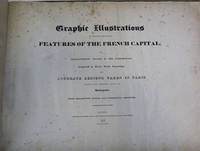
réf. 51-6998London : Harper and Co. successors to Mr. Kearsley 1816. Oblong elephant foilio. Much rarer than the smaller format edition. 69 x 50cm. 27 x 19.5 inches.Original printed boards rubbed and soiled; repaired with new goatskin spine. The more common smaller format is 43x38cm. 17 by 15 inches. .12 engraved plates scattered spotting and marginal browning throughout damp stain to lower margin of one plate one leaf loose repaired tear to final leaf.OCLC Number / Unique Identifier:461746497.Description by Juliette Jestaz.Conservatrice des manuscrits livres rares et plans à la Bibliothèque historique de la Ville de Paris. Référente d'histoire de Paris pour la bibliothèque:."These very discreet graphic illustrations of the most prominent features of the French capital with characteristic figures in the foregrounds bear no artist's name on the title page. The plates themselves are signed “S. Porter sculpsit” “Sparrow sculpsit” “Dadley sculpsit” or “Angus sculpsit.” The latter is probably William Angus 1752–1821 a British draftsman and engraver. We have not been able to identify the other engravers.At least one of the plates is based on a drawing by Pierre-Antoine Demachy 1723–1807 author of numerous views of Paris particularly panoramas of the quays. It is tempting to attribute to him all the aquatint drawings in the collection—a technique decidedly in vogue for veduta at the turn of the century. The drawings of him that are kept at the Musée Carnavalet or in the Destailleur collection of the BnF do not however correspond to those in our album and cannot confirm this attribution.The first edition was published in 1815 by Howlett and Brimmer in London. This edition published by Harper the following year suggests that the album was successful coming just a few months after Waterloo had reopened France to the British after twelve years of closure. These two publishers had previously produced picture albums of the Allied countries: The Costume of the Russian Empire 73 engravings 1803 with descriptions in French the international language at the time and English and Sketches of Military Costume in Spain and Portugal 1810.Like Nattes's album this one does not focus on the Empire's achievements in Paris: neither the Arc de Triomphe du Carrousel nor the Place du Châtelet the Palais de la Chancellerie Hôtel de Salm nor the Louvre's expansions. The buildings depicted on the plates could as in Nattes's work be presented in their state from 1802-1803.The album nevertheless focuses primarily on the heart of Napoleonic power the Louvre-Tuileries-Champs-Élysées district to which eight of the twelve plates are devoted. It also provides two panoramas from the North and the South. The panorama from Montmartre is a classic viewpoint dating back to that captured by Mathieu Merian in 1620.". London : Harper and Co. (successors to Mr. Kearsley), 1816 hardcover
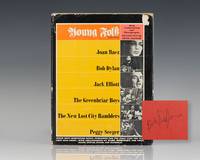
1963réf. 43008New York: Simon & Schuster 1963. First edition of this collection of songs from the 1960's folk music scene. Quarto original cloth with 112 pages with photographs. Signed by Bob Dylan in a contemporary hand on the front free endpaper. Features photos and tabulature of music by Joan Baez Bob Dylan Jack Elliott The Greenbriar Boys The New Lost City Ramblers and Peggy Seeger. Introduction by Pete Seeger. Notes by Earl Robinson. Rare and desirable signed by Dylan. Bob Dylan often performed and sometimes toured with Joan Baez starting when she was a singer of mostly traditional songs. As Baez adopted some of Dylan's songs into her repertoire and even introduced Dylan to her avid audiences a large following on the folk circuit it helped the young songwriter to gain initial recognition. By the time Dylan recorded his first LP 1962 he had developed a style reminiscent of Woody Guthrie. He began to write songs that captured the "progressive" mood on the college campuses and in the coffee houses. Simon & Schuster hardcover
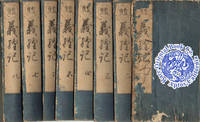
réf. 20038101Kyoto 1697 Umemura. Blue stitched wrs. very good covers basically clean scuffed rubbed tiny bit of old worming in vol. 1 else clean entirely woodblock printed on hand-made paper 43 woodcut illustrations 8 volume set complete. . . . AN EXCEPTIONALLY RARE & EARLY ILLUSTRATED RESOURCE . . . COMPLETE IN 8 ILLUSTRATED VOLUMES AS ISSUED . A most famous and valuable illustrated biography & historical work. . The FIRST EDITION of this was published in 1635 and is a biography of Yoshitsune. complete in 8 stitched & beautifully woodblock illustrated volumes. . Per Toda: "The illustrations suggest was a sugared pill of warning against the occupants of the Yoshiwara. Drawings are in simple outline with here and there a note of black. Another GIKEI-KI an extremely rare series of historical books on Yoshitoshi and his time profusely illustrated and with some sets coloured by hand appeared in Shohho 2 1645. It is one of the most interesting works of the period and when complete in 8 volumes in which it was issued is very valuable." See pp.3233 et al. . The title is written in Kambun old Chinese characters as used by Japanese the common title reading: GIKEI KI YOSHITSUNI KI in Japanese. . This set is complete in 8 uniformly bound volumes and follows the original in volume count & contents 18 x 25.5 cm. as cited in Brown's bibliographical notes see below. . ABOUT YOSHITSUNE: . Yoshitsune was the son of Mina-Moto No Yoshitomo his father turned against the Taira clan in the Heiji uprising. Yoshitsune entered Kuramadera temple in Kyoto to become a monk. Around 1180 he joined his half-brother to fight the Taira and at the famous battle of Dan No Ura spelled the end of the Taira. Yoshitsune and his famous retainer Benkei are the subject of a good number of dramatic books & stories performed as Kabuki plays. . This work outlines the life of Yoshitsune until his death at the hands of the Yoritomo forces. With a group set of charming woodblock illustrations. One in particular shows a young Yoshitsune testing his arm and sword against a solid tree another shows him in a successful defense against four assassins as he beheads two and cuts another in the heart as blood sprays forth the fourth attacker flees for his life. . THE ILLUSTRATIONS: The work is nicely woodblock print illustrated in black outline with a good number of examples. . Per Toda: There is a complete list of text pagination & illustrations of the 1635 edition but he also cites the 1659 edition as well. . Per Toda there are no titles to the illustrations nor is any artist indicated. Each illustration was divided into two printed on the front & back pages of the sheet. In many cases two plates are used to show a successive single picture. See Toda pp.28-30. . Color photos are posted to our website. . CONDITION: The set is bound in the original indigo-blue paper over boards with stitched spine as issued by the publisher. . Volume 1 front cover has more rubbing than the other volumes including to the title slip. With some usual loss see photos posted to our website typical cover edge corner & spine wear and rubbing to the blue paper covered covers with some typical minor loss & chipping. . The balance of the volumes show the minor and typical corner edge & spine wear all volumes art firmly stitched. Contents is clean there is a touch of the usual but minor old worming in vol. 1. first page some minor worming to the last few pages. Also some minor worming to the last few pages of vols. 7 & 8 very minor loss back covers rubbed old worming but solid and stable. No illustrations are affected. . The impression & registry are excellent & firm the contents are clean no stains or issues. There is some of the typical old worming here and there by and large mostly not a great distracting affecting the text or illustrations. All in all the contents & illustrations are quite clean and nice. . Seldom found & seldom found complete as issued. Our first copy in 55 years tenure. . REFERENCE: . K. Toda.: DESCRIPTIVE CATALOGUE OF JAPANESE AND CHINESE ILLUSTRATED BOOKS IN THE RYERSON LIBRARY OF THE ART INSTITUTE OF CHICAGO cites this on pp.28-30 with a careful list of the illustrations and two editions p.32-33. L. Brown.: BLOCK-PRINTING & ILLUSTRATION IN JAPAN p.32 & 48. She states:".each illustration extends over 2 full pages.it is one of the most interesting sets of books of this period not only because it represents rather typical Kwanyei work in wood-engraving but also because it shows the dress armor weapons etc. for the time of Yoshitsune." S. Iwao: BIOGRAPHICAL DICTIONARY OF JAPANESE HISTORY p.92 et al. F. Brinkley: A HISTORY OF THE JAPANESE PEOPLE.p.294 et al E. Papinot: HISTORICAL & GEOGRAPHICAL DICTIONARY OF JAPAN. pp.383-385. H. Murakami: GREAT HISTORICAL FIGURES OF JAPAN p.75 et al. J.M. Goedertier: DICTIONARY OF JAPANESE HISTORY index p.347 for several entries. . . unknown
1840réf. 376783London: Printed by C. Reynell Little Pulteney Street. Published by J. Clements Nos. 21 & 22 Little Pulteney Street Regent Street 1840. Text in three columns. Pp. iv 1-412 iv 1-412; iv 1-411 412 iv 1-411 412. 2 vols. 4to. Contemporary dark blue pebbled cloth possibly a uniform publisher's volume binding. Minor rubbing some foxing mostly in first and last pages of each volume. Very good. Text in three columns. Pp. iv 1-412 iv 1-412; iv 1-411 412 iv 1-411 412. 2 vols. 4to. Published Every Wednesday Price 2d. The Romancist and Novelist's Library is a fascinating example of early literary reading aimed at the popular market with each 16-page number containing one or more substantial works and shorter pieces to fill out the formes. The 26 numbers of the first volume have an ornamental title on the first page; thereafter only the running head and printers' slugs identify the series. With the title pages for the third and fourth volumes William Hazlitt the younger 1811-1893 is identified as the editor. "From about 1824 Hazlitt had been frequenting the family of Carew Reynell one of his father's printers; on 8 September 1833 he married Reynell's daughter Catherine d. 1860. At first they lived over a cabinet-maker's at 76 Charlotte Street London where their son William Carew Hazlitt was born in 1834 then at various other lodgings until they settled in Ovington Square Brompton in 1838. Life was a struggle" ODNB. Bleiler writes "This remarkable collection contains several score novels and short stories including sentimental supernatural Gothic and Romantic material". The contents are indeed remarkable in their range and include standards such as Monk Lewis Mrs. Radcliffe Maturin Schiller Irving's "Rip Van Winkle" and Leigh Hunt as well as several of Charles Lamb's Tales from Shakespeare. Hazlitt wrote to Leigh Hunt in March 1839 that translations were to be "a very important feature of the work". The Library included works by Alexandre Dumas Paul de Kock Goethe François Guizot Augustin Thierry Jules Michelet and Évariste Huc Hazlitt had been the first to translate Victor Hugo's Notre Dame de Paris in 1833 with a trenchant "literary and political preface". The Library includes Notre Dame de Paris "translated expressly for the Romancist with the addition of several chapters" and also good number of scarce and surprising choices notable among them Longsword The Early of Salisbury by John Leland 1762 Percy Shelley's St. Irvine; or the Rosicrucian; as well as several by Mrs. Shelley; "Sketches and Eccentricities of Colonel Crockett of West Tennessee"; Edgar Huntly by Charles Brockden Brown; The Post Captain or the Wooden Walls Well Manned here curiously attributed to Dr. Moore; and Mocha Dick; or the White Whale of the Pacific A Leaf from a Manuscript Journal by J.N. Reynolds. Each volume includes a title page and table of contents; the Preface in the first volume reviews the aims of the series; in the third volume the editor observes that 3572000 words have been published or 17862000 pieces of moveable type comprising 121 works to date or that works originally published in 64 half guinea volumes 32 pounds 10 shillings have been made available for just thirteen shillings; the Address in the fourth volume announces that a New Series in 8vo will be issued in a "more portable form" promising an alphabet of authors "ranging more nearly with other reprints of Standard Authors which are daily issuing from the press". AN IMPORTANT TREASURY OF POPULAR READING. Bleiler Guide to Supernatural Fiction 783. OCLC: 2457257 Printed by C. Reynell, Little Pulteney Street. Published by J. Clements Nos. 21 & 22 Little Pulteney Street, Regent Street unknown
1840réf. 376783London: Printed by C. Reynell Little Pulteney Street. Published by J. Clements Nos. 21 & 22 Little Pulteney Street Regent Street 1840. Text in three columns. Pp. iv 1-412 iv 1-412; iv 1-411 412 iv 1-411 412. 2 vols. 4to. Contemporary dark blue pebbled cloth possibly a uniform publisher's volume binding. Minor rubbing some foxing mostly in first and last pages of each volume. Very good. Text in three columns. Pp. iv 1-412 iv 1-412; iv 1-411 412 iv 1-411 412. 2 vols. 4to. Published Every Wednesday Price 2d. The Romancist and Novelist's Library is a fascinating example of early literary reading aimed at the popular market with each 16-page number containing one or more substantial works and shorter pieces to fill out the formes. The 26 numbers of the first volume have an ornamental title on the first page; thereafter only the running head and printers' slugs identify the series. With the title pages for the third and fourth volumes William Hazlitt the younger 1811-1893 is identified as the editor. "From about 1824 Hazlitt had been frequenting the family of Carew Reynell one of his father's printers; on 8 September 1833 he married Reynell's daughter Catherine d. 1860. At first they lived over a cabinet-maker's at 76 Charlotte Street London where their son William Carew Hazlitt was born in 1834 then at various other lodgings until they settled in Ovington Square Brompton in 1838. Life was a struggle" ODNB. Bleiler writes "This remarkable collection contains several score novels and short stories including sentimental supernatural Gothic and Romantic material". The contents are indeed remarkable in their range and include standards such as Monk Lewis Mrs. Radcliffe Maturin Schiller Irving's "Rip Van Winkle" and Leigh Hunt as well as several of Charles Lamb's Tales from Shakespeare. Hazlitt wrote to Leigh Hunt in March 1839 that translations were to be "a very important feature of the work". The Library included works by Alexandre Dumas Paul de Kock Goethe François Guizot Augustin Thierry Jules Michelet and Évariste Huc Hazlitt had been the first to translate Victor Hugo's Notre Dame de Paris in 1833 with a trenchant "literary and political preface". The Library includes Notre Dame de Paris "translated expressly for the Romancist with the addition of several chapters" and also good number of scarce and surprising choices notable among them Longsword The Early of Salisbury by John Leland 1762 Percy Shelley's St. Irvine; or the Rosicrucian; as well as several by Mrs. Shelley; "Sketches and Eccentricities of Colonel Crockett of West Tennessee"; Edgar Huntly by Charles Brockden Brown; The Post Captain or the Wooden Walls Well Manned here curiously attributed to Dr. Moore; and Mocha Dick; or the White Whale of the Pacific A Leaf from a Manuscript Journal by J.N. Reynolds. Each volume includes a title page and table of contents; the Preface in the first volume reviews the aims of the series; in the third volume the editor observes that 3572000 words have been published or 17862000 pieces of moveable type comprising 121 works to date or that works originally published in 64 half guinea volumes 32 pounds 10 shillings have been made available for just thirteen shillings; the Address in the fourth volume announces that a New Series in 8vo will be issued in a "more portable form" promising an alphabet of authors "ranging more nearly with other reprints of Standard Authors which are daily issuing from the press". AN IMPORTANT TREASURY OF POPULAR READING. Bleiler Guide to Supernatural Fiction 783. OCLC: 2457257 Printed by C. Reynell, Little Pulteney Street. Published by J. Clements Nos. 21 & 22 Little Pulteney Street, Regent Street unknown books
1968réf. 4545Bangkok: The Social Science Association Press of Thailand 1968. First edition in English of the Dalai Lama’s first book on Buddhist philosophy. Octavo original cloth. Signed by the Dalai Lama on the title page in Tibetan "with prayers." A near fine copy in an excellent dust jacket that is lightly rubbed. Housed in a custom half morocco clamshell box. Rare especially signed. The Opening the Eye of the Western Eye is a succinct thorough overview of the doctrines of Buddhism as they have been practiced for a thousand years in Tibet. The Dalai Lama here discusses the need for religious practice and the importance of kindness and compassion. Originally written for Tibetan lay people this was the Dalai Lama's first book on Buddhist philosophy to appear in English. Written for both Tibetan and Western readers Opening the Eye of New Awareness is the Dalai Lama's first religious work. It is not an edited transcript of public lectures but is His Holliness' own summation of Buddhist doctrine and practice. Completed in 1963 just four years after his escape from Tibet and four years after completing his religious education it is a work of consummate scholarship by a twenty-seven year-old geshe wise beyond his years. The Social Science Association Press of Thailand hardcover
1968réf. 140949936Berkeley: Berkeley Graphic Arts Offset Printing 1968. First printing. Signed by Angela Davis Kathleen Cleaver David Hillard Black Panther Party co-founder and Chief of Staff and Elaine Brown the only female Party President. With short inscriptions by Davis "Onward!" and Hilliard to the former owner "To Rick Synchef The struggle continues 7/12/97". Offset printed poster on medium cardstock. 23 x 17.5". Very Good with mild creasing and light edgewear a few minuscule closed tears to edges. "Bus / Masonic / Panhandle" is written faintly in grease pencil apparently a reference to a San Francisco bus line. Original memorial poster for Bobby Hutton the first recruit of the Black Panther Party who served as its treasurer until being killed in a confrontation with the Oakland police just two weeks shy of his 18th birthday. As the first Black Panther to die he has occupied a central place in the story of the group ever since being mentioned in hip-hop songs by luminaries such as Tupac Shakur The Coup Paris and this cataloguer's favorite of the bunch Smif-N'-Wessun'. This poster provides details for a memorial in a local park and visiting the funeral home where he lay in state. It also includes details for a procession that marched to the Oakland jail where Eldridge Cleaver was being held. "Bobby Hutton Day" is still held annually in Oakland nearly 60 years later. This historically important poster is rare in any condition with only one holding appearing on OCLC at Yale University. This example is a unique piece of ephemera from the movement signed by four major figures. Berkeley Graphic Arts Offset Printing unknown
1968réf. 140949936Berkeley: Berkeley Graphic Arts Offset Printing 1968. First printing. Signed by Angela Davis Kathleen Cleaver David Hillard Black Panther Party co-founder and Chief of Staff and Elaine Brown the only female Party President. With short inscriptions by Davis "Onward!" and Hilliard to the former owner "To Rick Synchef The struggle continues 7/12/97". Offset printed poster on medium cardstock. 23 x 17.5". Very Good with mild creasing and light edgewear a few minuscule closed tears to edges. "Bus / Masonic / Panhandle" is written faintly in grease pencil apparently a reference to a San Francisco bus line. Original memorial poster for Bobby Hutton the first recruit of the Black Panther Party who served as its treasurer until being killed in a confrontation with the Oakland police just two weeks shy of his 18th birthday. As the first Black Panther to die he has occupied a central place in the story of the group ever since being mentioned in hip-hop songs by luminaries such as Tupac Shakur The Coup Paris and this cataloguer's favorite of the bunch Smif-N'-Wessun'. This poster provides details for a memorial in a local park and visiting the funeral home where he lay in state. It also includes details for a procession that marched to the Oakland jail where Eldridge Cleaver was being held. "Bobby Hutton Day" is still held annually in Oakland nearly 60 years later. This historically important poster is rare in any condition with only one holding appearing on OCLC at Yale University. This example is a unique piece of ephemera from the movement signed by four major figures. Berkeley Graphic Arts Offset Printing unknown books
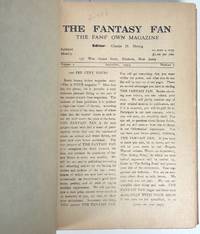
1933réf. 34594Elizabeth New Jersey: Charles D. Hornig 1933-1935. Bound in brown buckram titled in gold on the front and spine panels with "F. Lee Baldwin" stamped on the upper cover retaining the original wrappers where so issued. Overall the issues are in excellent condition which is not usually the case as they tend to be quite fragile when encountering single issues. A unique set of this uncommon and important publication. Complete sets are rare. 34594. Octavo 18 issues printed or self wrappers bound in cloth. Label affixed to front paste down with a presentation inscription from editor Charles D. Hornig to noted fan and publisher Gerry de la Ree. A contributor's complete set of this amateur magazine the first important weird fiction fanzine and one of the most desirable of the fanzines of the thirties. This set belonged to F. Lee Baldwin whose name is stamped in gold on the upper cover of the binding. "Franklin Lee Baldwin 1913-1987 corresponded with H. P. Lovecraft 1933-1936. "Baldwin first wrote HPL in the fall of 1933 proposing to issue 'The Colour Out of Space' as a booklet. HPL revised the tale slightly for the prospective publication but the plan never materialized. In early 1934 HPL put Baldwin in touch with Duane W. Rimel who by coincidence lived in the same small town Asotin Washington. The two took turns reading HPL's letters to each of them. Baldwin wrote two columns of news notes for the FANTASY FAN: 'Side Glances' April May September 1934 and 'Within the Circle' June July August October November 1934 January February 1935 much of the information for which was derived from HPL's letters to him as was the significant early article 'H. P. Lovecraft: A Biographical Sketch' originally scheduled to appear in the FANTASY FAN but following the magazine's demise published in FANTASY MAGAZINE April 1935. Baldwin later revised the article as 'Some Lovecraft Sidelights' FANTASY COMMENTATOR Spring 1948" Joshi and Schultz An H. P. Lovecraft Encyclopedia pp. 14-15. In 1989 Baldwin's copy was presented to early fantastic fiction fan and publisher Gerry de la Ree by Charles D. Hornig the editor of THE FANTASY FAN. Stories first published in THE FANTASY FAN include H. P. Lovecraft's "The Other Gods" and "From Beyond" Clark Ashton Smith's "The Epiphany of Death" "The Ghoul" "The Kingdom of the Worm" and "The Primal City" as well as tales by Robert Bloch August Derleth Robert E. Howard David H. Keller and others. THE FANTASY FAN was "an interesting mix of news articles stories poems and miscellany. Hornig however made an error in initiating a column of controversy entitled 'The Boiling Point' which quickly led to acrimonious letter exchanges between Lovecraft Forrest J. Ackerman Clark Ashton Smith and numerous others; the column was terminated with the February 1934 issue. Perhaps Hornig's greatest accomplishment was the serialization of the revised version of Lovecraft's 'Supernatural Horror in Literature' October 1933-February 1935. However the serialization proceeded at such a slow pace that it had reached only the middle of Chapter VIII before the magazine folded. THE FANTASY FAN also saw the first publication of Lovecraft's stories. 'The Other Gods' November 1933 and 'From Beyond' June 1934 as well as reprints from amateur papers of 'Polaris' February 1934 and 'Beyond the Wall of Sleep' October 1934; it also published 'The Book' October 1934 'Pursuit' October 1934 'The Key' January 1935 and 'Homecoming' January 1935 from 'Fungi from Yuggoth.' Brief excerpts of Lovecraft's letters to Hornig appeared regularly in the magazine's letter column. The October 1934 issue was dedicated to Lovecraft. After the demise of THE FANTASY FAN numerous attempts were made to revive or succeed it but no magazine truly filled its place as a news organ a forum for the expression of fan's views and a venue for work by distinguished writers in the field" Joshi and Schultz An H. P. Lovecraft Encyclopedia pp. 90-91. "As a real help to the lover of weird and fantasy fiction Hornig's magazine reigned supreme in the field at that time . Almost every weirdist of importance in fandom was at one time or another represented in its pages. And as a love-feast for such fans it has never again been equaled" Moskowitz The Immortal Storm pp. 18-20. ". one of the legendary magazines of the 1930s . an extremely consistent and reliable magazine ." Tymn and Ashley eds. Science Fiction Fantasy and Weird Fiction Magazines pp. 822-23. According to Hornig writing in 1988 "THE FANTASY FAN was printed by Conrad Ruppett of Jamaica New York hand set. Julius Schwartz and I helped him collate and staple each copy every month for eighteen months. Except for the second issue 500 copies there were only 250 printed and the paid circulation never reached over 50. What happened to the residue Well I found someone to buy up most of the unsold copies and that was B. K. Gores of Austin Texas. I never heard from him before or since never knew him in fandom and don't know whatever happened to him. Somewhere there should be stacks of TFF unless they're destroyed." Reference: See Kenneth W. Faig Jr. ed. Within the Circle: In Memoriam F. Lee Baldwin Moshassuck Press 1988. Pavlat and Evans Fanzine Index 1965 p. 37. Charles D. Hornig unknown
1982réf. 55071Washington DC: Department of the Air Force 1982. Presumed First Edition First printing. Wraps. fair. Quarto approx. 1900 pages. 6-vol. set. Wraps. Many illustrations and fold-outs some in color. Appendices. References. Volume I: Program Overview; Volume II: Full-Scale Engineering Development; Volume III: Missile Flight Testing; Volume IV: Basing Mode Evaluation; Volume V: Appendices; Volume VI: Public Comments. All text complete. Items have been poorly stored and have some warping edge soiling and a few instances of peripheral insect damage. The U.S. Air Force is developing a new advanced ICBM and basing system known at MX for Missile-eXperimental. This Final Environmental Impact Statement represents a full exposition of the impacts associated with a decision to proceed with Full-Scale Engineering Development. The complete 6-volume set is very rare; print-on-demand and microfilm versions of individual volumes may be available but typically they do not have comparable quality for illustrations especially fold-outs. Department of the Air Force paperback