Harrison, Keith Calley, Karin [prints]Biblio.com

10 990 résultats
2002réf. 444348Northfield : Black Willow Press 2002. 1st edition. Softcover. SIGNED and INSCRIBED by the author to Peter Porter with additional letter signed by Harrison loosely inserted. Near fine paperback copy; edges very slightly dulled. Remains particularly well-preserved overall; tight bright clean and especially sharp-cornered. Physical description; 371 p. : ill. ; 24 cm. Subjects; Contemporary poetry. Poetry anthologies. Australian poetry. Poems against war. Language cultures. Northfield : Black Willow Press paperback
1921- Lucien Vogel éditeur, Paris 1921, 18x24cm, une feuille. - Original color print, printed on vergé paper, signed in the plate. An original print used to illustrate the Gazette du bon ton, one of the most attractive and influential 20th century fashion magazines, featuring the talents of French artists and other contributors from the burgeoning Art Deco movement. A celebrated fashion magazine established in 1912 by Lucien Vogel, La Gazette du bon ton appeared until 1925, with a hiatus from 1915 to 1920 due to the war (the editor-in-chief having been called up for service). It consisted of 69 issues printed in only 2,000 copies each and notably illustrated with 573 color plates and 148 sketches of the models of the great designers. Right from the start, this sumptuous publication "was aimed at bibliophiles and fashionable society," (Françoise Tétart-Vittu, "La Gazette du bon ton", in Dictionnaire de la mode, 2016) and was printed on fine vergé paper using a type cut specially for the magazine by Georges Peignot, known as Cochin, later used (in 1946) by Christian Dior. The prints were made using stencils, heightened in colors, some highlighted in gold or palladium. The story began in 1912, when Lucien Vogel, a man of the world involved in fashion (he had already been part of the fashion magazine Femina) decided, with his wife Cosette de Brunhoff - the sister of Jean, creator of Babar - to set up the Gazette du bon ton, subtitled at the time: "Art, fashion, frivolities." Georges Charensol noted the reasoning of the editor-in-chief: "'In 1910,' he observed, 'there was no really artistic fashion magazine, nothing representative of the spirit of the time. My dream was therefore to make a luxury magazine with truly modern artists...I was assured of success, because when it comes to fashion, no country on earth can compete with France.'" ("Un grand éditeur d'art. Lucien Vogel" in Les Nouvelles littéraires, no. 133, May 1925). The magazine was immediately successful, not only in France but also in the United States and Latin America. At first, Vogel put together a team of seven artists: André-Édouard Marty and Pierre Brissaud, followed by Georges Lepape and Dammicourt, as well as eventually his friends from school and the School of Fine Arts, like George Barbier, Bernard Boutet de Monvel and Charles Martin. Other talented people soon came flocking to join the team: Guy Arnoux, Léon Bakst, Benito, Boutet de Monvel, Umberto Brunelleschi, Chas Laborde, Jean-Gabriel Domergue, Raoul Dufy, Édouard Halouze, Alexandre Iacovleff, Jean Émile Laboureur, Charles Loupot, Chalres Martin, Maggie Salcedo. These artist, mostly unknown when Lucien Vogel sought them out, later became emblematic and sought-after artistic figures. It was also they who worked on the advertising drawings for the Gazette. The plates put the spotlight on, and celebrate, dresses by seven designers of the age: Lanvin, Doeuillet, Paquin, Poiret, Worth, Vionnet and Doucet. The designers provided exclusive models for each issue. Nonetheless, some of the illustrations are not based on real models, but simply on the illustrator's conception of the fashion of the day. The Gazette du bon ton was an important step in the history of fashion. Combining aesthetic demands with the physical whole, it brought together - for the first time - the great talents of the artistic, literary, and fashion worlds; and imposed, through this alchemy, a completely new image of women: slender, independent and daring, which was shared by the new generation of designers, including Coco Chanel, Jean Patou, Marcel Rochas, and so on... Taken over in 1920 by Condé Montrose Nast, the Gazette du bon ton was an important influence on the new layout and aesthetics of that "little dying paper" that Nast had bought a few years earlier: Vogue. [FRENCH VERSION FOLLOWS] Estampe originale en couleur, tirée sur papier vergé, signée en haut à droite de la planche. La Gazette du bon ton, l'une des plus bell
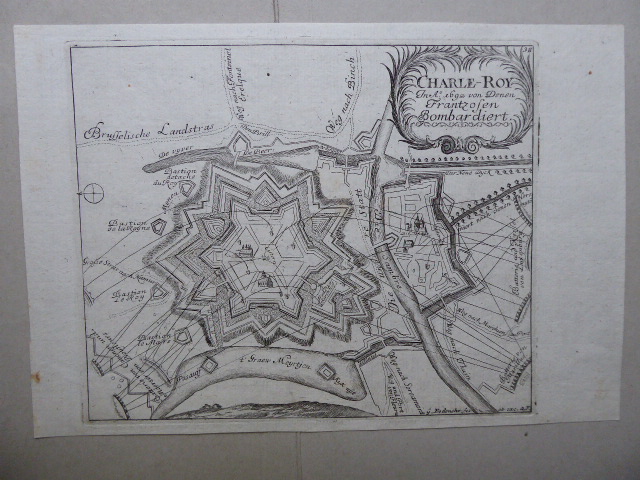
1720réf. 138896(Augsburg). (Um 1720). Kupferstichblatt. Format ca. 16 x 19,5 cm
1923réf. 97007Leipzig, Klinkhardt & Biermann, ( 1923). IX, 43 S. Mit 60 Abb. auf 56 Taf. in Lichtdruck. (= Meister der Graphik, Bd. 11). 32 cm. OLn.
19758vo, 21.6cm. Pp. 456,[2], frontisp., 56 black & white plates., several figs., refs. Orig. boards in dust-jacket. Slight rubbing to jacket, fine otherwise. - Unaltered reissue of the original edition of 1915.
1926réf. biblio226London: T. Fisher Unwin Ltd 1926. Fine. 8vo blue cloth 208p 34 ill color front ex library T. Fisher Unwin Ltd hardcover
1890réf. 1401DBBienne, Gassmann, 1890. Gr.-8°. 105(1) S. Orig.-Broschur.
réf. 500297378Sans date.
1930réf. A1869S.l., s.e., s.d. (vers 1930) ; 140/143 mm, 1 pp., une feuille encadrée. Exemplaire N° 1 sur papier vergé ancien. Bon état.
réf. 32929Paris, Editions Hervas, 1992. 21 x 30, 181 pp., très nombreuses illustrations en couleurs et en N/B, cartonnage d'édition, très bon état (2 cachets).
réf. 25445Actualités. (Titre de l'ensemble) - 1868- Lithographie -Hauteur: 38.6cmx Largeur: 26.7cm
réf. 25535Le Charivari, trente-quatrième année, mardi 21 mars 1865- LE CHARIVARI Aubert et Cie, imprimeur-lithographe. 1865- Lithographie - Trait carré: Hauteur: 21.9cmx Largeur: 21.9cm- 1 feuillet; illustration page 3.-- texte imprime au dos,bon etat.-
1788réf. 172711788 1788 Gravure a l'aquatinte du 18e siecle (1788) par Labrousse, d'apres le dessin de Grasset St Sauveur, Coloriee a la main a l'époque.Encyclopédie des voyages,Kolorierte Aquatinta, Darstellung: 11 x 17 cm
1903réf. 30662ABNeuchâtel, W. Sandoz, 1903. 4° (31 x 23,5 cm). (4), 66 S. Farb. illustr. Orig.-Umschlag.
réf. awd-297Lithographie en couleurs imprimée sur Arches. Tirage à 300 ex. numérotés et signés au crayon en marge, 1984. (65/93 cm). Bon état.
réf. 242000 Planche N°31, format 29 x 40 cm (toutes marges). Chromolithographie d'époque avec le timbre à sec de l'Imprimerie Chaix (Lugt 1777c). Notre exemplaire est une des très rares épreuves imprimées sur papier Japon, toute petite trace de punaisage sur 3 angles externes de la marge (Our plate is one of the few copies printed on Japanese paper. Original plate in good condition). LES MAITRES DE L'AFFICHE, prestigieuse publication d'art, éditée par l'atelier de lithographie Chaix, dont la parution s'étala de décembre 1895 à novembre 1900. Chaque livraison comportait 4 planches de reproduction en chromolithographie d'une remarquable qualité d'impression des plus belles affiches illustrées des grands artistes français et étrangers (auxquelles il faut ajouter 16 planches de lithographies originales offertes en prime aux abonnés). Lors de l'Exposition universelle de 1889, fut organisée la première exposition rétrospective dévolue à l'affiche, celle-ci devait valider la reconnaissance officielle d'appartenance de l'affiche au monde de l'art. Jules Chéret (1836-1932) y sera sacré '' Maître de l'affiche '', c'est aussi à cette date que Seurat commencera à collectionner les affiches de Chéret. Bel exemplaire ( Photographies sur demande / We can send pictures of this book on simple request )
réf. 500297377Sans date.
1900réf. 22947ABAarau, Sauerländer, 1900. 8°. 48 Seiten. Mit lithographiertem farbigem Profil. Orig.-Brosch.
1853réf. 10504Très rare Chemin de Croix édité par la veuve Turgis à Paris, rue Serpente n° 10. Son activité à cette adresse est comprise netre 1853 et 1856. Lithographies rehaussées et gommées. Les couleurs sont très fraiches et le rehaut remarquable de précision. Huit planches sur 14 (manquent les planches 2,3,4,5,6 et 12). Quelques rousseurs et traces d'humidité en pied. En feuilles. Très bon Paris Vve Turgis 1853-56
1987This is a near fine softcover copy of this limited numbered edition of the exhibition catalog. (Hand numbered in ink: 377 of 700 copies). Remarks by Barbara Rose. Introduction by Achille Bonito Oliva and an interview conducted by Danny Berger. Illustrated in color and with a black & white fold-out. Biography. Selected bibliography. A small crease to the lower corner of the front cover (not affecting contents:text or plates), otherwise a beautiful copy. 11" high X 8 1/2" wide, 49 pages.
1890réf. 1401DBBienne, Gassmann, 1890. Gr.-8°. 105(1) S. Orig.-Broschur. + Wichtig: Für unsere Kunden in der EU erfolgt der Versand alle 14 Tage verzollt ab Deutschland / Postbank-Konto in Deutschland vorhanden +
1900réf. 22947ABAarau, Sauerländer, 1900. 8°. 48 Seiten. Mit lithographiertem farbigem Profil. Orig.-Brosch. + Wichtig: Für unsere Kunden in der EU erfolgt der Versand alle 14 Tage verzollt ab Deutschland / Postbank-Konto in Deutschland vorhanden +
1930S.l., s.e., s.d. (vers 1930); 140/143 mm, 1 pp., une feuille encadrée. Exemplaire N° 1 sur papier vergé ancien. Bon état.