Jaques-Dalcroze, EmileAntiquariat.de
10 990 résultats
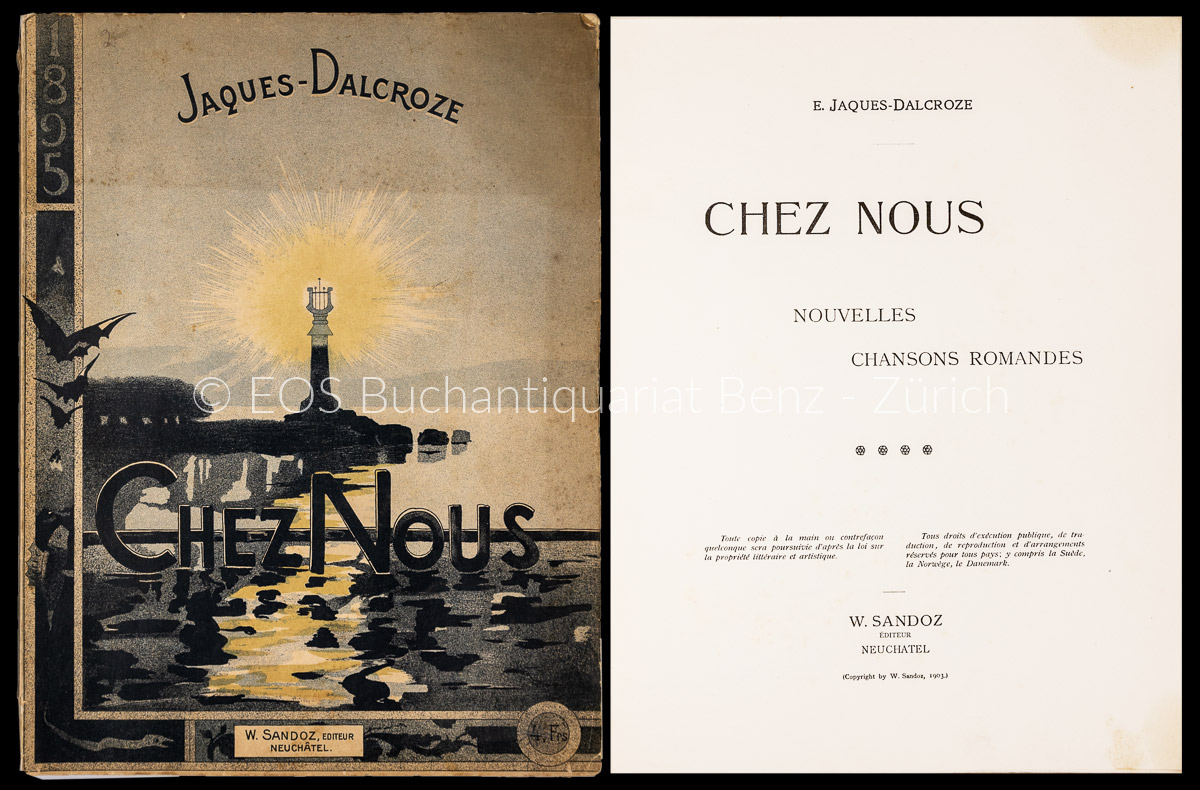
1903réf. 30662ABNeuchâtel, W. Sandoz, 1903. 4° (31 x 23,5 cm). (4), 66 S. Farb. illustr. Orig.-Umschlag. + Wichtig: Für unsere Kunden in der EU erfolgt der Versand alle 14 Tage verzollt ab Deutschland / Postbank-Konto in Deutschland vorhanden +, A
1924- Lucien Vogel éditeur, Paris 1924, 18x24cm, une feuille. - Original color print, printed on vergé paper, signed in the plate. An original print used to illustrate the Gazette du bon ton, one of the most attractive and influential 20th century fashion magazines, featuring the talents of French artists and other contributors from the burgeoning Art Deco movement. A celebrated fashion magazine established in 1912 by Lucien Vogel, La Gazette du bon ton appeared until 1925, with a hiatus from 1915 to 1920 due to the war (the editor-in-chief having been called up for service). It consisted of 69 issues printed in only 2,000 copies each and notably illustrated with 573 color plates and 148 sketches of the models of the great designers. Right from the start, this sumptuous publication "was aimed at bibliophiles and fashionable society," (Françoise Tétart-Vittu, "La Gazette du bon ton", in Dictionnaire de la mode, 2016) and was printed on fine vergé paper using a type cut specially for the magazine by Georges Peignot, known as Cochin, later used (in 1946) by Christian Dior. The prints were made using stencils, heightened in colors, some highlighted in gold or palladium. The story began in 1912, when Lucien Vogel, a man of the world involved in fashion (he had already been part of the fashion magazine Femina) decided, with his wife Cosette de Brunhoff - the sister of Jean, creator of Babar - to set up the Gazette du bon ton, subtitled at the time: "Art, fashion, frivolities." Georges Charensol noted the reasoning of the editor-in-chief: "'In 1910,' he observed, 'there was no really artistic fashion magazine, nothing representative of the spirit of the time. My dream was therefore to make a luxury magazine with truly modern artists...I was assured of success, because when it comes to fashion, no country on earth can compete with France.'" ("Un grand éditeur d'art. Lucien Vogel" in Les Nouvelles littéraires, no. 133, May 1925). The magazine was immediately successful, not only in France but also in the United States and Latin America. At first, Vogel put together a team of seven artists: André-Édouard Marty and Pierre Brissaud, followed by Georges Lepape and Dammicourt, as well as eventually his friends from school and the School of Fine Arts, like George Barbier, Bernard Boutet de Monvel and Charles Martin. Other talented people soon came flocking to join the team: Guy Arnoux, Léon Bakst, Benito, Boutet de Monvel, Umberto Brunelleschi, Chas Laborde, Jean-Gabriel Domergue, Raoul Dufy, Édouard Halouze, Alexandre Iacovleff, Jean Émile Laboureur, Charles Loupot, Chalres Martin, Maggie Salcedo. These artist, mostly unknown when Lucien Vogel sought them out, later became emblematic and sought-after artistic figures. It was also they who worked on the advertising drawings for the Gazette. The plates put the spotlight on, and celebrate, dresses by seven designers of the age: Lanvin, Doeuillet, Paquin, Poiret, Worth, Vionnet and Doucet. The designers provided exclusive models for each issue. Nonetheless, some of the illustrations are not based on real models, but simply on the illustrator's conception of the fashion of the day. The Gazette du bon ton was an important step in the history of fashion. Combining aesthetic demands with the physical whole, it brought together - for the first time - the great talents of the artistic, literary, and fashion worlds; and imposed, through this alchemy, a completely new image of women: slender, independent and daring, which was shared by the new generation of designers, including Coco Chanel, Jean Patou, Marcel Rochas, and so on... Taken over in 1920 by Condé Montrose Nast, the Gazette du bon ton was an important influence on the new layout and aesthetics of that "little dying paper" that Nast had bought a few years earlier: Vogue. [FRENCH VERSION FOLLOWS] Estampe originale en couleur, tirée sur papier vergé, signée en bas à droite de la planche. Gravure originale réalisée pour l'illustrat
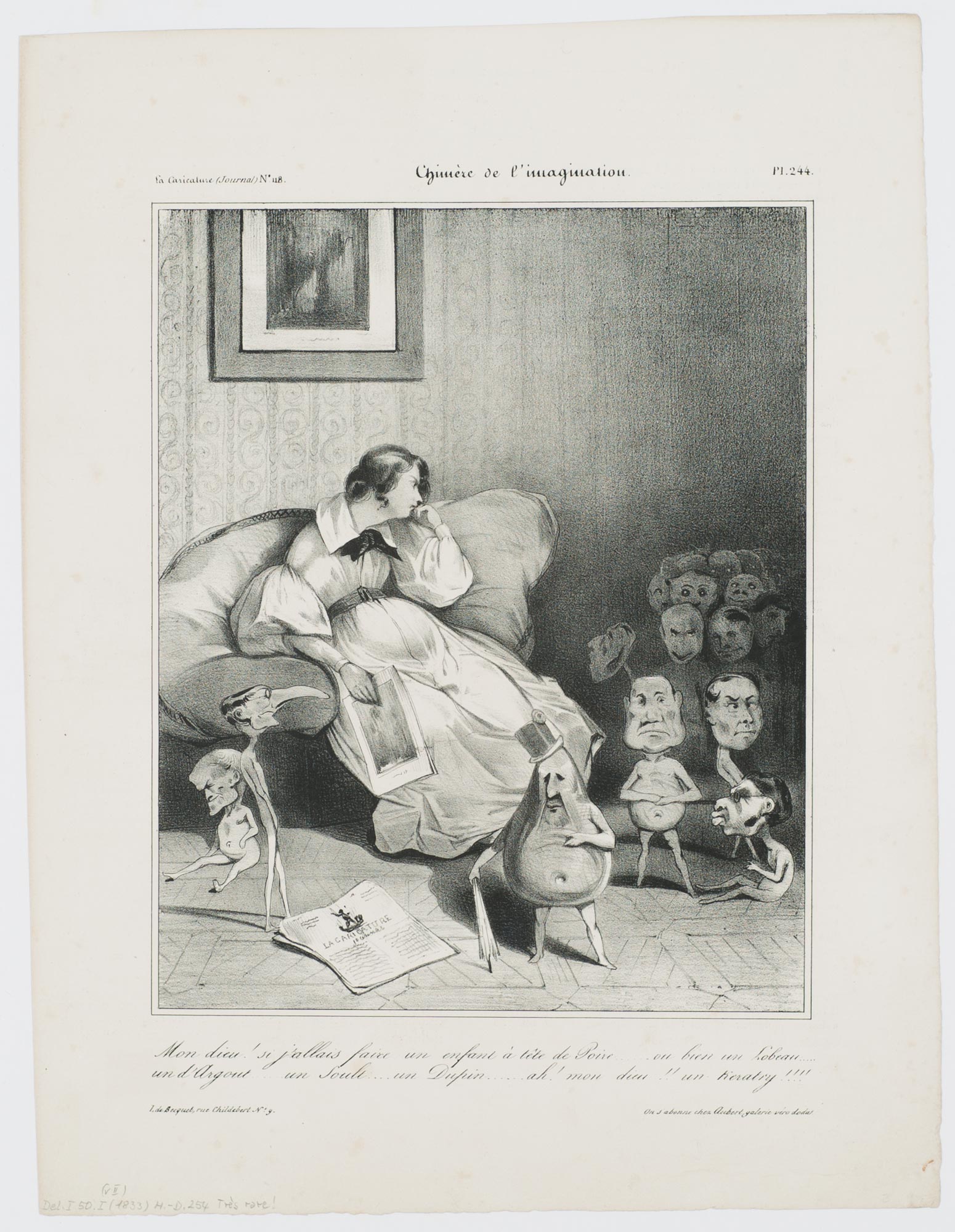
1833réf. 250781833 Planche 244 de La Caricature N° 118.La Caricature, 7 fevrier, 1833. Lithographie originale sur Velin blanc. . Delteil 50. Belle épreuve en noir et pli horizontal,plis;lithographie en noir sur velin blanc,Delteil 50 ,tirage bien noir malgré l'image jaunie
1851réf. 30242ABLausanne, G. Bridel et au Bazar vaudois, 1851. 8°. 339 S. Mit Frontisp., 3 Aquatintatafeln, 1 gef. Plan und 1 Tafel mit Handschriftfaksimile. Pappband der Zeit.
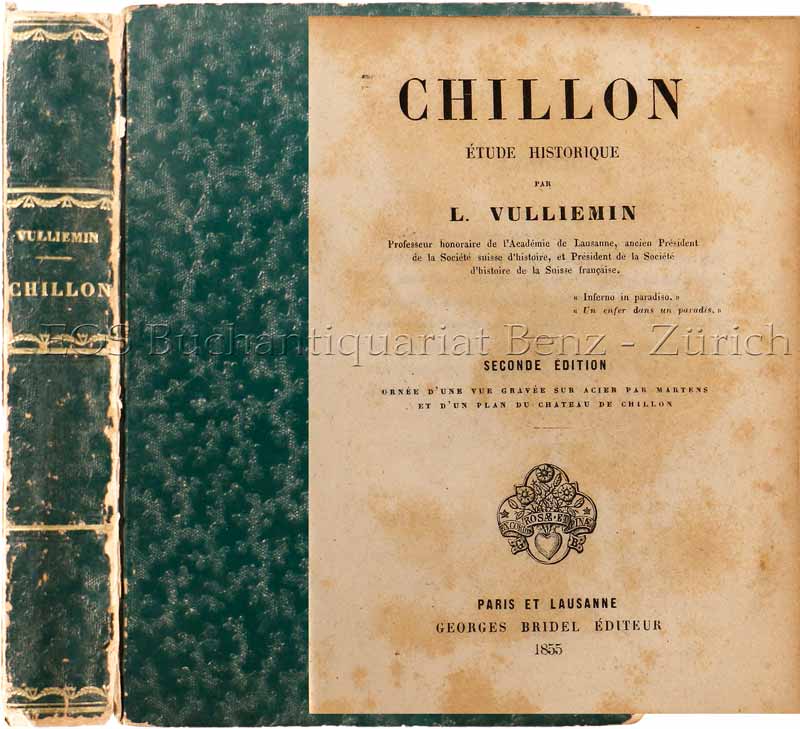
1855réf. 7444BBSeconde edition. Paris und Lausanne, Georges Bridel, 1855. Klein-8°. (1) Bl., 346 S. Mit Frontisp., mit 1 gef. Plan. Pappband der Zeit mit Kleisterpapierbezug.
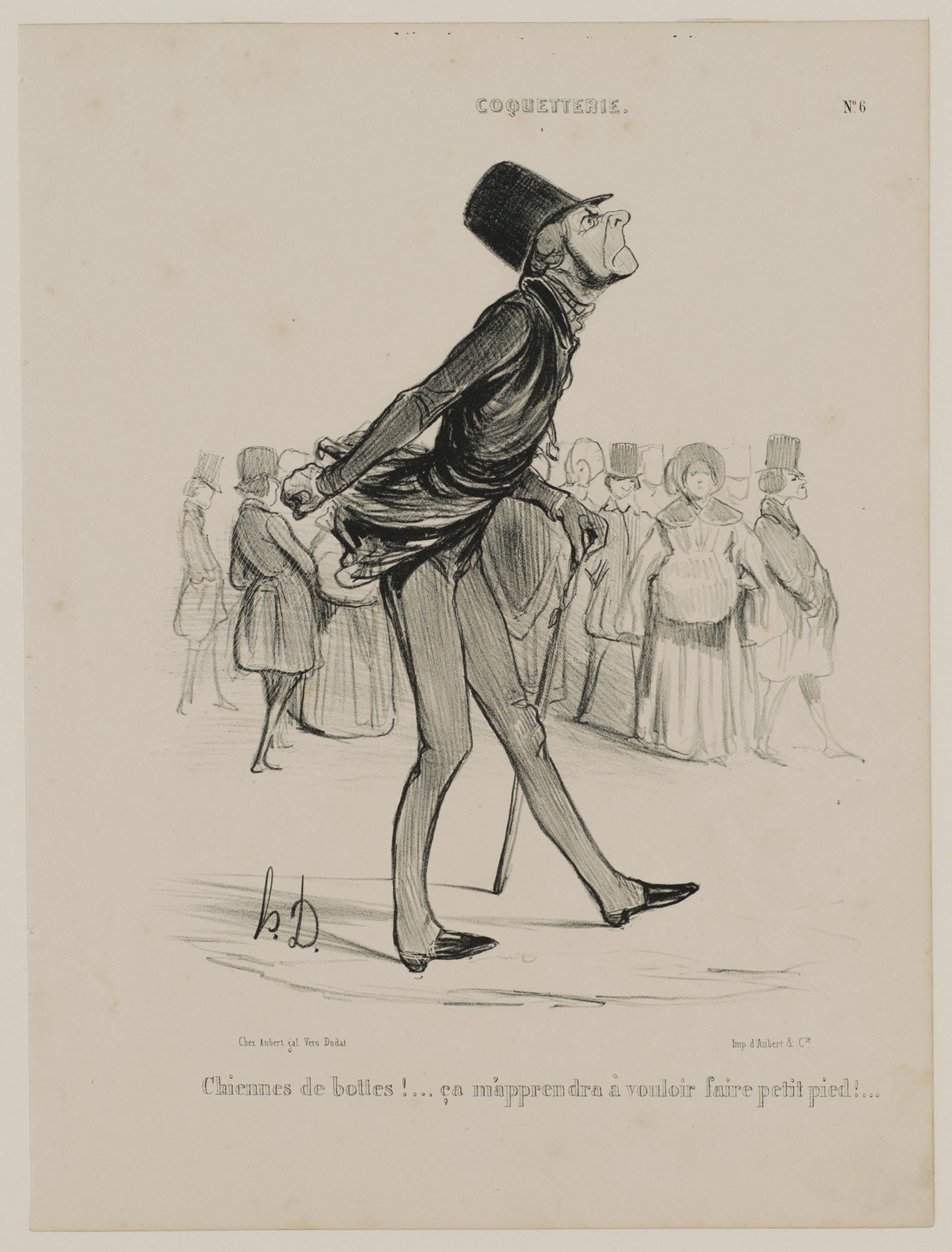
réf. HD-093o.J. Verdammte Stiefel! Das wird mich zwingen, kleinere Schritte zu machen! (Wortspiel: Vivre à grand pied=in grossem Stil zu leben). Lithographie, auf chamoisfarbenem Velin, mit den Adressen: Chez Aubert Gal. Vero Dodat sowie: Imp. d?Aubert & Cie. Blattgröße 33:24,8 cm. ? Leicht fingerfleckig. Literatur: Daumier-Register 741; Delteil 741, II (von 2), No. 6 der Serie ?Coquetterie?. (Koketterie) ist eine Serie von 10 nummerierten Lithographien, welche in der Zeit vom 7. Juli 1839 bis zum 15.November1840 im Charivari publiziert wurden. ? Sur blanc!
1998A clean, unmarked book with a tight binding. 113 pages. 8 1/4"w x 11 5/8"h. Exhibition catalog for a show that appeared in Russia, England, France, and Germany. The ukiyo-e prints of the Edo period represented here includes portraits of mother and chld, depecitions of customs and games, children's prints, and omacha-e.
1851réf. 30242ABLausanne, G. Bridel et au Bazar vaudois, 1851. 8°. 339 S. Mit Frontisp., 3 Aquatintatafeln, 1 gef. Plan und 1 Tafel mit Handschriftfaksimile. Pappband der Zeit. + Wichtig: Für unsere Kunden in der EU erfolgt der Versand alle 14 Tage verzollt ab Deutschland / Postbank-Konto in Deutschland vorhanden +, Einband
1855réf. 7444BBParis und Lausanne, Georges Bridel, 1855. Klein-8°. (1) Bl., 346 S. Mit Frontisp., mit 1 gef. Plan. Pappband der Zeit mit Kleisterpapierbezug. + Wichtig: Für unsere Kunden in der EU erfolgt der Versand alle 14 Tage verzollt ab Deutschland / Postbank-Konto in Deutschland vorhanden +, bild Seconde edition.
réf. HD-153o.J. Ein Streich der Phantasie. Mein Gott! Wenn mein Kind mit einem Birnenkopf zur Welt käme, oder als Lobau, oder als D?Argout, als Dupin... Um Gottes Willen! ein Kératry!... Lithographie, auf chamoisfarbenem Velin, mit den Adressen: L.de Becquet,rue Childebert n°9., sowie: On s'abonne chez Aubert, galerie véro dodat. Darstellungsgröße 24:19,3 cm, Blattgröße 35,5:27,3 cm. Minimal stockfleckig, mit geglätter horizontaler Falte, nur verso sichtbar. Literatur: Daumier-Register 50 III (von III); Delteil 50 II, (von II), Blatt 244, erschienen am 07.02.1833 in ?LA CARICATURE?, Nr. 118. ? Selten! Sur blanc.
1879548p. + Frontis. Illustrated with numerous full page engravings. Title page ruled in red and printed in red and black. Paper beginning to brown at edges. Some soiling. A few leaves torn without loss. Inner hinges cracked. 8vo. Original full green cloth binding, decorated and lettered in gold and black. Binding very worn. Hardbound. The author, Isaac W. Wiley, was a pastor, medical and educational missionary, and influential bishop of the former Methodist Episcopal Church. Wiley College, founded in 1873 by the Freemen's Aid Society to educate newly freed slaves, was named for him. He served as a missionary for some years in China and returned to organize missionary activity in the Far East. This account of his travels makes interesting reading. He visited and describes many places, customs, sights, religions. In China: Shanghai; Peking; Kiukiang; Foochow; Hong Kong; Canton - in Japan: Yokohama; Nagasaki; Tokio (Tokyo); among other places. Scarce. **PRICE JUST REDUCED! TRAVEL/3
1812réf. 195892London.: J. J. Stockdale. 1812. Three handcoloured engravings 10.5 x 17.5 cms landscape and two portrait partial watermark sheets toned handsomely preserved in cerulean card window mounts all in very good condition. Three European engravings illustrating three stages in the manufacture of Chinese porcelain from an edition of "China: Its Costume Arts Manufactures &c." by Breton de la Martiniere very attractively handcoloured. . J. J. Stockdale. unknown
1953RARE album of facsimile reproductions from the renowned 'Manual of the Mustard Seed Garden' (Jieziyuan Huazhuan, sometimes known as Jieziyuan Huapu) - a printed manual of Chinese painting compiled during the early-Qing Dynasty, an important early example of color printing. 325x280mm. 17 text pages & 16 full-page plates. Oblong illustrated board Hardcover laid in slipcase. Slipcase stained and worn. Slipcase hinges/spine partly missing. Slipcase edges and corners worn and peeling. Cover age-stained and yellowing. Front cover edges slightly peeled. Inner cover and whitepages age-stained. Previous owner's stamp on slipcase, front whitepage, pages 7 and 9. Pages slightly yellowing and wavy. [SUMMARY]: This rare facsimile reproduction of early Chinese color-prints, of immense interest to historians and lovers of far-eastern art, is otherwise in good condition.
1953Contains color plates. 28x32.5 cm. 17 pages. Hardcover laid in slipcase. Slipcase rubbed. Else in good condition. PLEASE NOTE: This item is overweight. We may ask for extra shipping costs.
réf. 37588Skira International / World Publishing Company. As New. Portfolio with 8 Loo. FREE UPGRADE to Courier/Priority Shipping Upon Request – – IN STOCK AND IMMEDIATELY AVAILABLE FOR SHIPMENT - 4 page brochure on Chinese paintings with notes on 6 of the 8 color plates included in the packet. -- with a bonus offer--; T-Skirchin; Skira International / Skira Color Prints Chinese Painting . Skira International / World Publishing Company unknown
2003This is a very good softcover copy with almost no wear. Completely clean inside and out. Text block page edges starting to yellow a bit. This catalog was prepared to accompany the exhibition at the British Library from November 7, 2003 to March 7, 2004. Catalog edited by Anne Farrer. Contributions by David Barker, Christer von der Burg, Norma Fung, He Weimin, Hwang Yin, Beth McKillop, Naomi Pears, Qi Fengge, Iris Wachs, Frances Wood, and Zheng Haiyao. Illustrated mostly in color some black & white. 108 works in the exhibition, each with lengthy entry and illustration. Biographical sketches of the artists. Bibliography. 11" high X 10" wide, 223 pages. This book will be securely packed in a sturdy box and shipped with tracking.
1921réf. 54901Lucien Vogel éditeur | Paris 1921 | 18 x 24 cm | une feuille
1921- Lucien Vogel éditeur, Paris 1921, 18x24cm, une feuille. - Original color print, printed on vergé paper, signed in the plate. An original print used to illustrate the Gazette du bon ton, one of the most attractive and influential 20th century fashion magazines, featuring the talents of French artists and other contributors from the burgeoning Art Deco movement. A celebrated fashion magazine established in 1912 by Lucien Vogel, La Gazette du bon ton appeared until 1925, with a hiatus from 1915 to 1920 due to the war (the editor-in-chief having been called up for service). It consisted of 69 issues printed in only 2,000 copies each and notably illustrated with 573 color plates and 148 sketches of the models of the great designers. Right from the start, this sumptuous publication "was aimed at bibliophiles and fashionable society," (Françoise Tétart-Vittu, "La Gazette du bon ton", in Dictionnaire de la mode, 2016) and was printed on fine vergé paper using a type cut specially for the magazine by Georges Peignot, known as Cochin, later used (in 1946) by Christian Dior. The prints were made using stencils, heightened in colors, some highlighted in gold or palladium. The story began in 1912, when Lucien Vogel, a man of the world involved in fashion (he had already been part of the fashion magazine Femina) decided, with his wife Cosette de Brunhoff - the sister of Jean, creator of Babar - to set up the Gazette du bon ton, subtitled at the time: "Art, fashion, frivolities." Georges Charensol noted the reasoning of the editor-in-chief: "'In 1910,' he observed, 'there was no really artistic fashion magazine, nothing representative of the spirit of the time. My dream was therefore to make a luxury magazine with truly modern artists...I was assured of success, because when it comes to fashion, no country on earth can compete with France.'" ("Un grand éditeur d'art. Lucien Vogel" in Les Nouvelles littéraires, no. 133, May 1925). The magazine was immediately successful, not only in France but also in the United States and Latin America. At first, Vogel put together a team of seven artists: André-Édouard Marty and Pierre Brissaud, followed by Georges Lepape and Dammicourt, as well as eventually his friends from school and the School of Fine Arts, like George Barbier, Bernard Boutet de Monvel and Charles Martin. Other talented people soon came flocking to join the team: Guy Arnoux, Léon Bakst, Benito, Boutet de Monvel, Umberto Brunelleschi, Chas Laborde, Jean-Gabriel Domergue, Raoul Dufy, Édouard Halouze, Alexandre Iacovleff, Jean Émile Laboureur, Charles Loupot, Chalres Martin, Maggie Salcedo. These artist, mostly unknown when Lucien Vogel sought them out, later became emblematic and sought-after artistic figures. It was also they who worked on the advertising drawings for the Gazette. The plates put the spotlight on, and celebrate, dresses by seven designers of the age: Lanvin, Doeuillet, Paquin, Poiret, Worth, Vionnet and Doucet. The designers provided exclusive models for each issue. Nonetheless, some of the illustrations are not based on real models, but simply on the illustrator's conception of the fashion of the day. The Gazette du bon ton was an important step in the history of fashion. Combining aesthetic demands with the physical whole, it brought together - for the first time - the great talents of the artistic, literary, and fashion worlds; and imposed, through this alchemy, a completely new image of women: slender, independent and daring, which was shared by the new generation of designers, including Coco Chanel, Jean Patou, Marcel Rochas, and so on... Taken over in 1920 by Condé Montrose Nast, the Gazette du bon ton was an important influence on the new layout and aesthetics of that "little dying paper" that Nast had bought a few years earlier: Vogue. [FRENCH VERSION FOLLOWS] Estampe originale en couleur, tirée sur papier vergé, signée en bas à droite de la planche. La Gazette du bon ton, l'une des plus belle
réf. 241610 Planche N°47, format 29 x 40 cm (toutes marges). Chromolithographie d'époque avec le timbre à sec de l'Imprimerie Chaix (Lugt 1777c). Notre exemplaire est une des très rares épreuves imprimées sur papier Japon, 2 toutes petites traces de punaisage chaque extrémité de la marge supérieure (Our plate is one of the few copies printed on Japanese paper. Original plate in good condition). LES MAITRES DE L'AFFICHE, prestigieuse publication d'art, éditée par l'atelier de lithographie Chaix, dont la parution s'étala de décembre 1895 à novembre 1900. Chaque livraison comportait 4 planches de reproduction en chromolithographie d'une remarquable qualité d'impression des plus belles affiches illustrées des grands artistes français et étrangers (auxquelles il faut ajouter 16 planches de lithographies originales offertes en prime aux abonnés). Lors de l'Exposition universelle de 1889, fut organisée la première exposition rétrospective dévolue à l'affiche, celle-ci devait valider la reconnaissance officielle d'appartenance de l'affiche au monde de l'art. Jules Chéret (1836-1932) y sera sacré '' Maître de l'affiche '', c'est aussi à cette date que Seurat commencera à collectionner les affiches de Chéret. Bel exemplaire ( Photographies sur demande / We can send pictures of this book on simple request )
1977réf. RO80062741CHEZ L'AUTEUR. 1977. In-8. Broché. Bon état, Couv. fraîche, Dos satisfaisant, Intérieur frais. Environ 40 / 50 pages, dont XXIV planches illustrées en noir et blanc.. . . . Classification Dewey : 769-Estampes
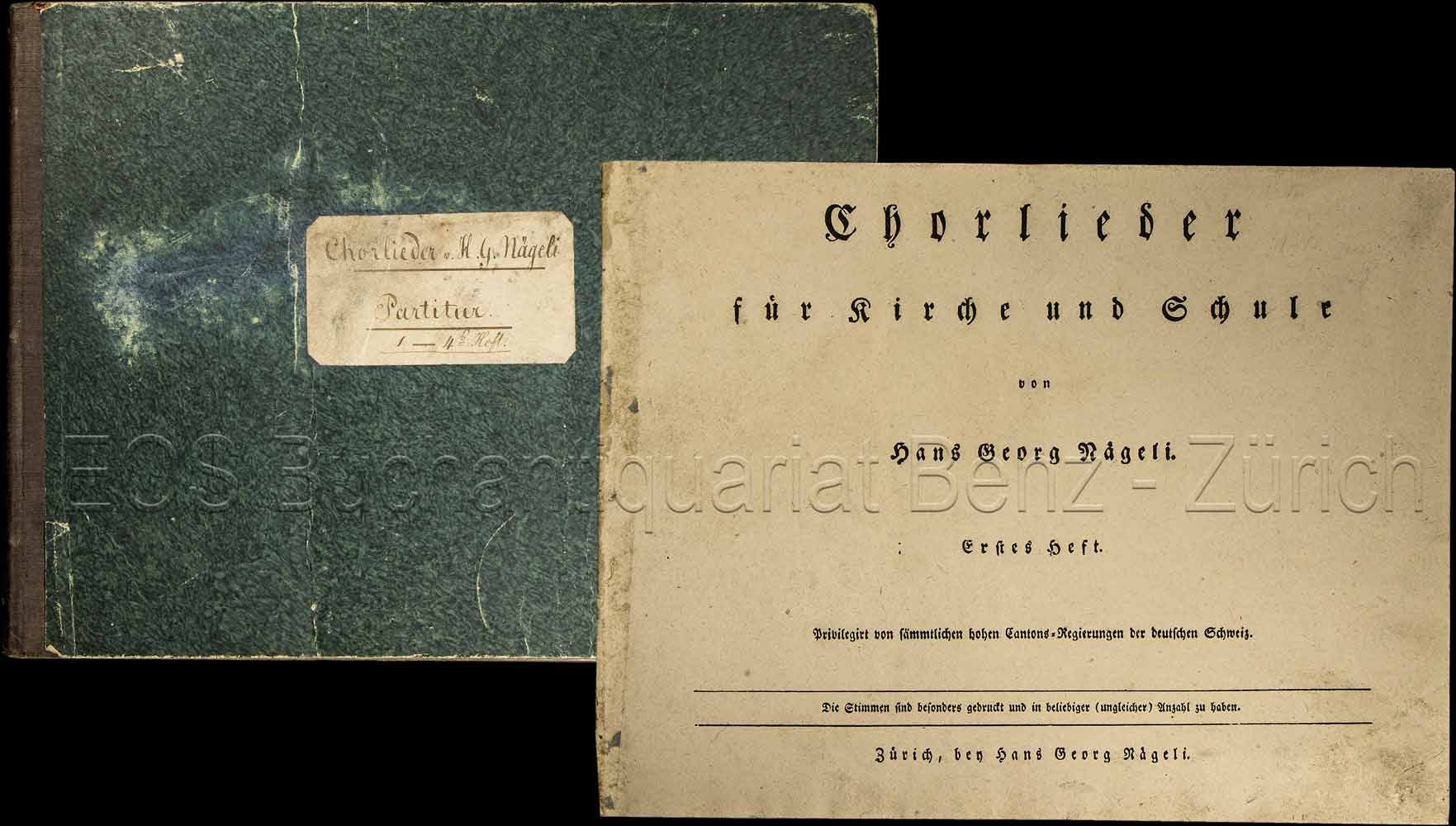
1820réf. 3793DB4 (von 7) Hefte. Zürich, Hans Georg Nägeli, (um 1820). Quer-4°. (1) Bl., 74 S. + 2 Titelblätter (Heft 3 u. 4). Halbleinenband der Zeit.
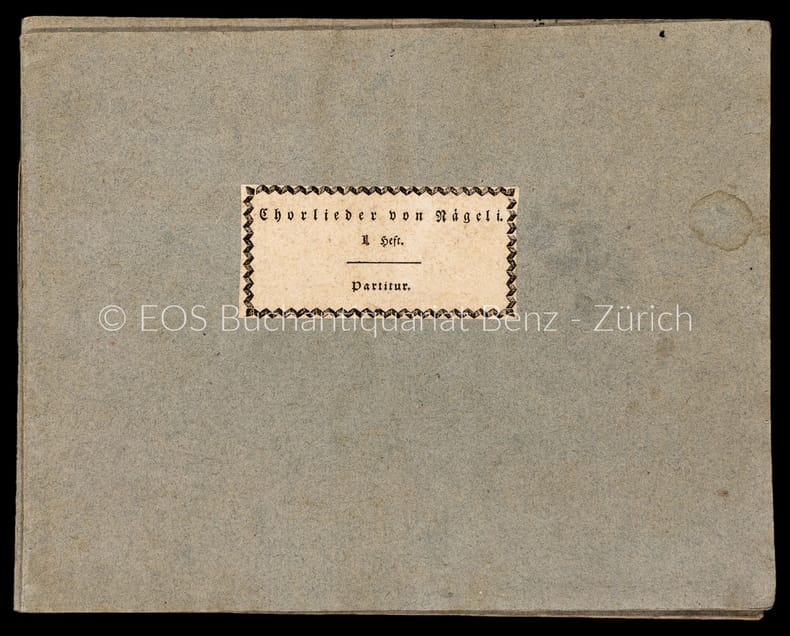
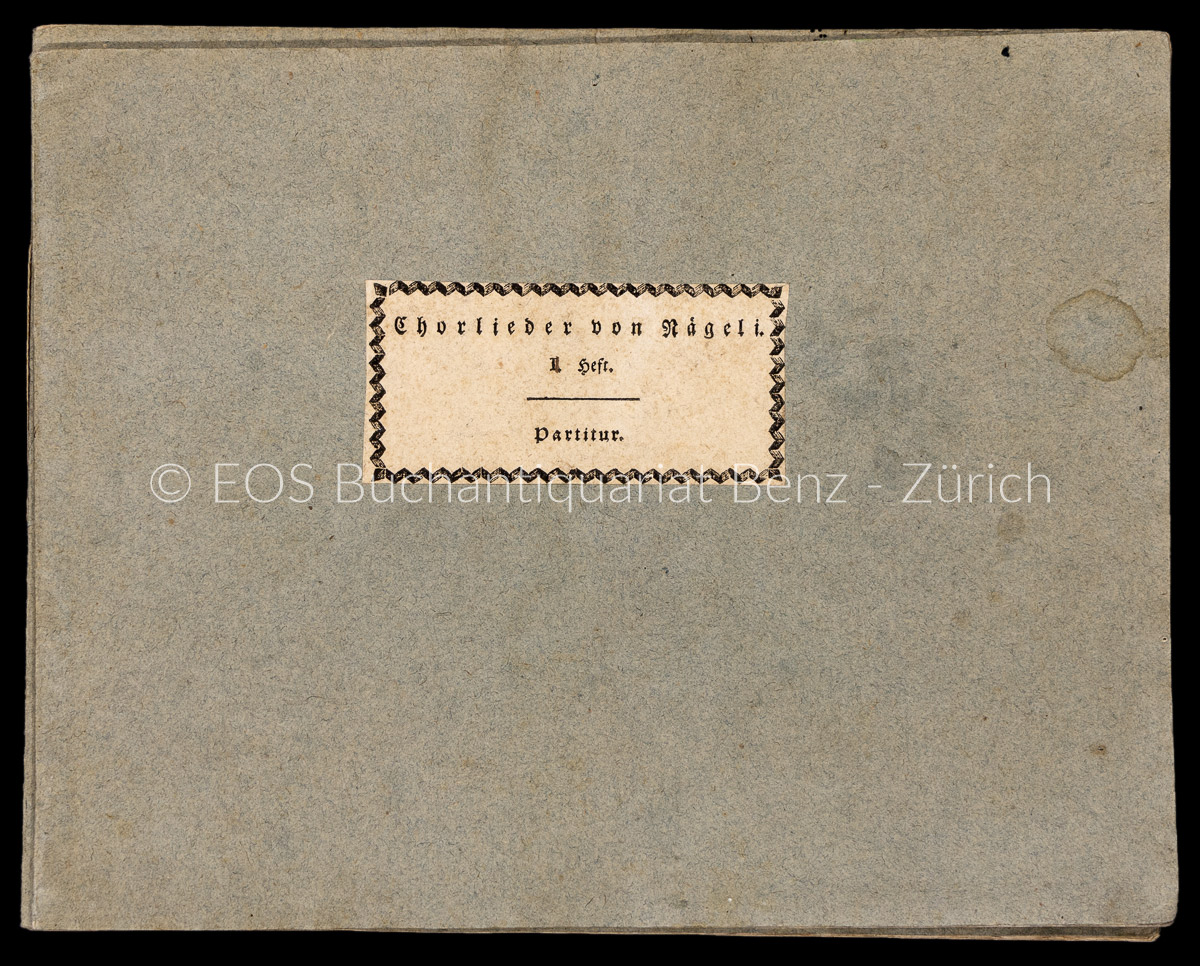
1820réf. 6707CB5 Hefte. Zürich, Hans Georg Nägeli, (um 1820). Quer-4°. S. 21–38; S. 9–16; S. 9–16; S. 9–16; S. 9–16. Orig.-Umschl.
1820réf. 3793DBZürich, Hans Georg Nägeli, (um 1820). Quer-4°. (1) Bl., 74 S. + 2 Titelblätter (Heft 3 u. 4). Halbleinenband der Zeit. + Wichtig: Für unsere Kunden in der EU erfolgt der Versand alle 14 Tage verzollt ab Deutschland / Postbank-Konto in Deutschland vorhanden +, Abb. 4 (von 7) Hefte.
1820réf. 6707CBZürich, Hans Georg Nägeli, (um 1820). Quer-4°. S. 21?38; S. 9?16; S. 9?16; S. 9?16; S. 9?16. Orig.-Umschl. + Wichtig: Für unsere Kunden in der EU erfolgt der Versand alle 14 Tage verzollt ab Deutschland / Postbank-Konto in Deutschland vorhanden +, A|B 5 Hefte.
1836réf. 31089ABTrogen, Gedruckt bei Joh. Schläpfer, 1836. 8°. 2 Blatt, 418 Seiten, 3 Blatt. Leinenband der Zeit mit dreifachem Goldschnitt, in Pappschuber.